
What Most Parents Were Never Told About Fever, the Immune System, and the Body’s Natural Intelligence
Few things make a parent anxious faster than seeing their child develop a fever.
The warmth.
The flushed cheeks.
The fatigue.
The number on the thermometer climbing higher.
For decades, parents have been taught to fear fever and immediately try to “bring it down.”
But what if fever is not the problem?
What if fever is actually one of the body’s most intelligent healing responses?
At Ptak Family Chiropractic, we believe one of the most important conversations parents can have is learning the difference between a body that is failing… and a body that is working.
Because in many cases, fever is not evidence that the body is weak.
It is evidence that the immune system is active, responsive, adaptive, and doing exactly what it was designed to do.
Fever Is Not a Mistake
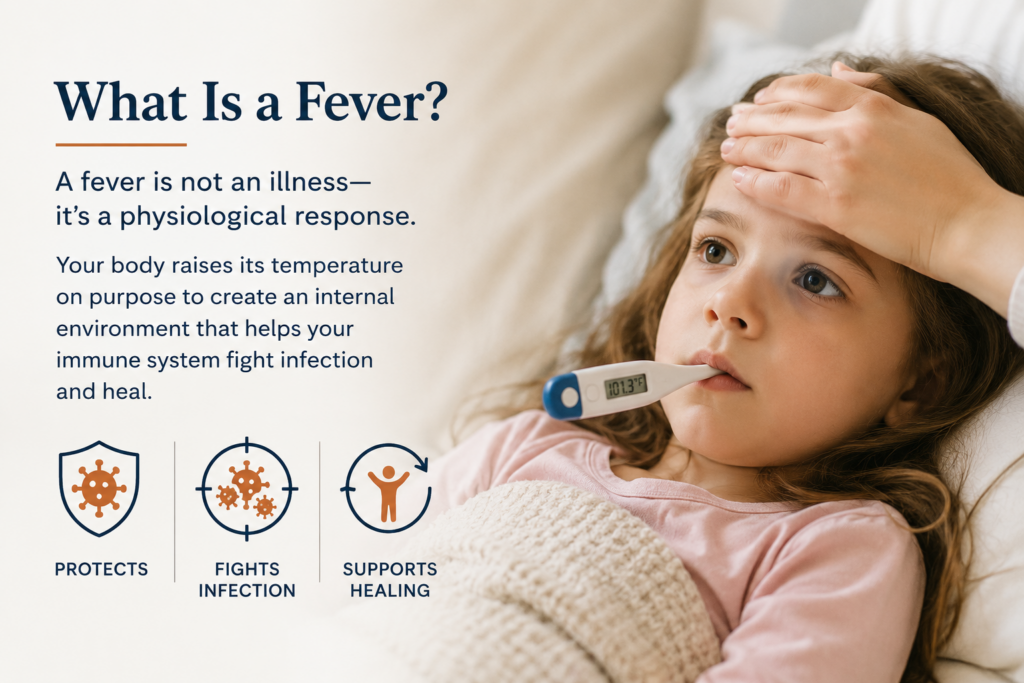
A fever is not a disease.
A fever is a physiological response.
When the immune system detects viruses, bacteria, or other immune challenges, the brain intentionally raises body temperature as part of the healing process.
This response is coordinated primarily through the hypothalamus — the part of the brain responsible for regulating temperature and many survival functions.
The body does this for a reason.
Higher temperatures can:
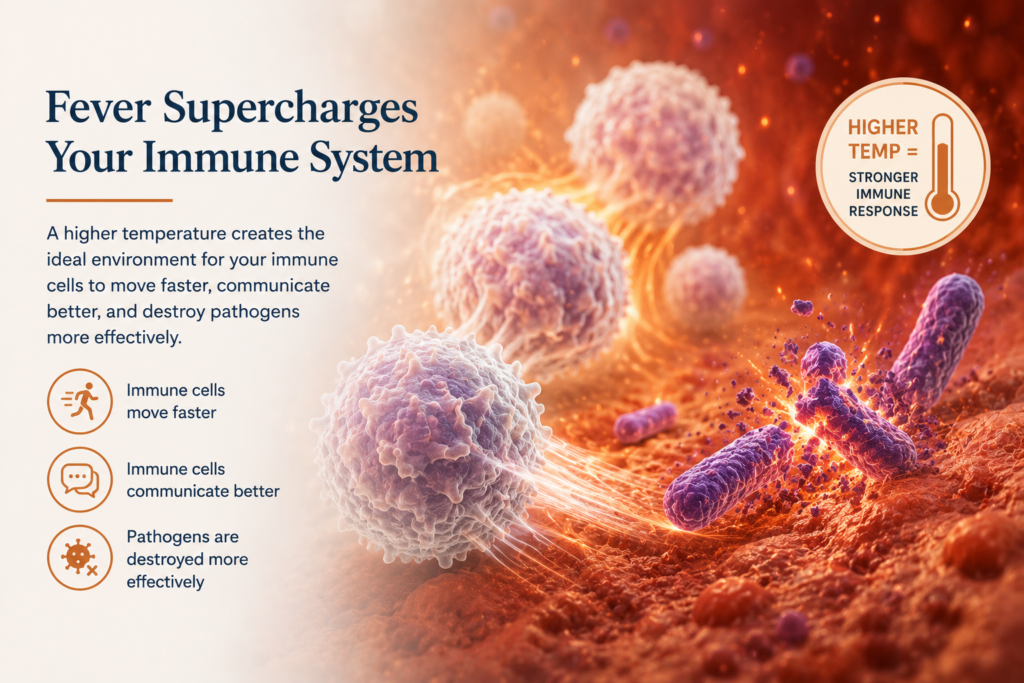
- Support immune cell activity
- Slow the replication of certain viruses and bacteria
- Enhance metabolic and repair processes
- Improve immune communication
- Increase white blood cell efficiency
In other words:
The body raises temperature because it may help the body heal more efficiently.
Fever is not the body losing control.
Fever is often the body taking control.
Why Fever Frightened an Entire Generation of Parents
Many parents grew up hearing:
- “A fever is dangerous.”
- “You must bring it down immediately.”
- “A high fever means something is terribly wrong.”
But much of modern “fever fear” developed from misunderstanding and anxiety — not always from physiology itself.
In fact, many healthcare professionals now acknowledge that fever is a normal and beneficial immune response in many situations.
That does NOT mean fever should always be ignored.
And it does NOT mean parents should never seek medical care.
But it DOES mean fever should be understood properly rather than automatically feared.
The Difference Between Monitoring and Panicking
A fever alone is not the most important factor.
What matters more is:
- The child’s responsiveness
- Hydration status
- Breathing
- Energy levels
- Behavior
- Medical history
- Duration of symptoms
- Associated symptoms
A child with a fever who is:
- drinking fluids
- making eye contact
- resting comfortably
- responsive
- periodically playful
may be handling the illness quite differently than a child with:
- labored breathing
- lethargy
- dehydration
- confusion
- severe pain
- persistent vomiting
- concerning neurological symptoms
The body is dynamic.
Numbers alone do not tell the whole story.
Why the Immune System Needs Challenge
One of the most overlooked concepts in health is this:
The immune system develops through adaptation.
Just like muscles grow stronger through challenge, the immune system learns, responds, remembers, and adapts through exposure and experience.
This does not mean children should be unnecessarily exposed to illness.
But it does mean the body was designed with intelligent defense mechanisms.
Fever is one of them.
Suppressing every fever immediately may interfere with some aspects of the body’s natural immune processes.
The goal should not always be:
“How quickly can we stop the fever?”
Sometimes the better question is:
“How can we support the body while it heals?”
The Nervous System and Immune Function
The immune system does not function independently from the nervous system.
The brain and immune system are in constant communication.
The nervous system helps regulate:
- Inflammation
- Stress responses
- Immune signaling
- Recovery
- Sleep
- Adaptation
- Healing responses
When the nervous system becomes overwhelmed by chronic stress, poor sleep, inflammation, or physiological overload, the body’s ability to adapt efficiently may become compromised.
This is one reason many families are beginning to look at health more holistically.
Not simply asking:
“How do we suppress symptoms?”
But instead:
“How do we support the body’s ability to function?”
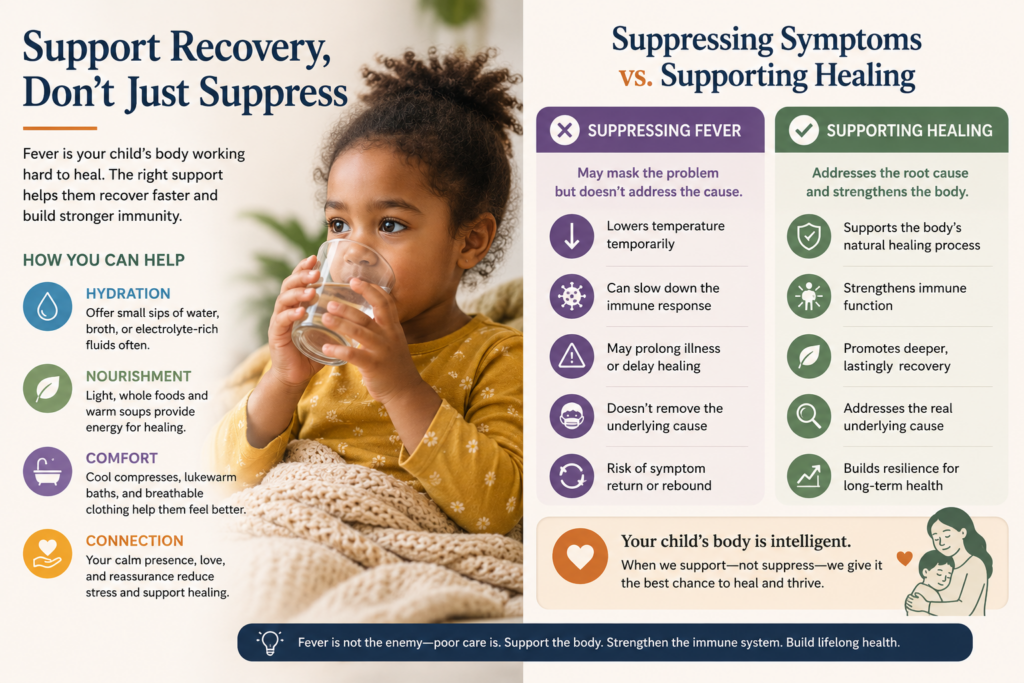
Why Some Children Seem to Get Sick Constantly
Many parents notice:
- recurrent ear infections
- repeated colds
- lingering congestion
- chronic inflammation
- frequent antibiotic use
- poor sleep
- fatigue
- behavioral changes during illness
While there are many factors involved, one important concept is adaptability.
Children’s nervous systems are constantly developing.
Their immune systems are constantly learning.
Their bodies are constantly adapting to:
- stress
- environmental exposures
- sleep changes
- nutrition
- inflammation
- posture
- physical trauma
- birth stress
- emotional stressors
Health is not simply the absence of symptoms.
Health is the ability to adapt.
Supporting the Body During a Fever
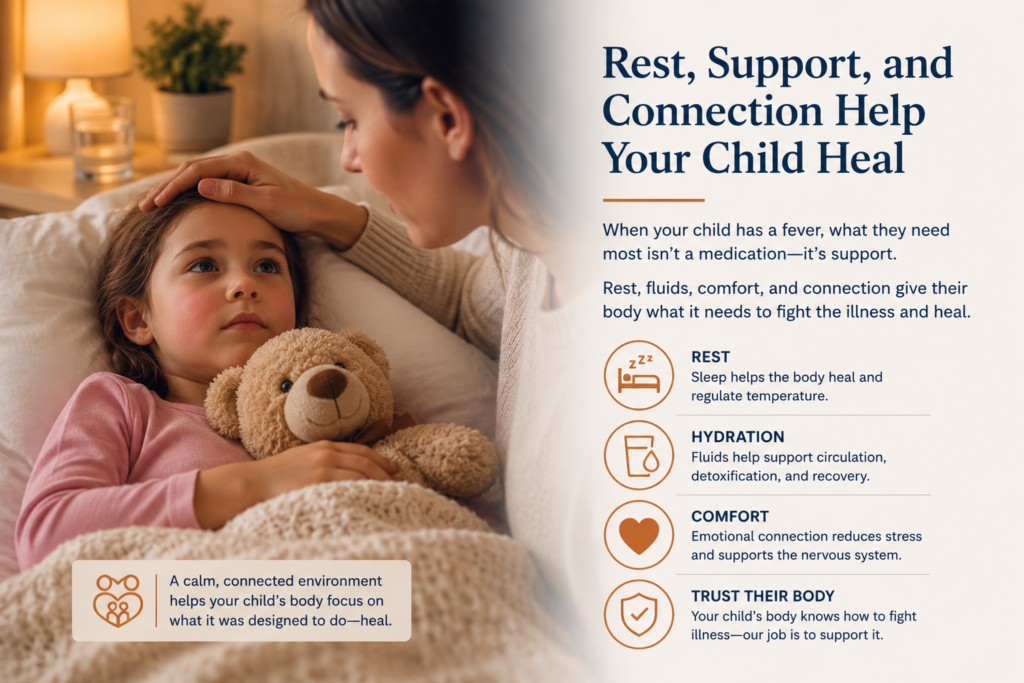
Many parents today are seeking balanced approaches that support healing while also knowing when professional medical care is necessary.
Helpful supportive strategies may include:
- hydration
- rest
- reducing overstimulation
- proper nutrition
- monitoring symptoms carefully
- supporting recovery instead of panicking
- consulting appropriate healthcare professionals when necessary
Every child is different.
And parents should always seek medical attention when symptoms are severe, persistent, or concerning.
What About Febrile Seizures?
Few things terrify parents more than hearing the words “febrile seizure.”
And while febrile seizures can be frightening, they are often misunderstood.
Most febrile seizures are believed to be related more to rapid changes in temperature than to the actual height of the fever itself.
Importantly:
- Most febrile seizures do not cause long-term neurological damage.
- Many occur in otherwise healthy children.
- Parents should still seek immediate medical evaluation if one occurs.
This is another example of why education matters more than fear.
The Bigger Problem May Not Be Fever
Sometimes the real issue is not that the body creates fever.
Sometimes the issue is that modern life has weakened our ability to trust and understand the body.
We have become conditioned to believe:
- symptoms are always bad
- discomfort always means danger
- suppression equals healing
But healing is often active.
Healing can involve:
- inflammation
- fatigue
- temperature changes
- immune activation
- recovery phases
The body is not always malfunctioning when symptoms appear.
Sometimes the body is fighting, adapting, and healing.
Fever Is Often Evidence of a Working Immune System
This may be one of the most important concepts parents can understand:
A fever is often evidence that the body recognizes a challenge and is responding to it.
That response is intelligent.
That response is coordinated.
That response is purposeful.
And while there are certainly times medical intervention is necessary, fear should not be the default response to every elevated temperature.
A Different Conversation About Children’s Health
At Ptak Family Chiropractic, we believe parents deserve a deeper understanding of how the body works.
Not fear.
Not panic.
Not confusion.
But education.
Because when parents understand:
- the nervous system
- adaptation
- immune responses
- recovery physiology
- the body’s innate intelligence
they can make more informed, empowered decisions about their family’s health.
When to Seek Medical Attention
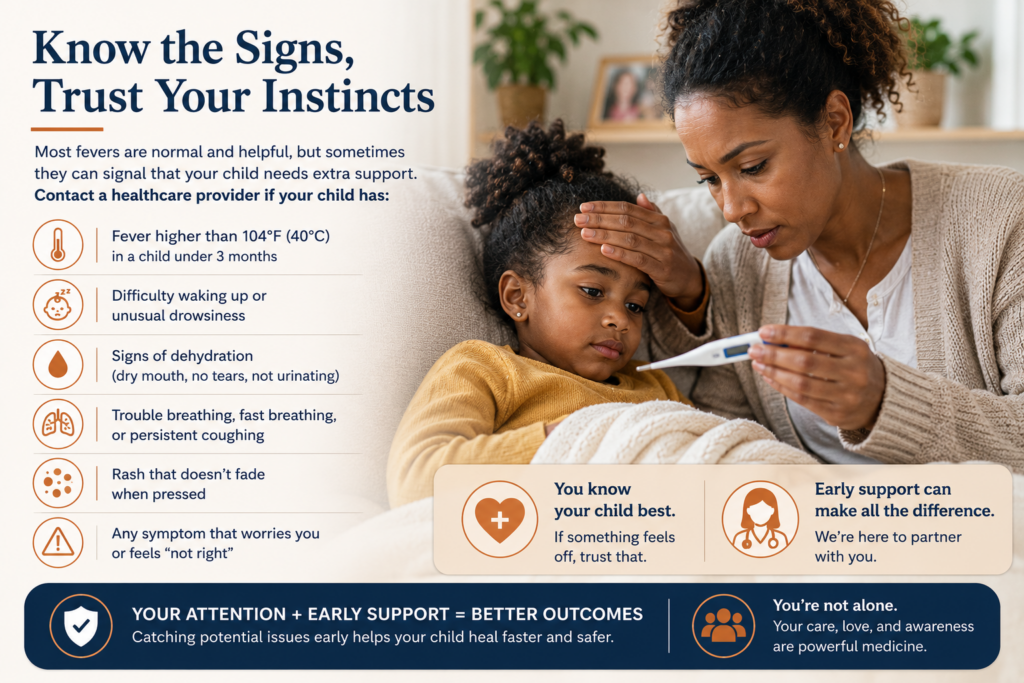
Parents should always contact a healthcare professional immediately if a child experiences:
- difficulty breathing
- severe lethargy
- dehydration
- seizures
- stiff neck
- persistent vomiting
- unresponsiveness
- bluish skin color
- symptoms worsening rapidly
- fever in very young infants
- or any symptom that feels concerning or unusual
Trust your instincts.
Ready to Learn More About Supporting Your Child’s Health Naturally?
At Ptak Family Chiropractic, our focus is helping families better understand the relationship between the nervous system, adaptation, healing, and long-term wellness.
If you would like to learn more about a neurologically focused approach to health and development, schedule a no-charge consultation with our office today (310) 473-7991.
3122 Santa Monica Blvd. Ste 102 Santa Monica, CA 90404
Research & References
- Barton D. Schmitt. Fever phobia: misconceptions of parents about fevers. American Journal of Diseases of Children. 1980;134(2):176–181.
- Barton D. Schmitt. Fever in childhood. Pediatrics. 1984;74(5 Pt 2):929–936.
- Matthew J. Kluger. Fever: role of pyrogens and cryogens. Physiological Reviews. 1991;71(1):93–127.
- David M. Morens and Jeffery K. Taubenberger. The mother of all pandemics is 100 years old (discussion of fever and immune response physiology). American Journal of Public Health. 2018;108(11):1449–1454.
- Andrew J. Pollard and Michael Levin. Vaccines and fever physiology in immune activation. Archives of Disease in Childhood. 2000;82(3):238–239.
- Katherine A. Autry et al. Fever as an adaptive immune response. Comprehensive Physiology. 2011;1(3):1341–1358.