

Summer Travel Tips for a Healthy, Pain-Free Vacation
Summer is finally here.
School is out. Families are packing their bags. Airports are filling up. Road trips are being planned. Theme parks, beaches, national parks, and family reunions are calling.
Unfortunately, many people return home from vacation with more than just souvenirs and photographs.
They come home with stiff necks, aching backs, sore hips, headaches, and pain that can linger long after the vacation ends.
The problem usually isn’t the destination.
It’s the journey.
Hours spent sitting in cars, airplanes, trains, airport terminals, and hotel rooms can place tremendous stress on the muscles, joints, and nervous system.
The good news?
A few simple habits can help keep you comfortable, active, and pain-free throughout your summer travels.
1. Remember: Your Body Was Designed to Move
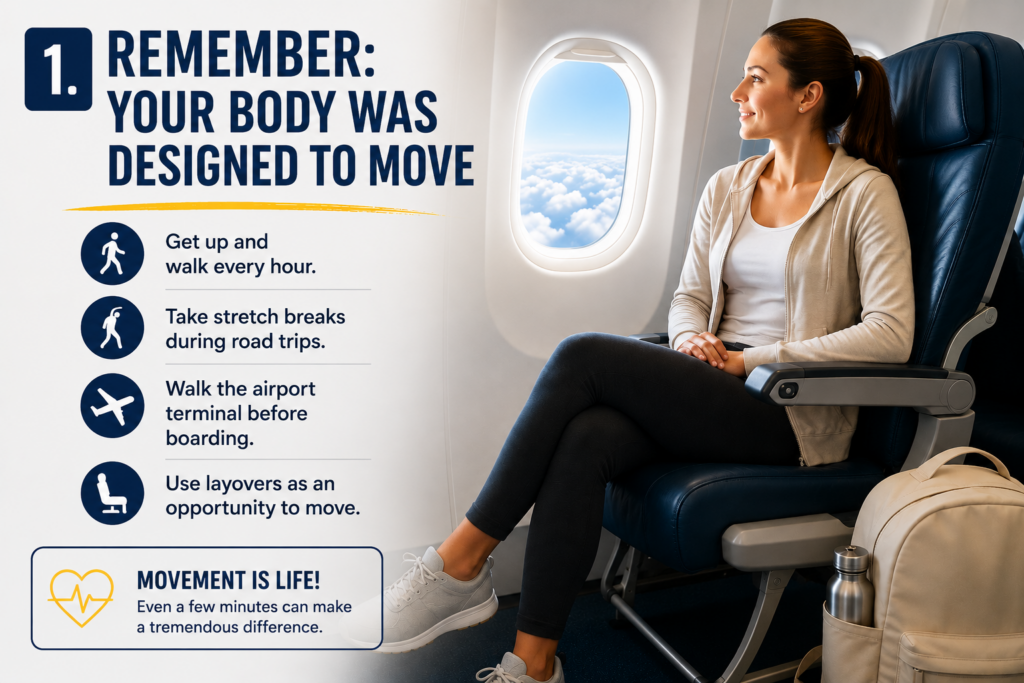
One of the biggest mistakes travelers make is remaining in the same position for hours at a time.
Whether you’re driving, flying, or riding a train, prolonged sitting can cause muscles to tighten, joints to stiffen, circulation to slow, and pressure to build throughout the spine.
Whenever possible:
- Get up and walk every hour
- Take stretch breaks during road trips
- Walk the airport terminal before boarding
- Use layovers as opportunities to move
Motion is life.
Even a few minutes of movement can make a tremendous difference in how you feel when you arrive.
2. Don’t Sit on Your Wallet
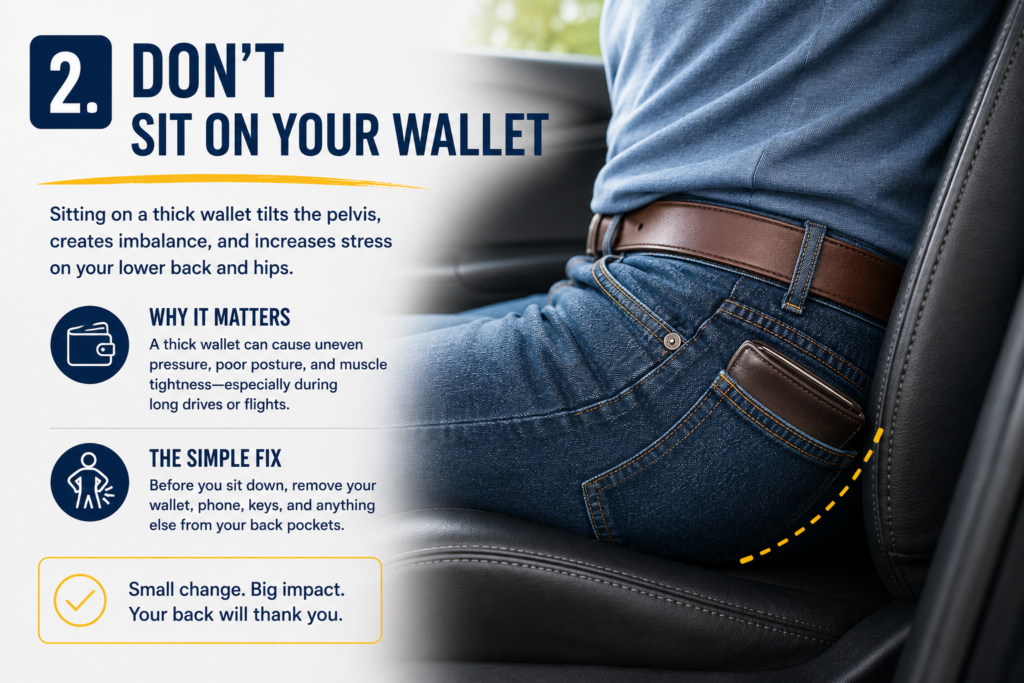
This may sound simple, but it is one of the most common causes of low back and hip discomfort during long drives.
Sitting on a thick wallet tilts the pelvis, creates imbalance between the hips, and places uneven stress on the lower back and sciatic nerve.
Before getting into the car:
- Remove your wallet
- Remove your phone
- Remove bulky items from your back pockets
Small change.
Big impact.
Your back will thank you.
3. Support Your Lower Back
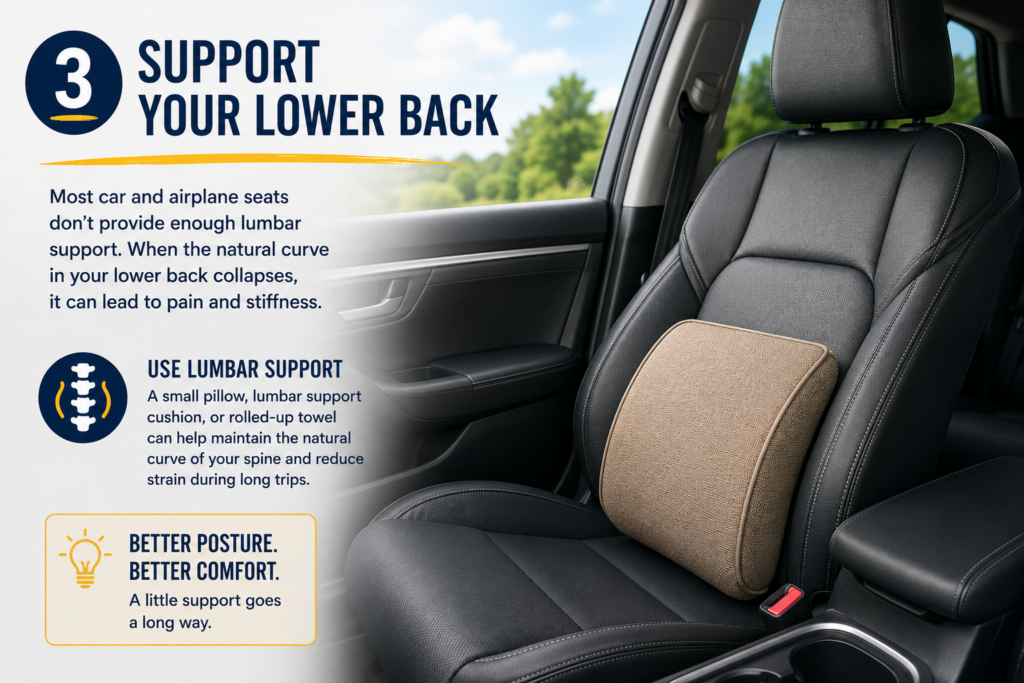
Most automobile and airplane seats provide little support for the natural curve of the lower back.
When this curve collapses, additional stress is placed on the spinal joints, discs, ligaments, and muscles.
Consider using:
- A lumbar support cushion
- A small travel pillow
- A rolled-up towel
A little support can go a long way toward reducing stiffness and fatigue during long trips.
4. Keep Your Head Up
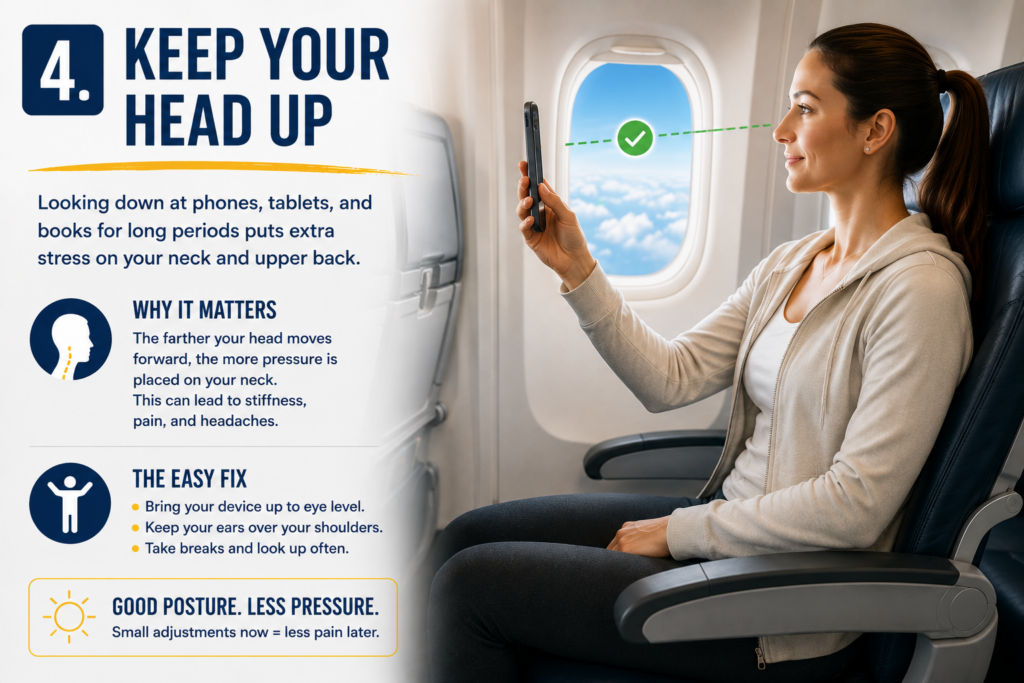
Many travelers spend hours looking down at phones, tablets, books, and laptops.
Unfortunately, the farther the head moves forward, the more stress is placed on the neck and upper back.
Instead:
- Bring your device up toward eye level
- Keep your ears over your shoulders
- Take frequent posture breaks
Good posture means less pressure on your muscles, joints, and nervous system.
5. Stay Hydrated
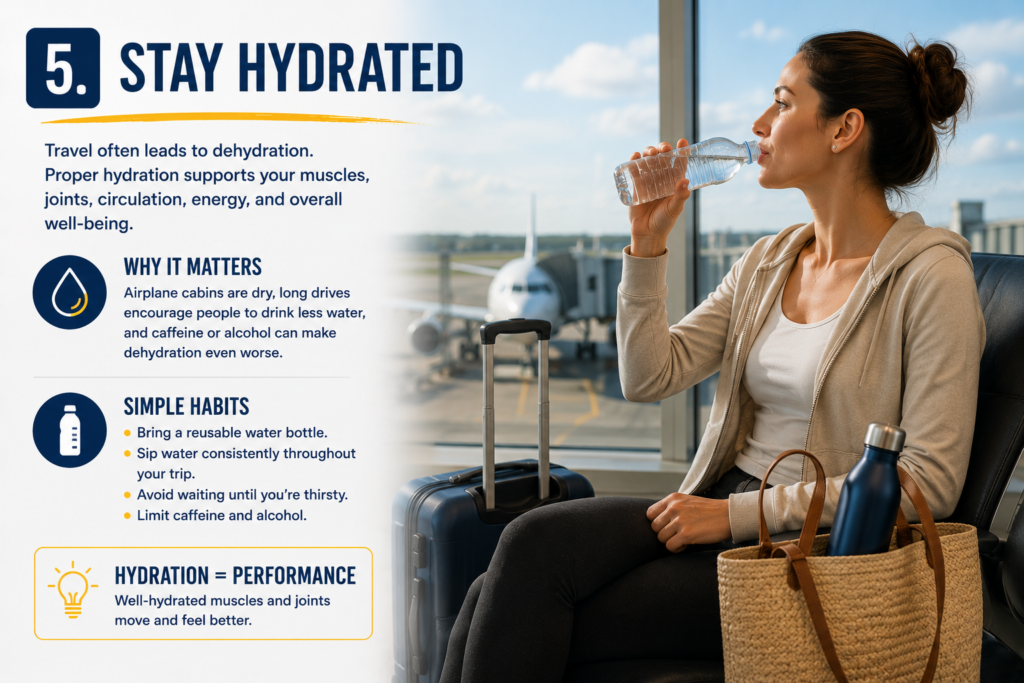
Travel often leads to dehydration.
Airplane cabins are extremely dry. Long drives encourage people to drink less water. Coffee, soda, and alcohol can make dehydration even worse.
Proper hydration supports:
- Muscle function
- Joint mobility
- Circulation
- Energy levels
- Nervous system performance
A simple rule:
Drink water consistently throughout your trip rather than waiting until you’re thirsty.
Well-hydrated muscles and joints simply work better.
6. Stretch Your Hips
One of the most common causes of travel-related back pain is tight hip flexor muscles.
When we sit for extended periods, the muscles at the front of the hips shorten and tighten.
These tight muscles can pull on the pelvis and increase stress on the lower back.
After a long drive or flight:
- Stand up
- Walk for a few minutes
- Perform a gentle hip flexor stretch
- Hold for 30 seconds per side
Many people experience immediate relief.
Remember:
Tight hips often create sore backs.
7. Lift Luggage Like an Athlete
Insert Image #7 Here
Image Title: Lift Luggage Like an Athlete
Many vacation injuries occur before the vacation even begins.
Lifting heavy luggage into the trunk, onto baggage carousels, or into overhead compartments can strain the back if done improperly.
Remember:
- Bend your knees
- Keep the load close to your body
- Avoid twisting while lifting
- Use both hands whenever possible
- Ask for help when necessary
One careless lift can create pain that follows you throughout your entire vacation.
Dr. Ptak’s Summer Travel Checklist
Before You Leave:
 Drink water
Remove items from back pockets
Stretch for 5 minutes
Pack lighter when possible
During Travel:
Move every hour
Maintain lumbar support
Keep your head up
Stay hydrated
After Arrival:
Walk for 10 minutes
Stretch your hips
Take several deep breaths
Give your body time to recover from the journey
Dr. Ptak’s Summer Challenge
On your next trip, set a timer and commit to moving for at least 2–5 minutes every hour.
Walk.
Stretch.
Stand.
Move.
Your body will feel dramatically different by the time you reach your destination.
When Should You Seek Professional Help?
Temporary stiffness after a long trip is common.
However, persistent pain, numbness, tingling, weakness, headaches, dizziness, or symptoms that continue long after your vacation may indicate an underlying problem that deserves professional evaluation.
Don’t ignore symptoms that are becoming more frequent, more intense, or lasting longer than expected.
Final Thoughts: Enjoy the Journey
Vacations are supposed to create memories—not back pain.
A little preparation, regular movement, proper hydration, proper lifting, and a few simple stretches can help keep your muscles, joints, and nervous system functioning at their best all summer long.
From all of us at Ptak Family Chiropractic, we wish you a safe, healthy, and adventure-filled summer.
Remember:
The body was designed to move.
Motion is life.
The more you move, the better you tend to feel.
Ptak Family Chiropractic
Santa Monica, California
Helping individuals and families improve their health through movement, posture, spinal health, and nervous system function.
 (310) 473-7991
