
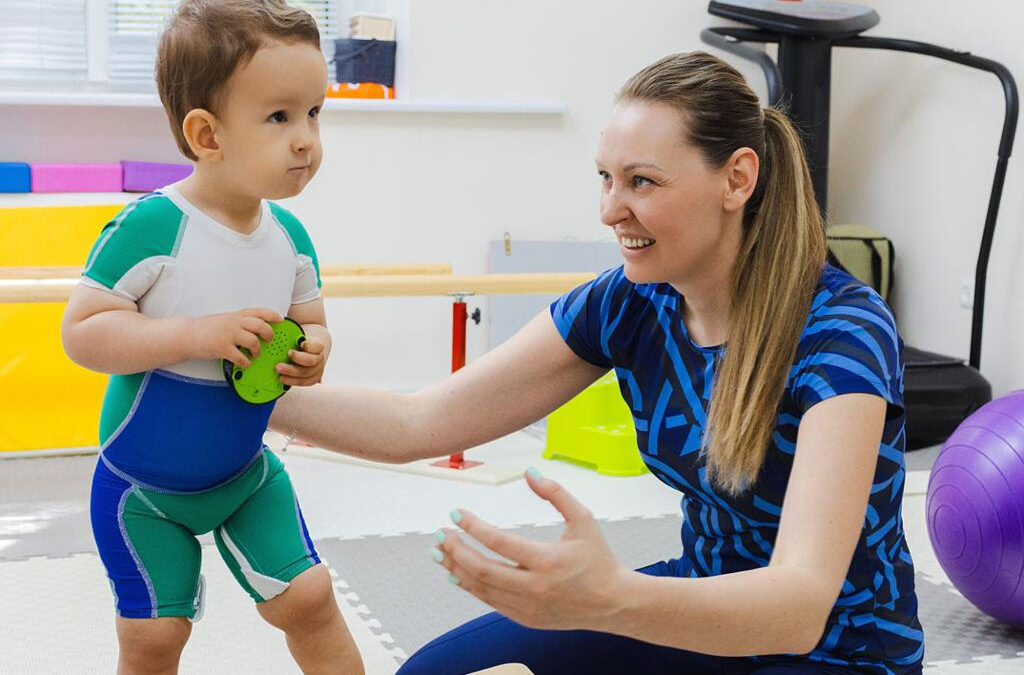

When a child struggles with focus, behavior, learning, or social interaction, most people immediately think of attention.
But what if attention isn’t the real problem?
What if the challenge is how the brain is developing and communicating?
Children labeled with ADHD are often bright, creative, and full of potential. The issue is not intelligence. It is how well different parts of the brain are working together.
Modern neuroscience continues to show that many of these challenges are linked to immature or underdeveloped neural connections. Certain areas of the brain may not be communicating efficiently, which can affect focus, behavior, emotional regulation, and learning.
This can show up as difficulty concentrating, impulsivity, frustration, poor coordination, trouble sitting still, or struggles in school.
The most important thing to understand is this.
The brain is not fixed.
It is adaptable.
It can change and improve when given the right input.
Movement Is Brain Development
Movement is not just physical.
It is neurological.
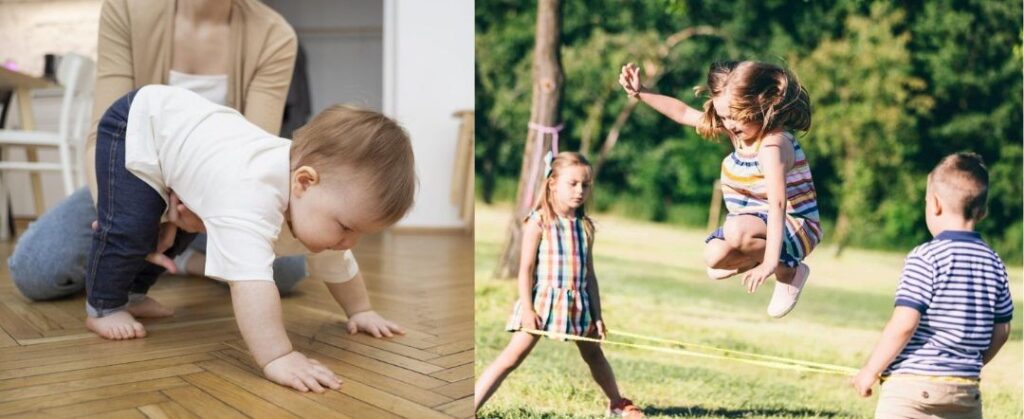
Every movement a child makes sends information into the brain. That input helps organize, strengthen, and refine neural pathways.
This is why telling a child to “sit still and focus” can actually work against development.
The brain builds through movement.
Especially movements that involve coordination, balance, rhythm, and crossing the midline of the body.
When these types of movements are missing or underdeveloped, the brain may not receive the input it needs to mature properly.
The Missing Link: Primitive Reflexes
There is another critical piece that is often overlooked in children with ADHD and learning challenges.
Primitive reflexes.
These are automatic movement patterns present at birth. They are essential for survival and early development, helping infants interact with their environment before conscious control is established.
As the brain matures, these reflexes are supposed to integrate, meaning they fade away and are replaced by more advanced, voluntary movement patterns.
But sometimes, they do not fully integrate.
When primitive reflexes remain active beyond early childhood, they can interfere with how the brain and body communicate.
This can contribute to:
Difficulty sitting still
Poor posture and coordination
Trouble focusing or following instructions
Emotional reactivity
Challenges with reading and writing
Sensory sensitivities
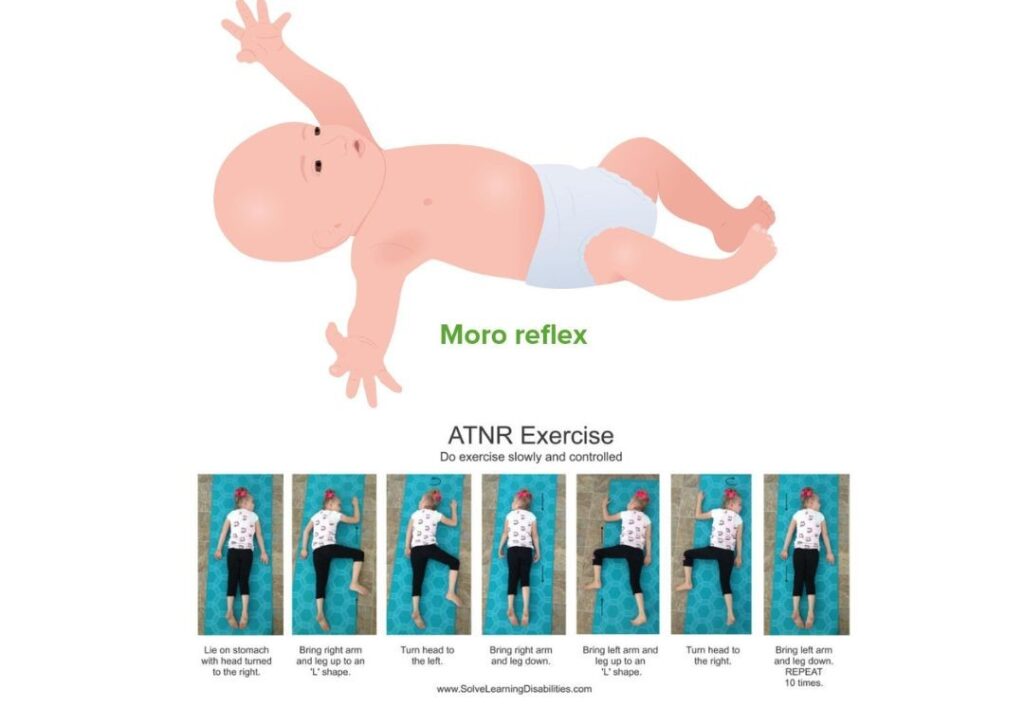
For example, a retained Moro reflex, often called the startle reflex, can keep a child in a constant state of alertness. This makes it difficult to relax, regulate emotions, and maintain focus.
A retained ATNR reflex can interfere with crossing midline, which is essential for reading, writing, and coordinated movement.
This is where movement-based exercises become powerful.
They are not random.
They are designed to help integrate these reflexes and support more mature brain function.
When the foundation improves, everything built on top of it becomes easier.
Four Brain-Building Exercises You Can Do at Home
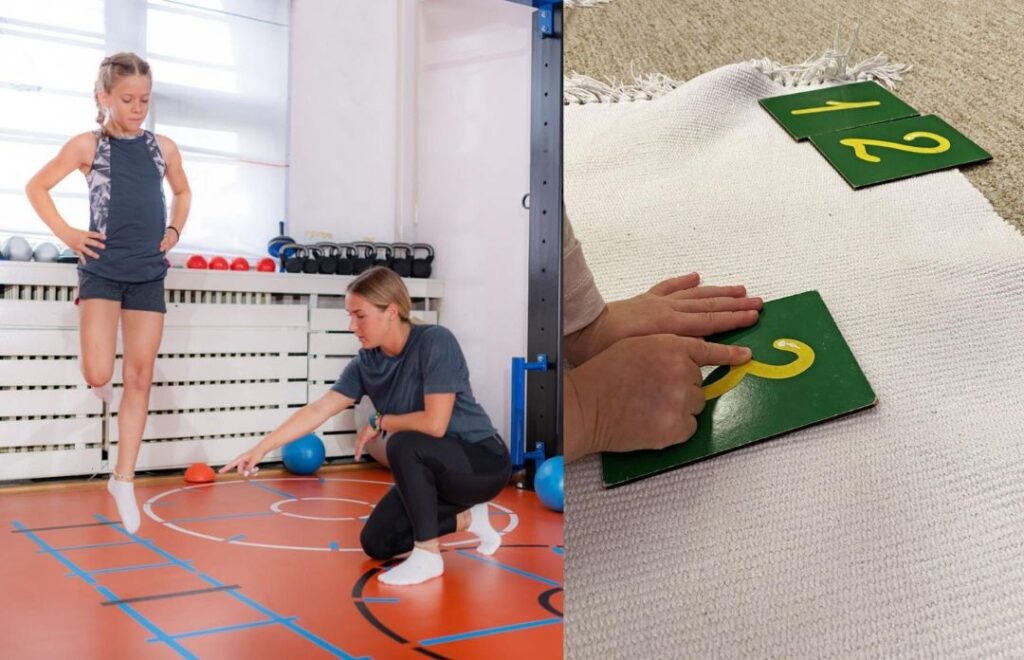
These exercises stimulate different parts of the brain and help improve coordination, awareness, and control.
They are simple, but when done consistently, they can be very effective.
Aerobic Activation: Jumping Jacks
Perform 20 jumping jacks followed by 15 seconds of rest. Complete 3 rounds.
Challenge: Perform with eyes closed.
This improves coordination between both sides of the brain and helps regulate energy and attention.
Proprioceptive Stability: Superman
Lie face down with arms extended. Lift one arm and the opposite leg and hold for 15 seconds. Switch sides.
Challenge: Lift all four limbs and hold steady.
This strengthens core stability and improves body awareness, which supports posture and focus.
Tactile Awareness: Number Tracing
With eyes closed, trace numbers on your child’s palm and have them identify each number.
Challenge: Trace multiple numbers in sequence.
This enhances sensory processing and the brain’s ability to interpret input without relying on vision.
Cognitive Control: Contrasting Commands
When you raise one finger, your child raises two. When you raise two, they raise one.
Use a random sequence and repeat multiple times.
This builds impulse control, attention, and executive function.
Why Consistency Changes Everything
The power of these exercises is not in doing them once.
It is in doing them consistently.
The brain develops through repetition. Each time these pathways are activated, they become stronger and more efficient.
Small, daily inputs create meaningful change over time.
A Different Approach to ADHD
At Ptak Family Chiropractic, we take a whole-child approach.
The brain and body are deeply connected. Movement influences brain function. Brain function influences behavior, learning, and emotional regulation.
When we improve how the body moves and how the nervous system communicates, we create the conditions for the brain to develop more fully.
This is not about masking symptoms.
It is about addressing the foundation.
Helping Your Child Build a Stronger Future
If your child is struggling with focus, behavior, or learning challenges, there is always a reason.
And more importantly, there is always potential for change.
When we understand how the brain develops and support it properly, we give children the opportunity to grow, adapt, and thrive.
If you would like to better understand what may be affecting your child and what steps you can take, we are here to help.
Call our office or schedule a consultation today. (310) 473-7991.
Let’s build a stronger foundation for your child’s focus, learning, and life.