
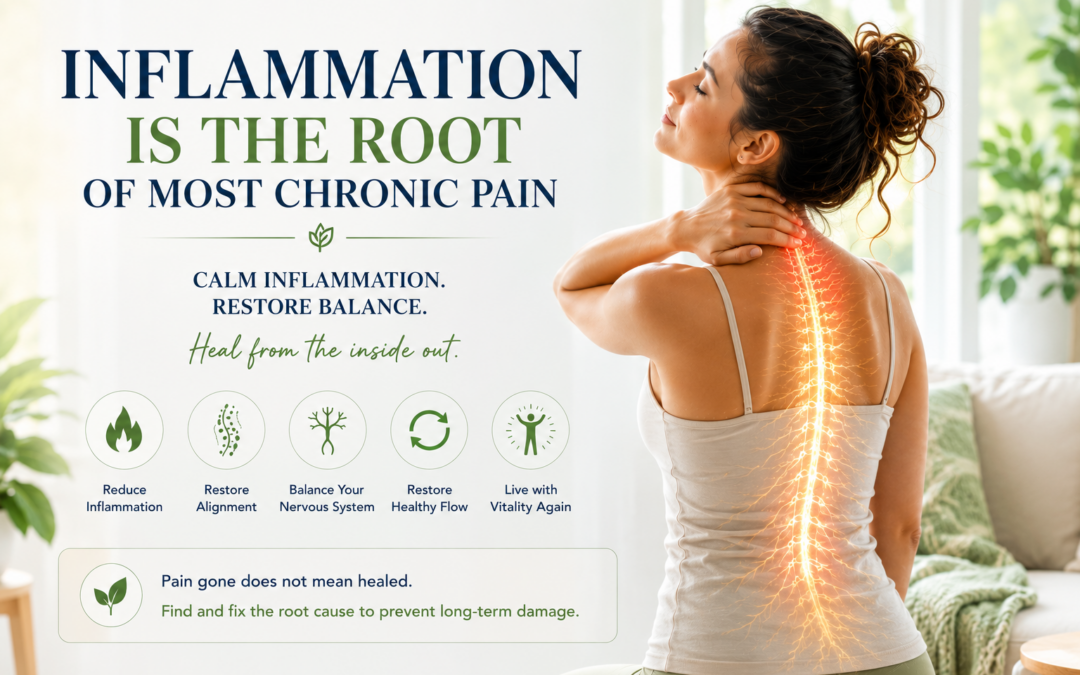
Inflammation is one of the most misunderstood processes in the human body.
Most people think inflammation is bad.
It is not.
Inflammation is actually one of the body’s most important survival mechanisms. Without it, you could not heal from a cut, recover from an injury, fight infection, or repair damaged tissue.
The problem is not inflammation itself.
The problem is when inflammation never turns off.
That is when inflammation stops being protective and starts becoming destructive.
Today, chronic inflammation is connected to nearly every major health challenge people face:
• Neck pain • Back pain • Sciatica • Arthritis • Headaches and migraines • Fatigue • Digestive problems • Autoimmune conditions • Brain fog • Anxiety and stress overload • Heart disease • Diabetes • Weight gain • Hormonal imbalance • Degeneration • Accelerated aging
At Ptak Family Chiropractic, we believe one of the most overlooked causes of chronic inflammation is stress and dysfunction within the nervous system itself.
Because your nervous system controls healing.
And when the nervous system is under stress, the body can become trapped in a constant inflammatory state.
What Is Inflammation?
Inflammation is your body’s natural repair response.
When tissue is injured, irritated, infected, or stressed, the immune system releases chemicals that increase blood flow, activate repair cells, and begin the healing process.
Short-term inflammation is healthy.
Examples include:
• Swelling after an ankle sprain • Redness around a cut • Soreness after exercise • Fever during infection
This type of inflammation is temporary and purposeful.
The body responds, repairs, and returns to balance.
Chronic inflammation is different.
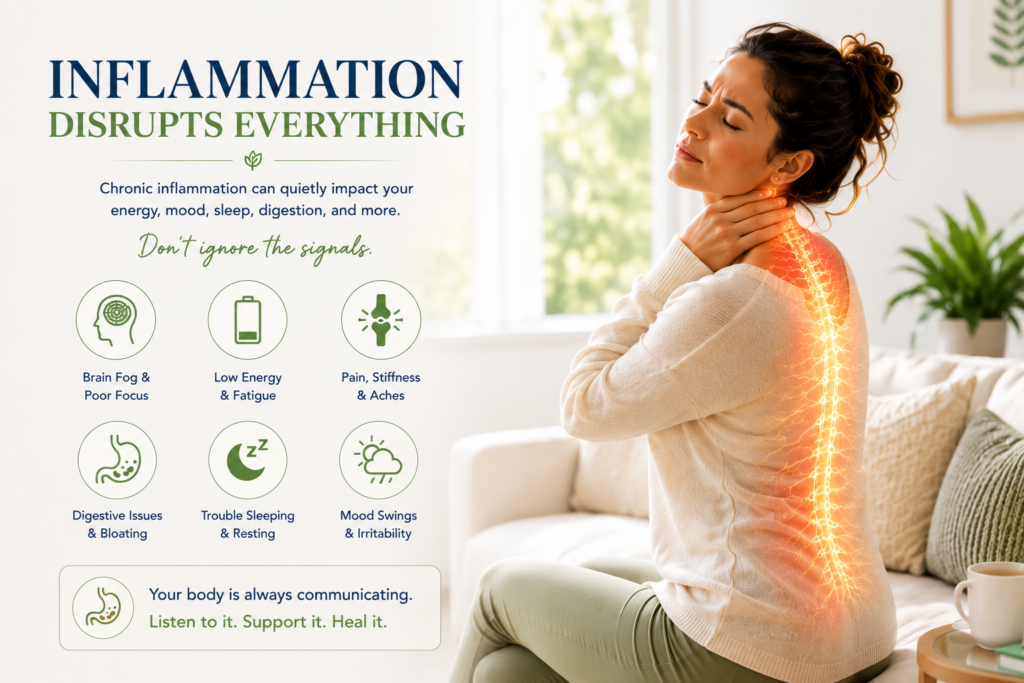
Chronic inflammation occurs when the body stays in a constant state of irritation, stress, or immune activation.
Instead of healing, tissues begin breaking down.
The body essentially becomes stuck in “fight, protect, survive” mode.
The Nervous System and Inflammation
One of the most important concepts people miss is that inflammation is heavily controlled by the nervous system.
Your brain and spinal cord constantly monitor the environment and decide:
• Is the body safe? • Is healing possible? • Should we repair or protect?
When the nervous system perceives ongoing stress, instability, irritation, or danger, inflammatory chemicals can remain elevated.
This is why people under chronic stress often experience:
• Tight muscles • Digestive problems • Fatigue • Poor sleep • Headaches • Increased pain sensitivity • Slower healing
The body is not malfunctioning.
It is adapting.
At Ptak Family Chiropractic, our focus is not simply covering symptoms.
Our goal is to help restore proper movement, reduce nervous system stress, improve communication between the brain and body, and help the body return to a more balanced healing state.
Common Causes of Chronic Inflammation
Inflammation rarely comes from just one source.
Most people are dealing with multiple layers of physical, chemical, emotional, and neurological stress simultaneously.
1. Physical Stress and Poor Posture
Poor posture places enormous stress on the spine and nervous system.
Forward head posture, sitting for hours, repetitive movements, and lack of motion create constant irritation within joints, muscles, ligaments, and discs.
Over time, this mechanical stress produces inflammation.
For example:
When the head moves forward just a few inches, the stress placed on the neck and upper back increases dramatically.
Muscles tighten.
Joints compress.
Discs lose hydration.
The nervous system becomes irritated.
Inflammation rises.
This is one reason why so many people today suffer from:
• Tech neck • Tension headaches • Shoulder tightness • TMJ problems • Mid-back pain • Low-back pain
The body is compensating for long-term stress.
2. Injury and Trauma
Car accidents, sports injuries, falls, repetitive strain, birth trauma, and even old injuries can create long-lasting inflammatory patterns.
Sometimes people recover from the initial injury but never fully restore proper movement and nervous system function.
The body adapts around the injury.
Compensation develops.
Inflammation becomes chronic.
This is why someone can say:
“I got hurt years ago, but I still don’t feel the same.”
3. Stress and Emotional Overload
Mental and emotional stress are real inflammatory triggers.
When the body is constantly producing stress hormones like cortisol and adrenaline, the nervous system shifts into survival mode.
Over time this can:
• Increase inflammatory chemicals • Disrupt digestion • Affect immune function • Increase muscle tension • Interfere with sleep • Slow recovery
The body does not separate emotional stress from physical stress.
To your nervous system, stress is stress.
4. Poor Sleep
The body performs much of its repair work during sleep.
Poor sleep has been strongly associated with elevated inflammation.
Lack of quality sleep may contribute to:
• Increased pain sensitivity • Slower tissue repair • Weight gain • Hormonal imbalance • Brain fog • Fatigue
Many people are surprised to discover that improving spinal mechanics, reducing tension, and calming the nervous system can improve sleep quality.
5. Diet and Processed Foods
Food can either support healing or contribute to inflammation.
Highly processed foods, excessive sugar, refined oils, alcohol, and chronic dehydration may increase inflammatory stress within the body.
Some people also react to specific foods.
Common inflammatory triggers may include:
• Excess sugar • Highly processed foods • Excess alcohol • Artificial additives • Food sensitivities • Chronic dehydration
Inflammation in the gut can also affect the brain and nervous system through what is known as the gut-brain connection.
6. Lack of Movement
Movement helps circulate nutrients, improve lymphatic drainage, hydrate discs, stimulate the brain, and support healing.
The body was designed to move.
When movement decreases, stiffness and inflammation often increase.
This is one reason many people feel worse after sitting too long.
Inflammation and Pain

One of the most important concepts people can understand is this:
Most pain is deeply connected to inflammation.
In many ways, pain can be thought of as the body’s inflammatory alarm system.
Pain is often the signal.
Inflammation is often part of the underlying process.
That does not necessarily mean severe damage is present.
It means the body is perceiving stress, irritation, overload, instability, or tissue dysfunction and responding protectively.
This is why two people can experience the same physical stress very differently.
The nervous system and inflammatory response determine much of how pain is experienced.
When inflammation rises, nerves become more sensitive.
Muscles tighten.
Movement changes.
Compensation patterns develop.
The brain becomes more protective.
This is why stress, lack of sleep, poor posture, old injuries, dehydration, emotional overload, repetitive motion, and even diet can all influence pain levels.
They all influence inflammation and nervous system stress.
At Ptak Family Chiropractic, we believe one of the most important questions is not simply:
“Where does it hurt?”
But rather:
“Why is the body inflamed and stressed in the first place?”
Pain and inflammation are closely connected, but they are not the same thing.
Inflammation can sensitize nerves and increase pain signals.
This may cause:
• Burning • Aching • Throbbing • Tightness • Stiffness • Sharp pain • Increased sensitivity
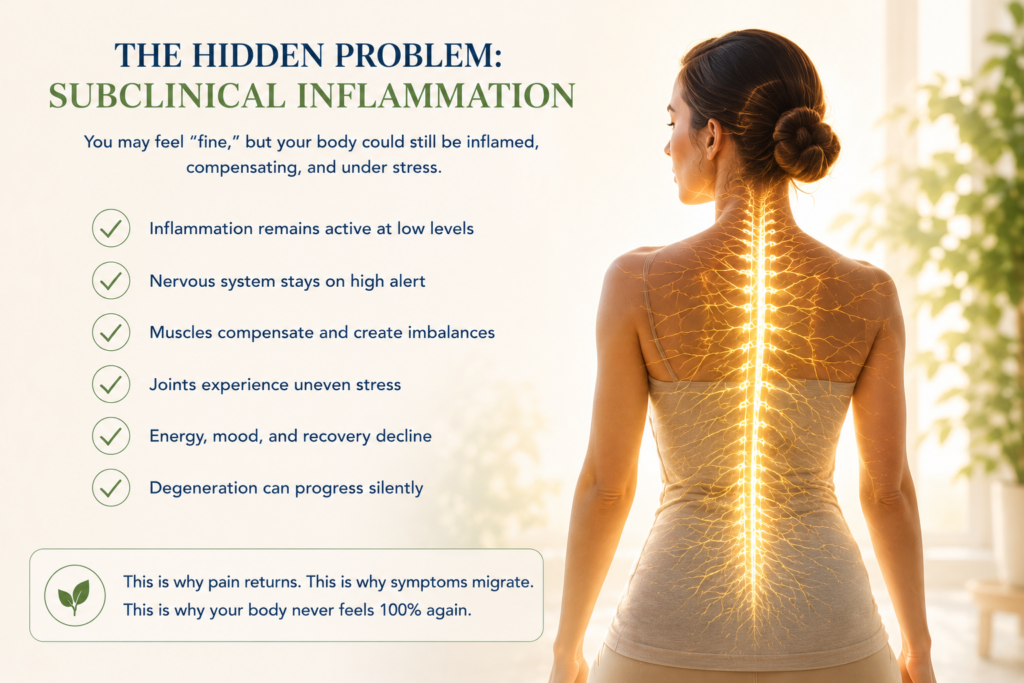
However, many people have inflammation long before severe pain develops.
This is why early care matters.
Waiting until pain becomes unbearable often means the body has been compensating for a long time.
The Chiropractic Perspective on Inflammation
At Ptak Family Chiropractic, we look at inflammation differently.
Instead of asking only:
“Where does it hurt?”
We ask:
“Why is the body under stress in the first place?”
Inflammation is often the result of:
• Abnormal spinal movement • Joint restriction • Nervous system irritation • Muscle imbalance • Poor posture • Chronic stress adaptation • Decreased motion • Disc degeneration and dehydration
Chiropractic care focuses on restoring motion and improving nervous system function.
When spinal joints stop moving properly, surrounding tissues become stressed.
Inflammation increases.
Muscles tighten.
Compensation spreads.
The brain begins adapting around dysfunction.
Specific chiropractic adjustments help restore movement to areas that are not functioning properly.
This may help:
• Reduce mechanical stress • Improve mobility • Improve circulation • Decrease muscle tension • Support nervous system communication • Improve recovery and healing
Many patients report improvements not only in pain, but also in:
• Sleep • Energy • Breathing • Flexibility • Posture • Recovery time • Stress levels
Because the nervous system influences the entire body.
Ice vs Heat: What Actually Helps Inflammation?
One of the most common questions people ask is:
“Should I use ice or heat?”
The answer depends on the situation.
When Ice May Help
Ice is generally most useful during acute inflammation and recent injury.
Examples include:
• Sprains • Swelling • Acute flare-ups • Fresh injuries • Sudden inflammation
Ice may help:
• Reduce swelling • Slow inflammatory activity temporarily • Numb pain • Calm irritated tissue
However, excessive icing for long periods may also slow circulation and tissue repair.
For many chronic conditions, endless icing may not address the real problem.
When Heat May Help
Heat generally helps improve circulation and relax tissue.
Heat may be helpful for:
• Muscle tightness • Chronic stiffness • Restricted movement • Old injuries • Tension patterns
But not all heat is equal.
Moist Heat vs Dry Heat
Moist heat is often preferred because moisture allows heat to penetrate tissues more effectively.
Examples of moist heat include:
• Warm moist towels • Steam heat • Warm baths • Moist heating pads
Dry heat can sometimes dehydrate tissues further.
Moist heat often creates a deeper relaxing effect and may help improve circulation more effectively.
This is one reason warm showers and baths often feel better than dry heating pads alone.
Other Natural Ways People Reduce Inflammation
Reducing inflammation often requires a whole-body approach.
Movement and Exercise
Movement stimulates circulation, lymphatic flow, joint nutrition, and brain activation.
Walking, stretching, mobility exercises, and strength training can all support healthy inflammatory balance.
Hydration
Hydration is critical.
Discs, muscles, fascia, joints, and even the brain depend on proper hydration.
Dehydrated tissues become less resilient and more irritated.
At our office, hydration and movement-based spinal warm-up protocols are a major part of care.
Sleep Recovery
Sleep is one of the body’s greatest anti-inflammatory tools.
Consistent sleep supports:
• Tissue repair • Hormone balance • Nervous system recovery • Brain detoxification • Immune regulation
Nutrition
Many people reduce inflammatory stress by emphasizing:
• Whole foods • Vegetables • Healthy fats • Lean proteins • Omega-3 rich foods • Reducing processed foods and sugar
Stress Reduction
Breathing exercises, meditation, prayer, walking outdoors, mindfulness, and nervous system regulation strategies may help calm inflammatory stress.
When the nervous system shifts out of survival mode, healing improves.
Chiropractic Care
One of the goals of chiropractic care is helping the body function more efficiently.
Better motion.
Better communication.
Better adaptability.
The body is designed to heal.
But healing is harder when the nervous system is under constant stress.
Inflammation and Aging
Chronic inflammation is increasingly being associated with accelerated aging.
Some researchers now use the term “inflammaging” to describe the relationship between chronic low-grade inflammation and degeneration.
Over time, chronic inflammation may contribute to:
• Disc degeneration • Joint breakdown • Reduced mobility • Brain decline • Muscle loss • Cardiovascular stress • Reduced recovery capacity
This is why prevention matters.
Waiting until severe degeneration develops often means the body has been compensating for years.
The Goal Is Not Just Less Pain
Most people think health means:
“I don’t hurt.”
But true health is adaptability.
Can your body:
• Recover? • Move? • Heal? • Adapt to stress? • Maintain energy? • Function efficiently?
Inflammation becomes dangerous when the body loses its ability to return to balance.
That is why our focus is not simply symptom relief.
It is helping the body function better.
Final Thoughts
Inflammation is not the enemy.
It is a message.
A signal that the body is responding to stress.
Sometimes that stress is physical.
Sometimes chemical.
Sometimes emotional.
Most of the time, it is a combination of all three.
The question is not simply how to suppress inflammation.
The real question is:
Why is the body inflamed in the first place?
At Ptak Family Chiropractic, our goal is to help identify underlying stress patterns, restore movement, support nervous system function, and help the body move toward healing naturally.
Because when the nervous system functions better, the body often functions better.
And when the body functions better, healing becomes possible.

Ready to Find Out What May Be Driving Your Inflammation?
If you are dealing with chronic pain, stiffness, headaches, fatigue, poor posture, recurring injuries, or feel like your body is constantly tense and inflamed, it may be time to look deeper.
A comprehensive chiropractic and nervous system evaluation may help identify hidden stress patterns affecting your health.
Contact Ptak Family Chiropractic today to schedule your consultation and discover a different way to approach inflammation, healing, and long-term health.
(310) 473-7991
www.ptakfamilychiropractic.com
3122 Santa Monica Blvd. Ste 102 Santa Monica, CA 90404