
Maybe the muscles that feel tight aren’t the muscles that need stretching—or strengthening.
You stretch your neck. You massage it. Maybe you use heat.
It feels better.
Then a few hours later—or the next morning—it’s tight again.
Why?
Because sometimes the muscles that feel tight aren’t the problem.
They’re the muscles working overtime.
The Problem May Be on the Other Side
The muscles in the back of your neck are relatively large and powerful. They help support and
control your head all day long, as do the upper trapezius muscles.
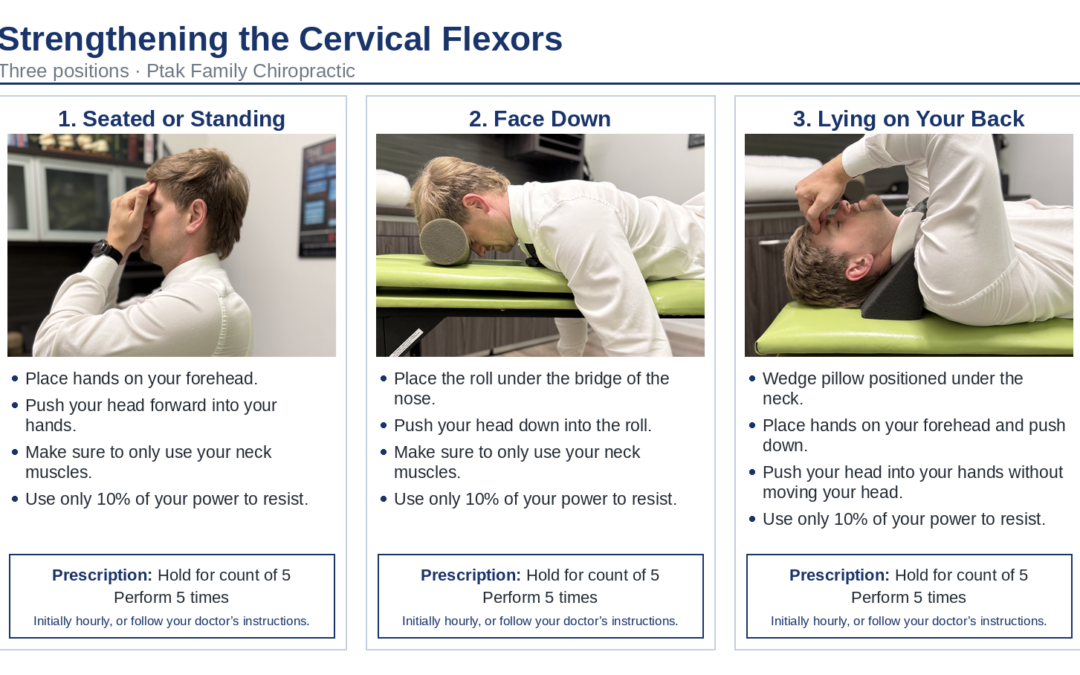
But the muscles in the front of your neck—the cervical flexors—are also essential.
In our clinical experience, the strength and endurance of the cervical flexor muscles are critically
important to maintaining normal cervical posture and the natural lordotic curve. When those muscles become weak relative to the more powerful cervical extensors and trapezius muscles, we
frequently see forward head posture and loss—or even reversal—of the normal cervical curve.
Now the muscles in the back of the neck have to work even harder.
They tighten. They fatigue. They ache.
And what do most people do?
Stretch them again.
It may feel good—but it may be treating the compensation rather than correcting the imbalance.
Your Neck Is Also Talking to Your Brain
There’s another piece most people never hear about.
The joints in your neck are filled with sensory receptors that continually send information to
your brain about position and movement.
This is part of proprioception—your body’s awareness of where it is in space.
Your nervous system uses that information to help coordinate posture, muscle tone and balance.
So, a joint problem isn’t simply a bone or muscle problem. It is also a neurological and
proprioceptive problem.
When normal neck-joint movement changes, the information reaching the nervous system can
change. Muscle tone and function can become unbalanced, and some muscles may begin
compensating for others.
That’s why we don’t look at a chronically tight neck as simply a “tight muscle.”
The joints, nerves and muscles work together.
So, What Can You Actually Do?
If your neck is continually tight, don’t automatically stretch what’s tight.
Find out why it’s tight.
We look at questions such as:
● Is your neck moving properly?
● Are the cervical flexors weak or lacking endurance?
● Is your head moving forward?
● Has your normal cervical curve changed?
● Are the muscles in the back working overtime?
Then we address what we actually find.
That may include restoring proper joint movement and alignment, activating and strengthening
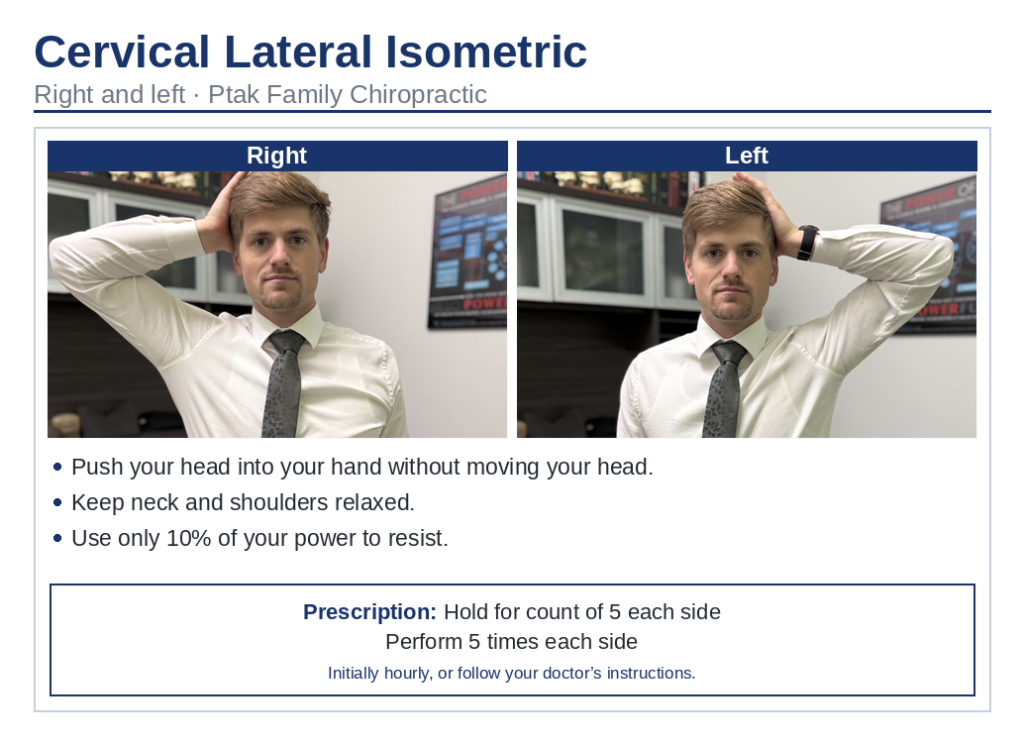
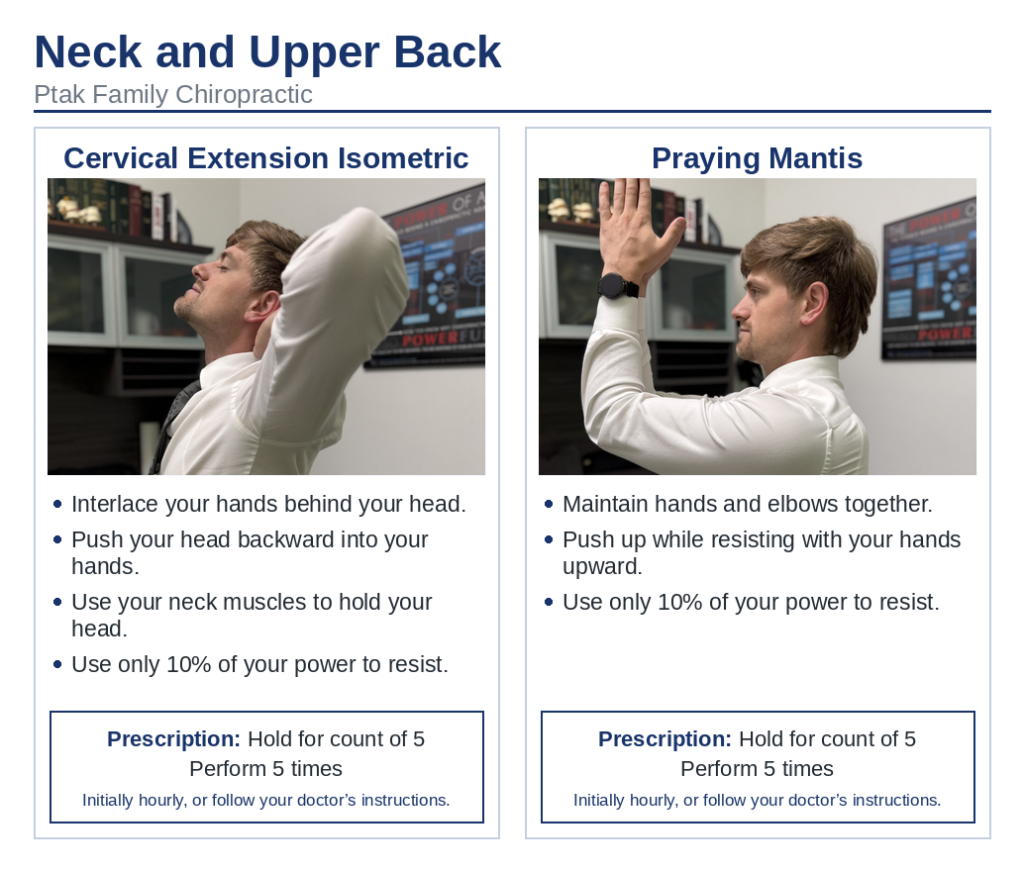
the cervical flexors, improving posture and proprioceptive control, and eventually strengthening
the entire neck and upper back in balance.
The key is doing things in the right order.
Position first. Activate second. Strengthen third.
The Goal Isn’t a Better Stretch
The goal is a neck that doesn’t need to keep tightening in the first place.
So the next time you find yourself rubbing or stretching those same muscles, ask a different
question:
“What isn’t doing its share?”
Because sometimes…
Tight isn’t the problem.
Tight is the compensation.
Restore movement. Strengthen what’s weak. Rebalance the system.
Got Questions? Ask One of Our Doctors.
Ptak Family Chiropractic
3122 Santa Monica Blvd., Suite 102
Santa Monica, CA 90404
310-473-7991