
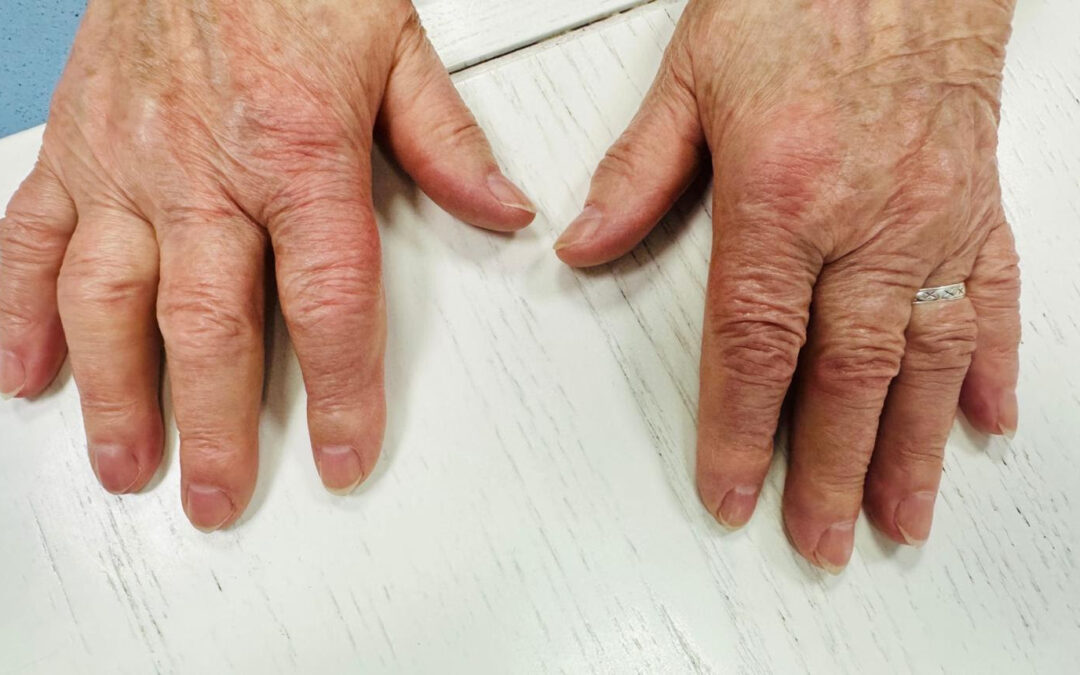

If you have been diagnosed with arthritis, you were likely told some version of this. It is wear and tear. It comes with age. It is something you will have to manage. But what if that is not the full story?
What if arthritis is not the beginning of decline, but the result of patterns that have been building for years?
Because arthritis does not begin when you feel pain, and it does not begin when you get older. It begins much earlier.
To understand arthritis more clearly, we need to look at what it really is. There are two primary categories people are diagnosed with. Osteoarthritis and autoimmune arthritis. They share a name, but they are very different processes.
Osteoarthritis is often described as wear and tear, but that explanation is incomplete. Your body does not simply wear out. It adapts. When joints are not moving properly, when there is restriction, imbalance, or repetitive stress, the forces through that joint begin to change. Pressure becomes uneven. Motion becomes altered. Inflammation begins. Over time, this leads to degeneration.
Autoimmune arthritis, such as Rheumatoid Arthritis, follows a different path. In these cases, the immune system mistakenly attacks the body’s own tissues, creating inflammation and damage within the joints. But even here, the joints are not acting alone. The immune system is closely connected to the nervous system, and that connection changes everything.
Whether you are dealing with osteoarthritis or autoimmune arthritis, there is one system that connects them both. The nervous system.
Every joint in your body is constantly communicating with your brain. Movement is not just mechanical. It is neurological. When a joint moves properly, it sends clear, accurate signals to the brain. This supports coordination, balance, muscle function, and even how your body regulates inflammation. When motion is restricted, those signals change. Over time, that changes how your body moves, how it compensates, and how it functions.

One of the most important truths about arthritis is this. It does not start with pain. It starts with patterns.
Movement is essential for joint health. Every time a joint moves, it draws in nutrients, pushes out waste, and stimulates the nervous system. But when movement is reduced, even for short periods, things begin to change.
Within days to weeks, reduced motion can lead to decreased fluid exchange, increased stiffness, and altered neurological communication. Over time, this leads to compensation patterns, chronic imbalance, early degeneration, and subluxation.
Subluxation is when a joint is not moving or functioning properly, interfering with how the nervous system communicates with the body. This is where arthritis truly begins. Not with pain, but with dysfunction.

At Ptak Family Chiropractic, we are seeing early signs of degeneration in patients as young as 13 years old. That would have been rare decades ago. But today’s environment has changed.
People are sitting more, moving less, spending hours on devices, repeating the same movements daily, and living in constant stress. The body adapts to whatever it is exposed to most. And over time, those adaptations become structure.
The same patterns that create stiffness in your teens become arthritis later in life.


Here is what most people are never told. The body has the ability to change.
When the right inputs are introduced consistently, structure and function can improve.
At Ptak Family Chiropractic, we utilize a comprehensive corrective care approach designed to restore motion, improve neurological communication, and support long-term structural change.
This includes specific chiropractic adjustments combined with wobble chair exercises to promote motion and disc hydration, cervical dynamic traction to improve alignment, fulcrum exercises to support spinal structure, head weighting to retrain posture, body weighting systems to improve balance and neurological input, and hydration strategies to support disc health.
These are performed both in-office and at home, often twice per day.
Over time, we have seen measurable improvements in disc spacing, joint function, posture, and movement patterns. Not overnight, but through consistency.
This is where chiropractic care changes the trajectory. Not by masking symptoms, but by restoring function.
When motion improves, joint stress becomes more balanced, muscles function more efficiently, and neurological communication improves.
In osteoarthritis, this can help reduce abnormal wear and improve movement. In autoimmune conditions, chiropractic care does not treat the disease itself, but it supports the nervous system, helping the body regulate and adapt more effectively.
Patients often experience improvements in pain, mobility, energy, sleep, and overall quality of life.

You are not your diagnosis. Your body is not breaking down. It is adapting. And when you change the inputs, you change the outcome.
Too often, people are told to wait, to manage, to accept limitation. But there is another path. A path focused on function over symptoms, cause over condition, and restoration over resignation.
Whether you are 13 or 73, it is never too early and it is never too late.
If you have been diagnosed with arthritis or are beginning to notice stiffness, tension, or reduced mobility, this is your opportunity to take control of your health.
At Ptak Family Chiropractic, we specialize in helping people restore motion, improve function, and support their body’s natural ability to heal.
Call 310-473-7991 today and ask how our corrective care approach can help you move better, feel better, and live with greater ease.
Because arthritis may be part of your story, but it does not have to define it.