
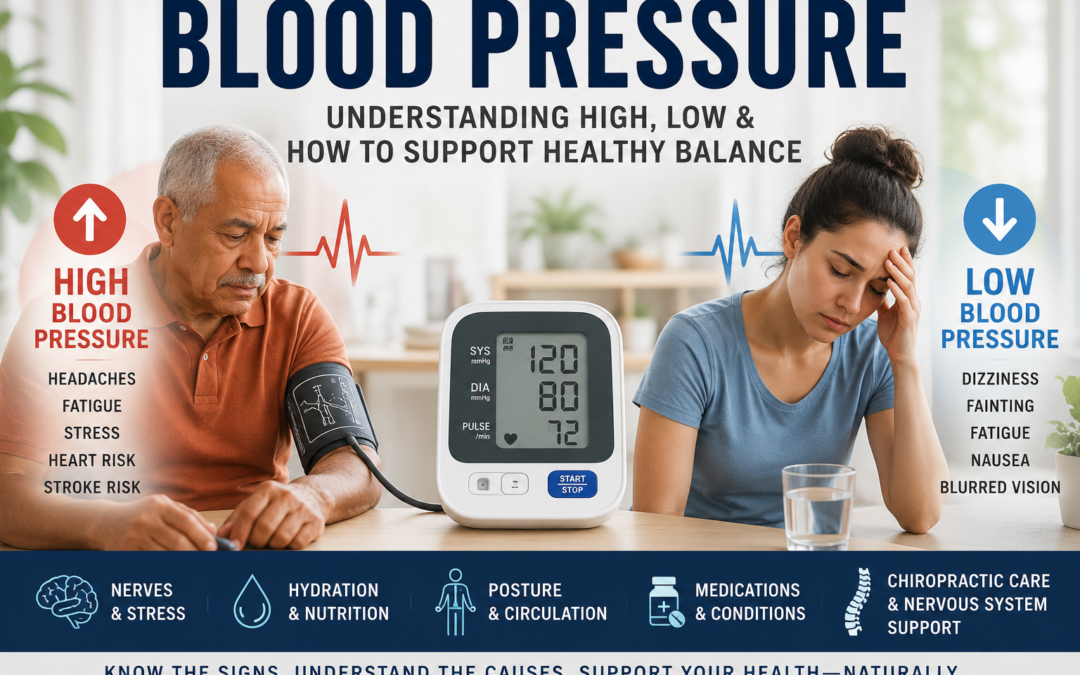
What Most People Never Hear About Stress, the Vagus Nerve, the Atlas Bone, and the Nervous System’s Role in Blood Pressure Regulation
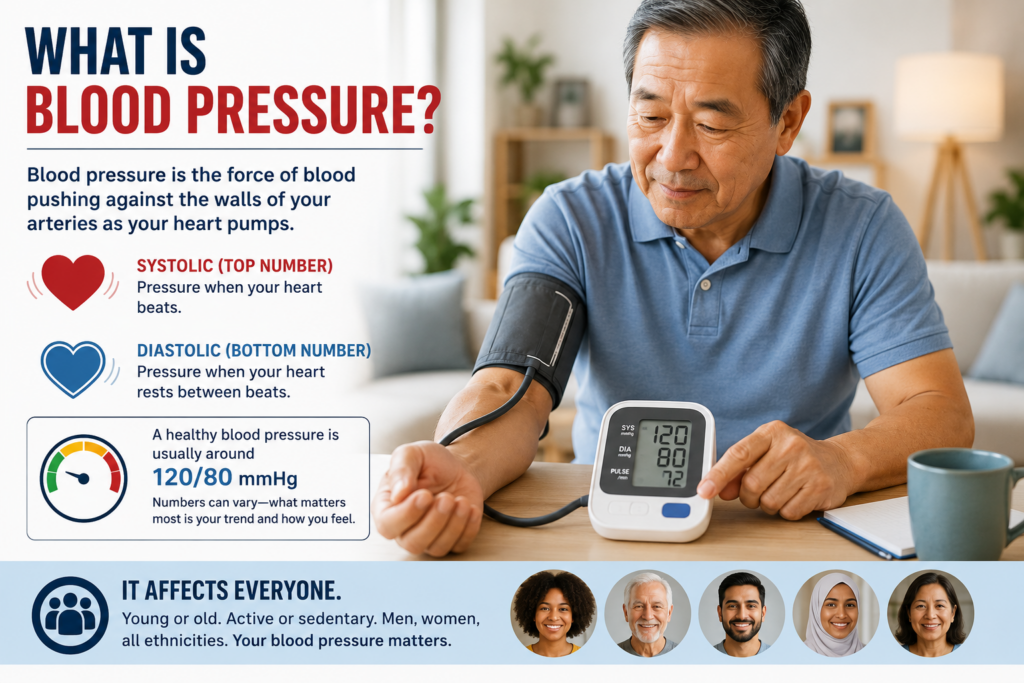
High blood pressure affects nearly half of all adults in the United States.
Low blood pressure affects millions more.
Some people feel their heart racing constantly.
Others feel dizzy when they stand.
Some battle headaches, fatigue, anxiety, brain fog, chest pressure, or chronic stress.
Yet despite how common blood pressure problems have become, most conversations focus almost entirely on:
- salt
- medications
- age
- weight
- genetics
And while those factors absolutely matter, one major system is often overlooked:
The nervous system.
At Ptak Family Chiropractic, we believe blood pressure is not simply a cardiovascular issue.
It is also a neurological regulation issue.
Because blood pressure is not random.
Your body is constantly regulating circulation through a complex communication network involving:
- the brain
- brainstem
- autonomic nervous system
- vagus nerve
- blood vessels
- hormones
- kidneys
- stress responses
- and the upper cervical spine
When that communication system becomes overwhelmed, stressed, or dysregulated, blood pressure patterns may begin to change.
And that changes the entire conversation.
Blood Pressure Is Controlled by the Nervous System
Most people think blood pressure is simply:
“Pressure inside the arteries.”
But blood pressure is actually a constantly changing neurological process.
Every second of every day, the brain monitors:
- oxygen demand
- breathing
- stress levels
- posture
- inflammation
- hydration
- heart rate
- blood vessel tension
- emotional stress
- survival needs
The nervous system then adjusts the body accordingly.
Your body is constantly adapting.
Blood pressure is one of the ways it adapts.
The Autonomic Nervous System: Your Internal Regulator
The autonomic nervous system controls automatic body functions you do not consciously think about.
This includes:
- heart rate
- blood pressure
- circulation
- digestion
- breathing
- inflammation
- recovery
- stress responses
It has two major branches.
Sympathetic Nervous System
Often called:
“Fight or flight.”
This system:
- raises blood pressure
- increases heart rate
- tightens blood vessels
- increases stress hormones
- prepares the body for survival
This system is helpful during emergencies.
The problem is:
many people now live in chronic sympathetic dominance.
Always stressed.
Always stimulated.
Always adapting.
Over time, the body may begin expressing that stress physically.
Parasympathetic Nervous System
Often called:
“Rest, digest, and recovery.”
This system helps:
- slow heart rate
- regulate circulation
- reduce stress physiology
- support healing
- improve digestion
- enhance recovery
- restore balance
Healthy blood pressure regulation depends heavily on balance between these two systems.
The Vagus Nerve: The Body’s Calming Pathway
One of the most important nerves involved in blood pressure regulation is the vagus nerve.
The vagus nerve travels from the brainstem throughout the body and influences:
- heart rate
- blood vessel tone
- digestion
- breathing
- inflammation
- emotional regulation
- stress recovery
A healthy vagal response helps the body shift OUT of survival mode and INTO recovery mode.
This is why people often notice blood pressure rises during:
- stress
- anxiety
- overwhelm
- chronic pain
- emotional tension
- poor sleep
- burnout
The nervous system is shifting toward survival physiology.
High Blood Pressure: The Silent Stress Response
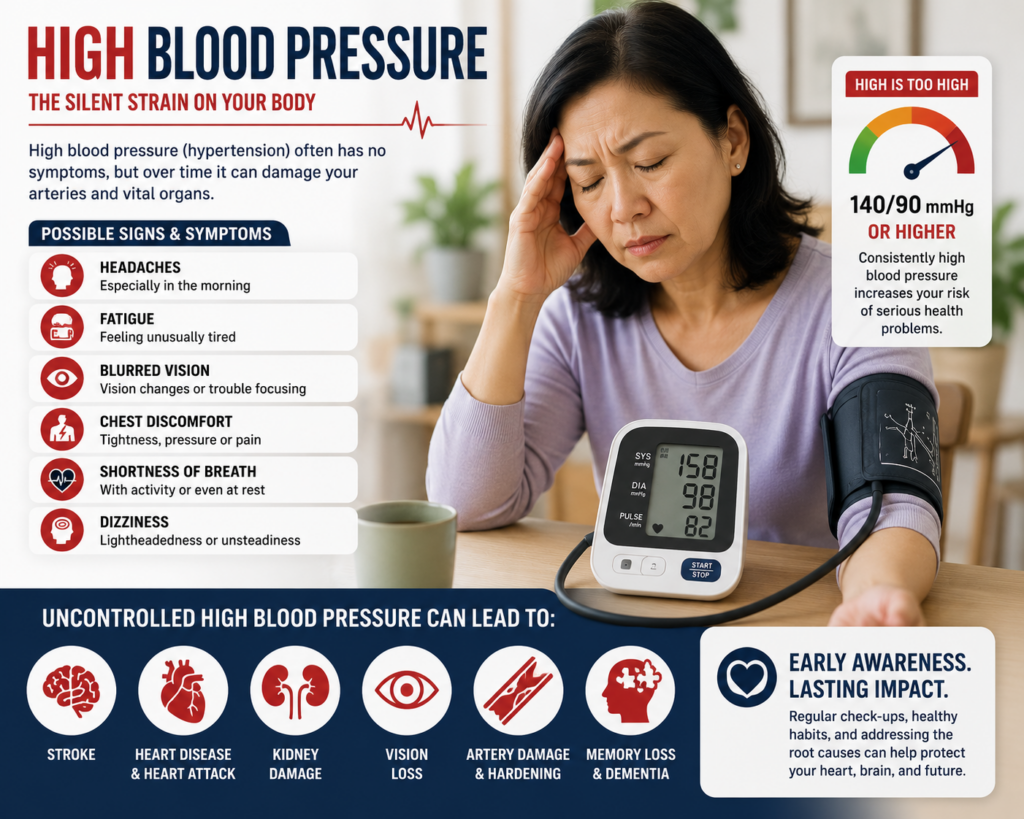
High blood pressure — hypertension — is often called:
“The silent killer.”
Many people have no symptoms at all.
Others may experience:
- headaches
- facial flushing
- fatigue
- anxiety
- chest pressure
- tension
- poor sleep
- irritability
Long-term elevated blood pressure increases risk for:
- stroke
- heart attack
- vascular disease
- kidney damage
- cognitive decline
But the deeper question is:
Why is the body increasing pressure in the first place?
Possible contributors include:
- chronic stress
- inflammation
- poor sleep
- obesity
- insulin resistance
- smoking
- vascular disease
- nervous system dysregulation
- autonomic imbalance
- chronic sympathetic activation
The body is often adapting to stress physiology.
Low Blood Pressure: The Other Side of Dysregulation
Low blood pressure is often overlooked, yet many people struggle with:
- dizziness
- faintness
- fatigue
- lightheadedness
- cold hands and feet
- brain fog
- weakness
- poor circulation
- low energy
Some people feel exhausted standing up quickly.
Others feel chronically depleted.
Possible contributing factors include:
- dehydration
- autonomic dysfunction
- poor vascular tone
- chronic fatigue states
- hormonal imbalance
- vagal dysregulation
- nervous system stress
The goal is not simply lowering blood pressure.
The goal is helping the body regulate appropriately.
The Overlooked Connection Between the Atlas (C1) and Blood Pressure
One of the most fascinating areas of blood pressure research involves the upper cervical spine — specifically the atlas vertebra, also known as C1.
The atlas is the top bone in the neck and sits directly beneath the skull.
This region surrounds and protects portions of the brainstem — the area responsible for:
- autonomic nervous system regulation
- heart rate
- vascular tone
- stress responses
- blood pressure regulation
- vagus nerve communication
Because of this close neurological relationship, some researchers and chiropractors have explored whether upper cervical dysfunction may influence blood pressure regulation in certain individuals.
The University of Chicago / Rush Blood Pressure Study
In 2007, researchers led by George Bakris published a groundbreaking pilot study examining upper cervical chiropractic care and blood pressure regulation.
The study used:
- randomized design
- placebo control
- double-blinding
Researchers examined patients with Stage 1 hypertension and atlas misalignment.
The results were remarkable.
Following a specific upper cervical adjustment:
- systolic blood pressure dropped significantly
- diastolic blood pressure improved significantly
- changes persisted for 8 weeks
Researchers stated the reduction was similar to what is often seen with two blood pressure medications used together.
Importantly:
- patients were not taking blood pressure medication
- no adverse effects were reported
- the adjustment specifically targeted the atlas vertebra
This does NOT mean chiropractic cures hypertension.
But it strongly suggests neurological and upper cervical factors may influence blood pressure regulation in certain individuals.
And that changes the conversation dramatically.
How Might the Upper Neck Influence Blood Pressure?
Researchers propose several possible mechanisms:
- altered brainstem signaling
- autonomic imbalance
- muscular tension patterns
- stress physiology
- altered vascular regulation
- vagus nerve influence
- postural strain
- sympathetic nervous system activation
The exact mechanism is still being researched.
But anatomically and neurologically, the relationship between the upper cervical spine and autonomic regulation is significant.
Why Stress Changes Blood Pressure So Powerfully
Most people underestimate how much chronic stress changes physiology.
Stress alters:
- cortisol
- inflammation
- breathing
- vascular tension
- heart rate variability
- sleep quality
- muscular tension
- autonomic balance
Over time, the body adapts to survival mode.
This may contribute to:
- hypertension
- anxiety
- fatigue
- headaches
- sleep disturbances
- autonomic dysregulation
This is why many people notice blood pressure worsens during:
- emotional stress
- burnout
- poor sleep
- chronic pain
- nervous system overload
Blood Pressure and Sleep
Poor sleep is one of the strongest predictors of blood pressure dysregulation.
Sleep deprivation may increase:
- cortisol
- inflammation
- sympathetic activation
- vascular tension
Conditions like sleep apnea are strongly associated with hypertension.
The body cannot regulate efficiently without proper recovery.
Blood Pressure and Breathing
Shallow chest breathing may reinforce sympathetic dominance.
Deep diaphragmatic breathing helps stimulate the vagus nerve and parasympathetic nervous system.
Breathing is neurological.
The way you breathe affects:
- heart rate
- stress hormones
- circulation
- autonomic balance
- blood pressure regulation
Blood Pressure and Posture
Poor posture may contribute to:
- muscular tension
- shallow breathing
- upper cervical stress
- nervous system overload
Forward head posture places significant strain on the upper neck and surrounding tissues.
Over time, this may influence:
- autonomic regulation
- vagal tone
- breathing efficiency
- stress adaptation
Posture is not just structural.
Posture is neurological.
Blood Pressure and Dehydration
Many people do not realize dehydration may contribute to:
- dizziness
- blood pressure fluctuations
- fatigue
- poor circulation
- headaches
The body depends on proper hydration for:
- blood volume
- vascular regulation
- cellular communication
- circulation efficiency
White Coat Hypertension: When Stress Raises Blood Pressure
Some patients only experience elevated blood pressure in medical settings.
This is known as:
White Coat Hypertension.
Why?
Because stress and anxiety directly affect the autonomic nervous system.
The body perceives stress…
and physiology changes immediately.
Blood pressure is deeply tied to emotional and neurological states.
Exercises That Help Activate the Parasympathetic Nervous System
One of the most powerful ways to support healthier blood pressure naturally is by improving parasympathetic activation.
The body cannot fully heal while trapped in chronic survival physiology.
1. Diaphragmatic Breathing
Try:
- inhale through the nose for 4 seconds
- expand the belly
- exhale slowly for 6–8 seconds
- repeat for 5–10 minutes
Long exhalations stimulate vagal activity and may reduce sympathetic dominance.
2. Humming and Chanting
The vagus nerve connects to vocalization muscles.
Humming, chanting, singing, or prolonged “OM” sounds may help stimulate vagal pathways.
3. Walking
Gentle walking helps:
- regulate stress hormones
- improve circulation
- calm the nervous system
- improve heart rate variability
Movement is neurological medicine.
4. Cold Water Facial Stimulation
Cool water on the face may activate portions of the parasympathetic nervous system through the diving reflex.
5. Cervical Mobility and Postural Exercises
Improving:
- posture
- neck mobility
- thoracic movement
- breathing mechanics
may reduce stress patterns affecting the upper cervical spine and nervous system.
Why Chiropractic Care and Parasympathetic Exercises Work Together
At Ptak Family Chiropractic, we believe chiropractic care and nervous system exercises complement one another powerfully.
Chiropractic adjustments focus on:
- spinal motion
- nervous system communication
- adaptability
- reducing neurological stress
Parasympathetic exercises help reinforce calmer neurological states and improved vagal tone.
Together, the goal is helping the body:
- regulate more efficiently
- reduce chronic stress physiology
- improve circulation
- improve recovery
- restore autonomic balance
Daily Habits That Influence Blood Pressure
Small daily habits matter enormously.
Helpful habits may include:
- proper hydration
- consistent sleep
- walking
- sunlight exposure
- stress management
- posture awareness
- breathing exercises
- reducing processed foods
- movement throughout the day
- nervous system recovery
The body responds to lifestyle patterns over time.
Key Takeaways
- Blood pressure is neurologically regulated.
- The autonomic nervous system strongly influences circulation.
- Chronic stress may drive sympathetic dominance.
- The vagus nerve helps regulate recovery and cardiovascular balance.
- The upper cervical spine may influence autonomic function.
- Chiropractic care may support nervous system regulation in some individuals.
- Parasympathetic activation exercises may help improve adaptability and recovery.
- Health is not simply chemical — it is neurological.
Frequently Asked Questions About Blood Pressure
Can stress raise blood pressure?
Yes. Chronic stress activates the sympathetic nervous system, which may increase vascular tension and blood pressure.
What is the vagus nerve?
The vagus nerve is a major parasympathetic nerve involved in heart rate, digestion, inflammation, and autonomic regulation.
Can chiropractic help blood pressure?
Some research suggests upper cervical chiropractic care may influence blood pressure regulation in certain individuals.
Can posture affect blood pressure?
Posture may influence breathing, muscular tension, autonomic balance, and upper cervical stress patterns.
Can anxiety raise blood pressure?
Yes. Anxiety activates stress physiology and may temporarily elevate blood pressure.
What causes low blood pressure?
Low blood pressure may involve dehydration, autonomic dysfunction, hormonal issues, or nervous system dysregulation.
Can dehydration affect blood pressure?
Absolutely. Hydration strongly influences blood volume and circulation.
Why does blood pressure rise at night?
Poor sleep, stress physiology, sleep apnea, and autonomic imbalance may contribute.
Is high blood pressure always permanent?
Not always. Lifestyle, stress regulation, sleep, nervous system function, and overall health all influence blood pressure patterns.
Why do I get dizzy when standing up?
This may involve blood pressure regulation, hydration, circulation, or autonomic nervous system responses.
A Different Conversation About Blood Pressure
At Ptak Family Chiropractic, we believe people deserve a broader understanding of how the nervous system influences health.
Because the body is not simply chemical.
It is neurological.
The brain and nervous system coordinate every organ, every blood vessel, every stress response, and every adaptive process within the body.
And when communication improves, function may improve.
Important Medical Disclaimer
High or low blood pressure can be serious and potentially life-threatening.
Patients should never stop medications or alter treatment plans without consulting their physician.
Anyone experiencing symptoms or concerns regarding blood pressure should seek appropriate medical evaluation and monitoring.
Looking for a More Neurologically Focused Approach to Health?
If you are struggling with:
- high blood pressure
- low blood pressure
- dizziness
- headaches
- chronic stress
- poor sleep
- fatigue
- autonomic imbalance
- nervous system overload
schedule a no-charge consultation at Ptak Family Chiropractic to learn more about a neurologically focused approach to health and healing.
Research & References
- George Bakris et al. Atlas vertebra realignment and achievement of arterial pressure goal in hypertensive patients: a pilot study. Journal of Human Hypertension. 2007.
- University of Chicago Medicine. Special chiropractic adjustment lowers blood pressure among hypertensive patients with misaligned C1.
- Stephen W. Porges. The Polyvagal Theory: Neurophysiological Foundations of Emotions, Attachment, Communication, and Self-Regulation.
- Bruce S. McEwen. Protective and damaging effects of stress mediators. New England Journal of Medicine. 1998.
- Robert M. Sapolsky. Why stress is bad for your brain. Science. 1996.
- Patricia M. Lehrer et al. Heart rate variability biofeedback improves autonomic regulation and cardiovascular function.
- Julian F. Thayer and Richard D. Lane. The role of vagal function in emotional regulation and cardiovascular health.
- Herbert Benson. The relaxation response and cardiovascular regulation.
- American Heart Association. Current hypertension guidelines and cardiovascular risk recommendations.
- Andrew Huberman et al. Contemporary research discussions involving autonomic regulation, stress physiology, and vagal mechanisms.