
Why So Many Children Keep Getting Them, And What Most Parents Are Never Told About the Immune System, Drainage, the Upper Neck, and the Nervous System
Few things frustrate parents more than recurring ear infections.
The sleepless nights.
The crying.
The fevers.
The repeated antibiotics.
The temporary improvement… only for the infection to return weeks later.
Eventually many parents begin asking:
“Why does this keep happening?”
Because while ear infections are extremely common in childhood, recurring ear infections are often a sign that the body may be struggling with pressure regulation, drainage, inflammation, immune adaptation, or nervous system stress.
At Ptak Family Chiropractic, we believe parents deserve a broader understanding of what may contribute to recurrent ear infections — not simply repeated symptom suppression.
Because sometimes the issue is not that the body is weak.
Sometimes the issue is that the body is overwhelmed, congested, inflamed, mechanically stressed, or struggling to adapt efficiently.
What Is an Ear Infection?
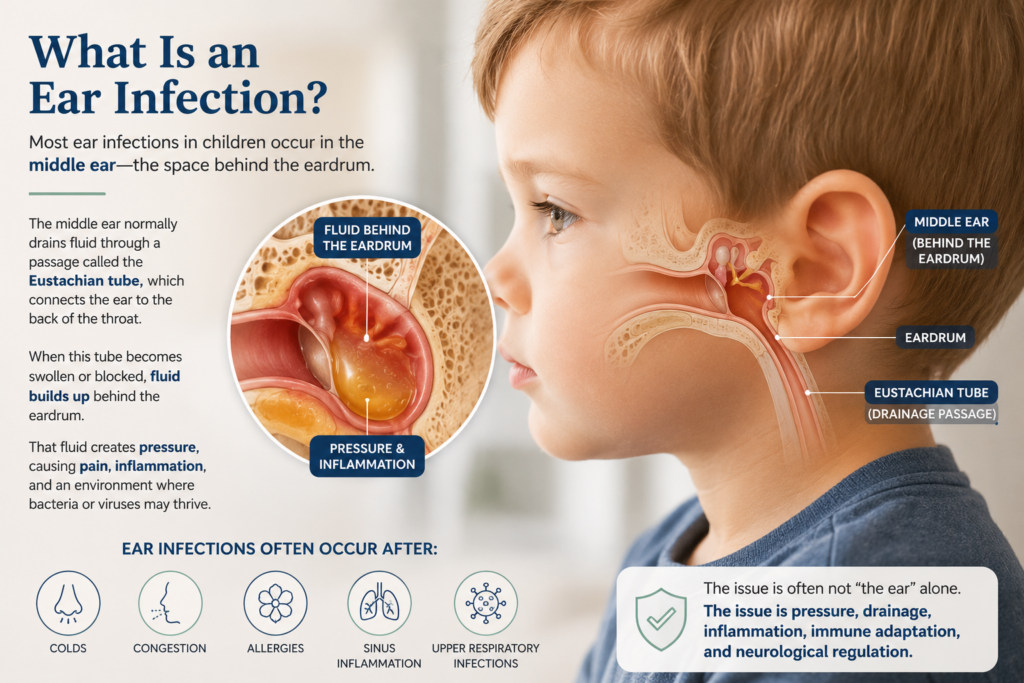
Most childhood ear infections involve the middle ear — the space behind the eardrum.
This condition is known as:
Acute Otitis Media.
The middle ear normally drains fluid through a narrow passageway called the Eustachian tube, which connects the ear to the back of the throat.
When this drainage system becomes swollen, inflamed, or unable to function efficiently, fluid may accumulate behind the eardrum.
That fluid creates:
- pressure
- pain
- inflammation
- irritation
- and an environment where bacteria or viruses may thrive
This is why ear infections often occur after:
- colds
- congestion
- allergies
- sinus inflammation
- upper respiratory infections
The issue is often not “the ear” alone.
The issue is pressure, drainage, inflammation, immune adaptation, and neurological regulation.
Why Children Are More Susceptible
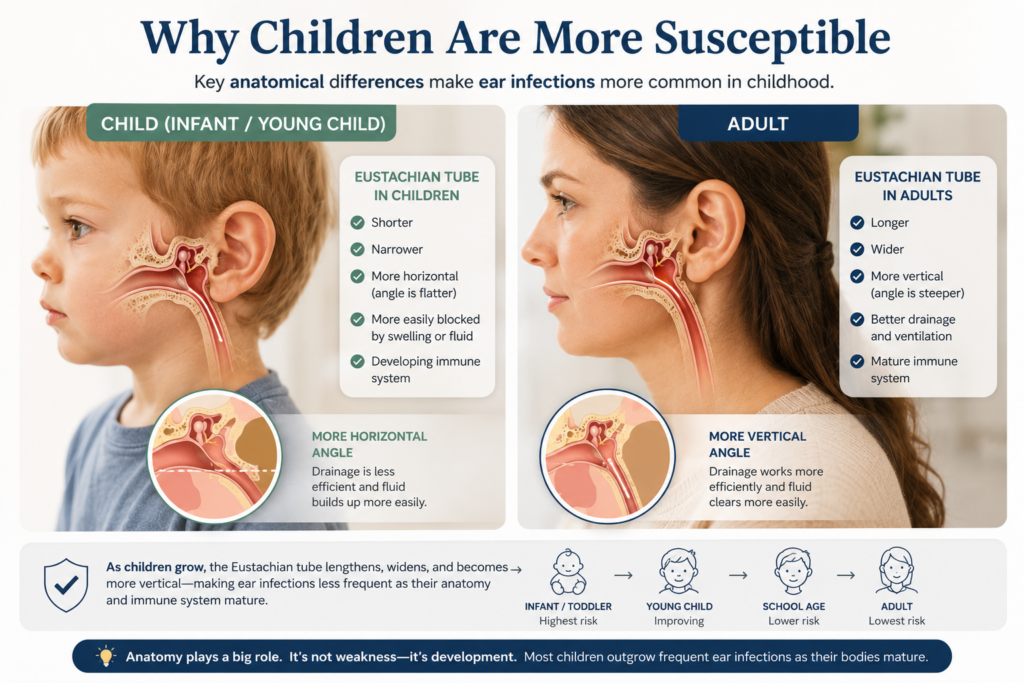
Children’s anatomy makes them more vulnerable to ear infections.
Compared to adults, children have:
- shorter Eustachian tubes
- narrower drainage pathways
- more horizontal tube angles
- developing immune systems
This makes drainage less efficient — especially during congestion or inflammation.
In many children, these issues improve naturally as the skull, neck, airway, and drainage pathways mature.
But in other children, infections become recurrent.
And this is where many parents begin searching for deeper answers.
The Often Overlooked Role of the Upper Neck and Atlas (C1)
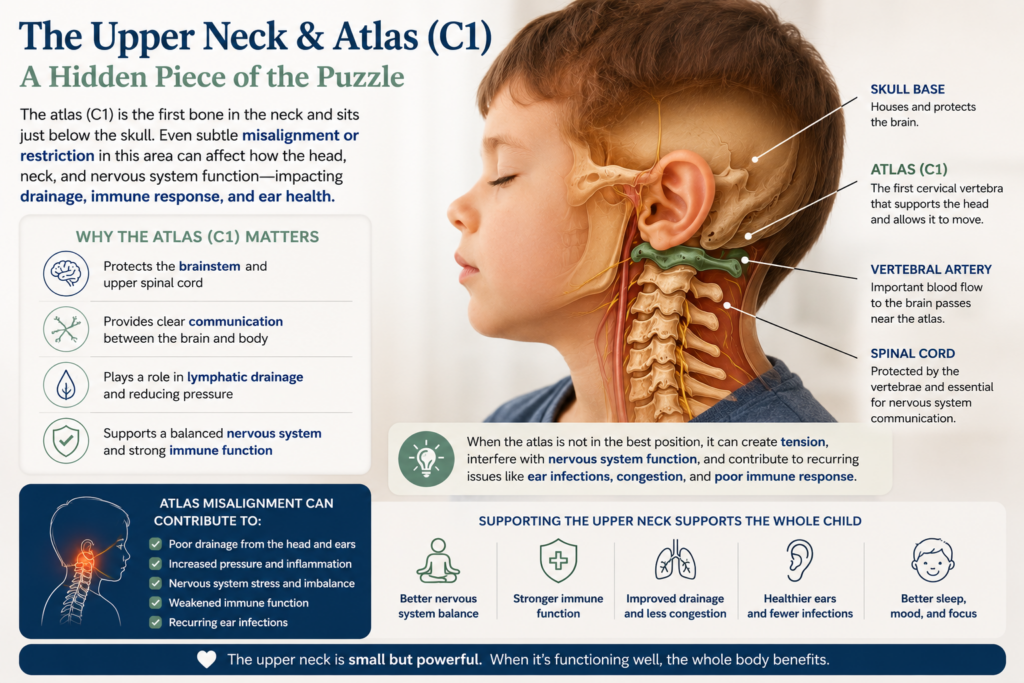
One area many parents never hear discussed in relation to recurring ear infections is the upper cervical spine — particularly the atlas vertebra, also known as C1.
The atlas is the top bone in the neck and sits directly beneath the skull.
This region is incredibly important because it is closely associated with:
- head and neck mechanics
- muscle tension patterns
- jaw function
- lymphatic drainage
- neurological communication
- pressure regulation near the Eustachian tube
The muscles surrounding the upper neck and jaw help influence the function of the Eustachian tube.
If tension, restricted motion, postural imbalance, or upper cervical dysfunction develop, some chiropractors believe this may contribute to:
- impaired drainage
- fluid retention
- altered pressure regulation
- muscular tension near the ear and jaw
- autonomic nervous system stress
- reduced adaptability
Birth stress, falls, repetitive strain, posture, and physical tension patterns may all influence this area.
This does not mean the atlas is the sole cause of ear infections.
But many chiropractors believe it may be one contributing factor affecting how efficiently the body drains, adapts, and heals.
Why Chiropractors Evaluate the Upper Cervical Spine
At Ptak Family Chiropractic, children with recurring ear infections are commonly evaluated for:
- upper cervical motion restrictions
- tension patterns
- spinal mechanics
- postural imbalances
- nervous system stress
- overall adaptability
Why?
Because the nervous system controls and coordinates healing throughout the body.
The upper cervical spine is particularly important because of its close relationship to:
- brainstem function
- muscle tone
- autonomic regulation
- lymphatic movement
- inflammatory responses
- adaptation and recovery
Chiropractic adjustments are designed to improve spinal motion and reduce interference within the nervous system.
Some chiropractors propose that improving upper cervical function may help support:
- healthier drainage mechanics
- reduced muscular tension
- improved pressure regulation
- more efficient neurological communication
- better adaptability during immune stress
Many parents report improvements in:
- congestion
- comfort
- sleep quality
- recurrent episodes
- overall well-being
following chiropractic care.
While more research is still needed to fully understand the exact mechanisms involved, many families appreciate an approach that focuses on supporting the body’s natural ability to regulate, drain, adapt, and heal.
Why Antibiotics Sometimes Help… But Don’t Solve the Bigger Problem

Antibiotics can absolutely be necessary in certain situations.
They can be life-saving when bacterial infections become severe or persistent.
But many parents notice something important:
The infection improves…
then returns.
Why?
Because while antibiotics may help address bacteria, they do not necessarily address:
- chronic congestion
- inflammation
- drainage dysfunction
- recurring immune stress
- upper cervical tension
- postural mechanics
- nervous system stress
- repeated respiratory irritation
Additionally, many childhood ear infections are viral — meaning antibiotics may not always be the primary solution.
This is one reason many pediatric guidelines now recommend careful evaluation before immediate antibiotic use in every situation.
The Nervous System and Immune Function
One of the most overlooked concepts in children’s health is the relationship between the nervous system and immune function.
The nervous system helps regulate:
- inflammation
- immune signaling
- lymphatic flow
- stress responses
- healing
- sleep
- muscle tone
- recovery and adaptation
When the nervous system becomes overwhelmed by stress, inflammation, tension, or repeated immune challenges, the body’s ability to adapt efficiently may become compromised.
Health is not simply about eliminating symptoms.
Health is about adaptability.
Why Some Children Seem to Get Sick Constantly
Many parents notice their child experiences:
- repeated ear infections
- chronic congestion
- poor sleep
- mouth breathing
- frequent colds
- lingering inflammation
- repeated antibiotic use
- irritability during illness
The question should not only be:
“What infection is present?”
Sometimes the deeper question is:
“Why is the body struggling to adapt repeatedly?”
Possible contributing factors may include:
- chronic inflammation
- immune stress
- allergies
- daycare exposure
- poor sleep
- dietary stressors
- environmental irritants
- upper cervical dysfunction
- postural strain
- nervous system overload
The body is interconnected.
A Different Way to Think About Children’s Health

At Ptak Family Chiropractic, we believe children’s bodies are designed for:
- adaptation
- healing
- regulation
- resilience
Symptoms are often signals.
Not failures.
The goal is not simply suppressing every symptom as quickly as possible.
The goal is helping the body function more efficiently.
Because when the nervous system functions better, the body may be better able to:
- drain
- regulate inflammation
- recover
- adapt
- heal naturally
Ear Tubes: Sometimes Necessary, But Not the Entire Conversation
For some children, ear tubes may become medically necessary — especially when infections are severe, persistent, or affecting hearing and development.
But even then, many parents still wonder:
Why was the body struggling repeatedly in the first place?
Procedures may address the immediate mechanical issue while broader contributing factors may still remain.
This is why many families seek a more comprehensive understanding of health and adaptation.

When Parents Should Seek Medical Attention Immediately
Parents should always contact a healthcare professional if a child experiences:
- difficulty breathing
- severe lethargy
- dehydration
- swelling around the ear
- persistent high fever
- stiff neck
- fluid or blood drainage from the ear
- worsening symptoms
- hearing changes
- severe pain
- symptoms in very young infants
- or anything concerning or unusual
Trust your instincts.
Looking for a More Neurologically Focused Approach?
At Ptak Family Chiropractic, our focus is helping families better understand the relationship between the nervous system, spinal function, adaptation, and long-term wellness.
If your child has been struggling with recurring ear infections, congestion, sleep challenges, or repeated immune stress, schedule a no-charge consultation with our office to learn more about a neurologically focused approach to health and healing. (310) 473-7991.
Research & References
- American Academy of Pediatrics. Clinical Practice Guideline: The Diagnosis and Management of Acute Otitis Media. Pediatrics.
- Tasnee Chonmaitree et al. Viral upper respiratory tract infection and otitis media complication in young children. Clinical Infectious Diseases. 2008;46(6):815–823.
- Joan Fallon. The role of chiropractic care in children with recurrent otitis media: a pilot study. Journal of Clinical Chiropractic Pediatrics. 1997.
- Jennifer H. Alcantara, Joel Alcantara. Chiropractic care of pediatric patients with otitis media: case reports and review of the literature. Explore. 2009.
- International Chiropractic Pediatric Association. Vertebral subluxation and pediatric otitis media: clinical observations and chiropractic considerations.
- Jerome O. Klein. The burden of otitis media. Vaccine. 2000;19:S2–S8.
- Aleksandra Skotnicka et al. Anatomy and physiology of the Eustachian tube related to otitis media in children. International Journal of Pediatric Otorhinolaryngology.
- Centers for Disease Control and Prevention. Appropriate antibiotic use and watchful waiting recommendations for pediatric ear infections.