
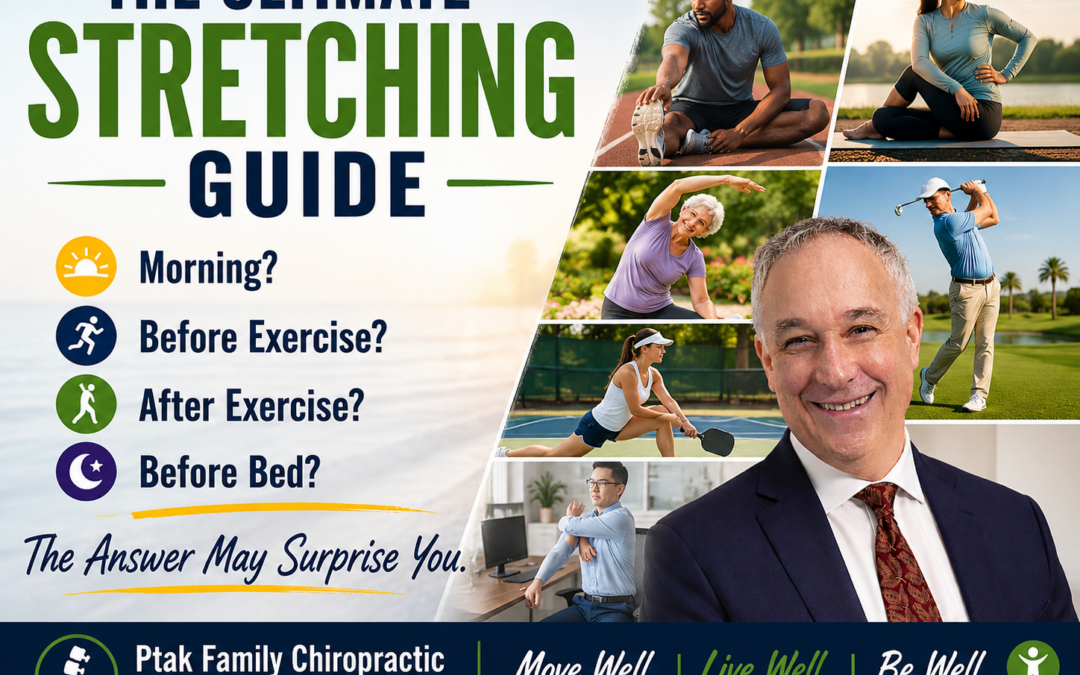
Move Better. Feel Better. Live Better.
Most people think stretching is something they should do when they wake up feeling stiff, sore, or tight.
I see it differently.
After nearly 40 years in practice, I’ve found that many people spend their mornings trying to undo what happened the day before. They wake up stiff, stretch for a few minutes, feel a little better, and then repeat the cycle again the next morning.
What if the secret isn’t stretching more in the morning?
What if the secret is preparing your body the night before?
Is There a Best Time to Stretch?
The answer is: it depends.
Stretching can be beneficial at different times of the day depending on your goals.
Morning
When you first wake up, your body may feel stiff from hours of inactivity.
Rather than jumping immediately into deep stretching, I recommend beginning with movement.
Go for a walk.
Perform mobility exercises.
Warm up your joints.
Get your circulation moving.
Your goal in the morning is not to force flexibility. Your goal is to prepare your body for movement.
Before Exercise
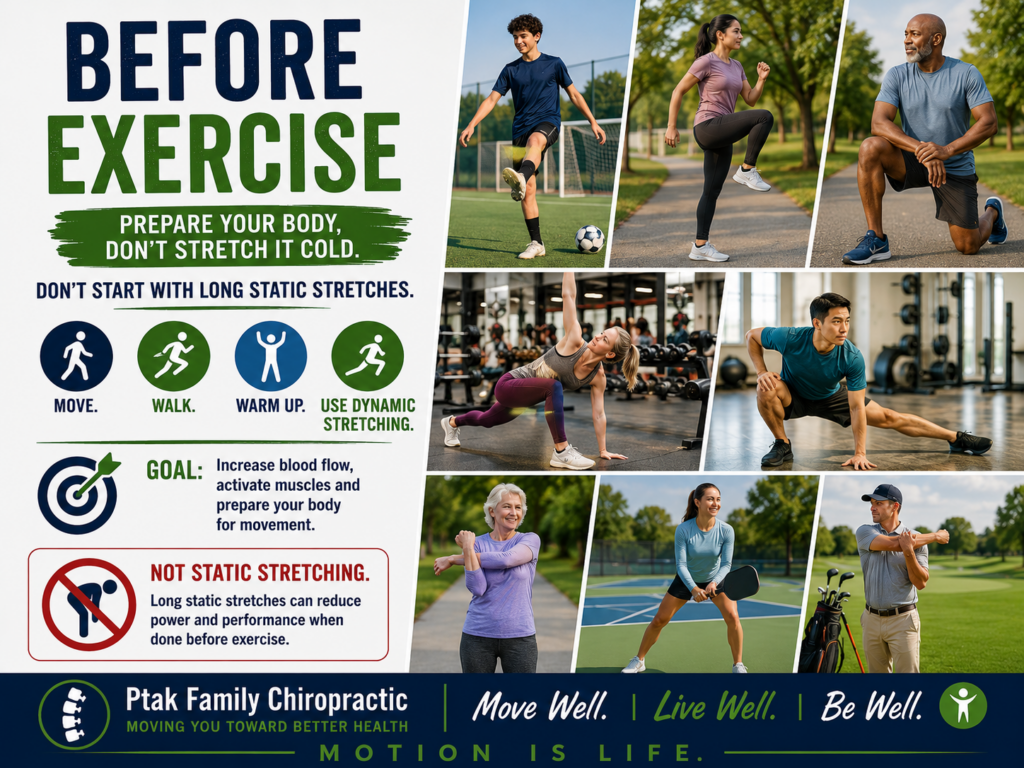
Many people perform static stretching before exercise because they’ve seen athletes do it.
I generally prefer a warm-up.
Before activity, increase your body temperature, heart rate, and circulation.
Walk.
Jog lightly.
Perform dynamic movements.
Move your joints through their ranges of motion.
Prepare your body for performance.
After Exercise
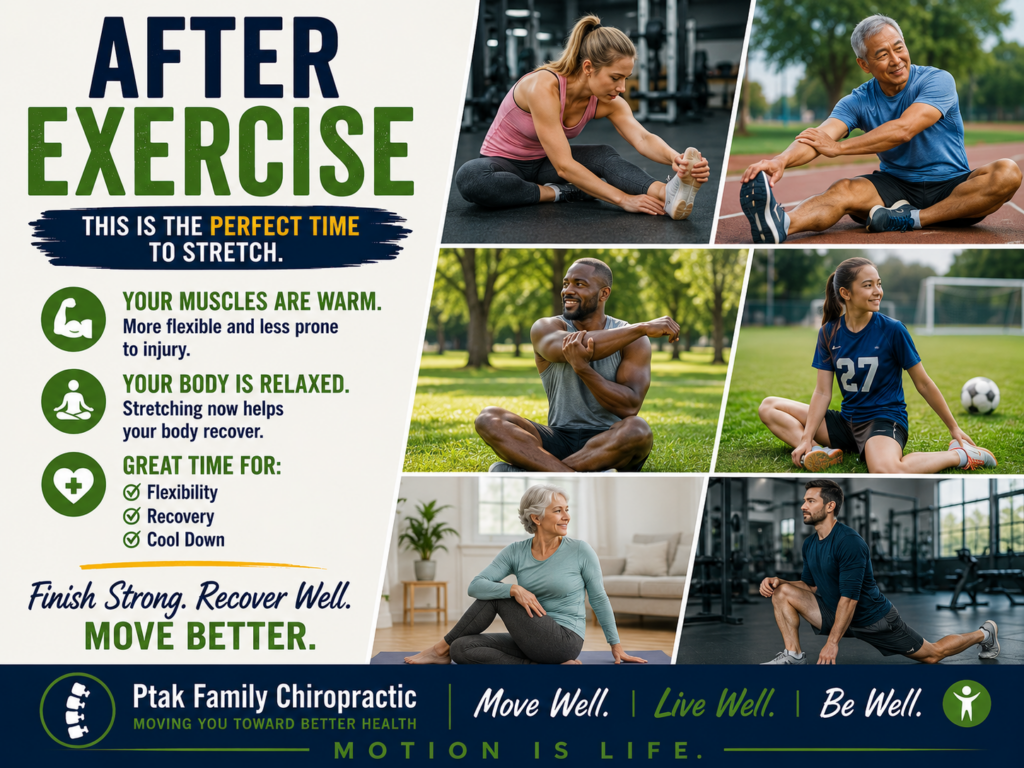
This is one of my favorite times to stretch.
Your muscles are warm.
Your tissues are more pliable.
Your body is already moving well.
After activity, stretching can help restore mobility, reduce tension, and encourage recovery.
Before Bed
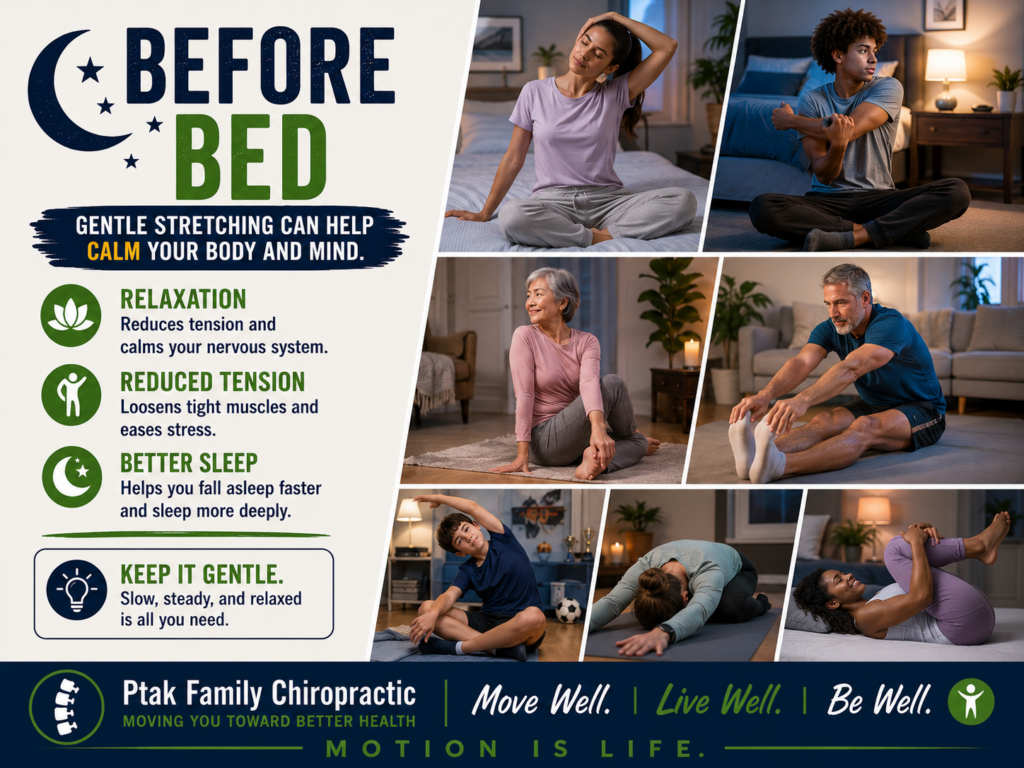
If I had to choose one time of day to stretch consistently, this would be it.
Before bed, your goal is not performance.
Your goal is recovery.
Stretching before bed can help relax tight muscles, calm the nervous system, improve circulation, and prepare your body for sleep.
It may also help you wake up feeling less stiff and less sore the next morning.
The Stretching Mistake Most People Make
Many people push a stretch as far as they can go and then force it even farther.
I recommend something different.
Move into the stretch until you feel tension.
Then ease off slightly.
Once you find that comfortable position, hold it.
Breathe.
Allow your body to relax into the stretch.
Stretching should create a feeling of release, not a battle between you and your muscles.
Don’t Hold Your Breath
Breathing is one of the most overlooked aspects of stretching.
Take a slow breath in.
As you exhale, allow your body to settle deeper into the stretch.
Continue breathing naturally.
The goal is relaxation, not strain.
Your breath can help your body release tension far more effectively than force.
Tomorrow Morning Starts Tonight
This may be the most important concept in this entire article.
Most people try to fix morning stiffness in the morning.
I prefer to prevent it the night before.
The more consistently you recover in the evening, the less you’ll feel the need to stretch in the morning.
A simple evening routine might include:
- Foam rolling
- Gentle stretching
- Relaxation
- An Epsom salt bath
- Quality sleep
Over time, many people find they wake up feeling looser, less stiff, and more ready to move.
The Best Stretching Routine?
The one you’ll actually do.
You don’t need the perfect routine.
You need a routine you can perform consistently.
Maybe that’s five minutes.
Maybe it’s ten minutes.
Maybe it’s a foam roller and a few stretches before bed.
Something is always better than nothing.
Consistency beats perfection every time.
Dr. Ptak’s Daily Routine
People often ask me what I personally do.
My routine is simple.
Morning
- Drink water
- 5 minutes of Cervical Dynamic Traction
- Drink more water
- 10–15 minutes on the Wobble Chair
- Gym/weight workout, run/jog, or yoga
- Shower
- Head to work
Evening
- 5 minutes of Cervical Dynamic Traction
- 10–15 minutes on the Wobble Chair
- Foam rolling
- Stretching
- Epsom salt bath
- Sleep
You don’t need my routine.
You need a routine you’ll actually do.
Find something that works for you.
Do it consistently.
Adjust it as needed.
Keep moving.
Life Is Motion
Your body was designed to move.
Move first.
Move often.
Recover well.
And remember:
Life Is Motion.