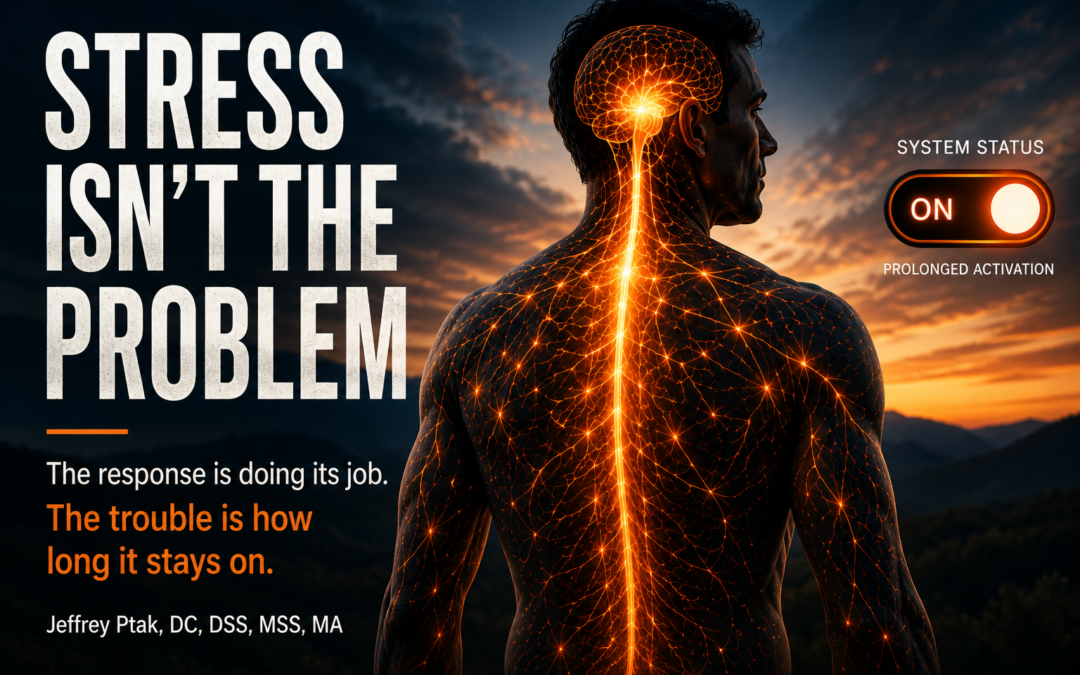
Almost everything people believe about stress is built on a mistake, and the mistake is in the first sentence: that the stress response is something going wrong. It isn’t. When your brain registers a challenge — or anticipates one — a great many systems shift at once. Heart rate and blood pressure change. Hormonal signaling changes. Muscle tension changes. Attention narrows. Digestion slows. Immune activity is redirected. Energy stops going toward projects with a long payoff and starts going toward the next few minutes. That is not malfunction. That is a body correctly reading its situation and reallocating accordingly. If you have ever wondered why you can carry something up a flight of stairs in an emergency that you could not carry on an ordinary Tuesday, that is the system working exactly as designed. The problem is not the response. The problem is that a response built for five minutes will run for five years if nothing tells it to stop.
The Variable Nobody Asks About
Bruce McEwen spent a career studying this and gave it a name: allostatic load. His formulation is the one I keep returning to because it identifies the actual variable — and the actual variable is not intensity. The chemistry that carries out the stress response — cortisol and the catecholamines chief among them — protects you in the short term. Over longer intervals, the same chemistry exacts a cost. Not different chemistry. The same chemistry, running longer than it was built to run. Which means the distinction that matters is not between good stress and bad stress. Nearly every conversation about stress is organized around that split, and it points in the wrong direction. The distinction that matters is between a system that switches on and off cleanly and a system that switched on and never switched off.
A hard week is not the thing. A hard week is what the response was designed for. Four years of a situation that never resolved is the thing — and people in year four rarely describe themselves as stressed, because it stopped feeling like an event and started feeling like their personality.
Why It Can Look Like Several Problems
People in that condition seldom arrive with one complaint. They arrive with a list. The shoulder, and also the sleep, and also the gut, and also the six weeks it now takes to get over a cold. That is not necessarily a coincidence, and it is not vagueness on the patient’s part. A system running an expensive process continuously has less available for everything else — repair, digestion, immune surveillance, recovery. What shows up is not always one dramatic failure but a general rise in the cost of running the body. Several things may get slightly worse at once, and none of them is bad enough on its own to explain the whole picture. This is where I have to be careful, and I want to be, because this is the exact point at which people in my profession can overreach. I cannot tell you that stress caused your shoulder problem. Nobody can. In any individual person, the honest answer is that the causal arrows cannot always be separated. Poor sleep, inactivity, financial strain, physical discomfort and physiological load can influence one another. Untangling which came first in one life is often beyond what the evidence permits. Anyone who tells you confidently that your stress caused a specific diagnosis has left the science behind, however satisfying the explanation may sound. What I can tell you is that the pattern is real, that duration matters, and that duration is the variable people often forget to ask about.
A Better Question
This changes the first question. The standard clinical opening is: What’s wrong? It is a reasonable question, and it finds a great deal. But it assumes the body has malfunctioned, and it goes looking for the broken part. If the stress response itself is not a malfunction — if it is an adaptive response to a situation that has not changed — then another question belongs alongside the first: What is this body responding to, and how long has it been responding? The second half of that question matters. In practice, I find that people can often answer it more precisely than they expected. Not stress in general. Something specific. A change in a relationship. A financial problem. An illness in the family. A difficult job. An injury. Months without adequate sleep. A responsibility that was supposed to be temporary and somehow became permanent.
Something with a beginning. And frequently, something that is still going on. The answer does not necessarily produce a treatment. What it can produce is a more accurate account of the situation, which is different from a diagnosis and sometimes just as important. A body that has been responding to something real for four years is not necessarily a body that simply “broke down.” It may be a body that has been paying attention for a very long time.
Maybe It’s Time to Ask a Different Question
If you have been dealing with recurring tension, discomfort, poor sleep or symptoms that keep returning despite repeatedly treating the symptom itself, there may be value in looking at the larger picture. Not because “stress causes everything.” It doesn’t. And not because every symptom can be explained by stress. It can’t. But because your symptoms deserve more than one question. At Ptak Family Chiropractic, we look at how your body is moving, how your nervous system is functioning, what physical demands it has been adapting to, and how long those patterns have been present. Sometimes the most useful place to begin isn’t: “How do we make this symptom go away?” It is: “Why might my body still be responding this way?”
Your Body Is Talking. Are You Listening? If something keeps coming back, keeps tightening up, or simply doesn’t make sense, talk with one of our doctors. Ask us a better question. We’ll help you look for a better answer.
PTAK FAMILY CHIROPRACTIC 3122 Santa Monica Blvd., Suite 102 · Santa Monica, CA 90404 310.473.7991 · ptakfamilychiropractic.com We Listen. We Care. We Get Results.
References McEwen BS. Protective and damaging effects of stress mediators. New England Journal of Medicine. 1998;338(3):171–179. McEwen BS, Seeman T. Protective and damaging effects of mediators of stress: elaborating and testing the concepts of allostasis and allostatic load. Annals of the New York Academy of Sciences. 1999;896:30–47. Educational purposes only. Nothing here is clinical advice for any individual, and nothing here claims that chiropractic care treats disease outside the evidence supporting a particular intervention. Persistent or worsening symptoms deserve a medical evaluation.
Maybe the muscles that feel tight aren’t the muscles that need stretching—or strengthening.
You stretch your neck. You massage it. Maybe you use heat.
It feels better.
Then a few hours later—or the next morning—it’s tight again. Why? Because sometimes the muscles that feel tight aren’t the problem. They’re the muscles working overtime.
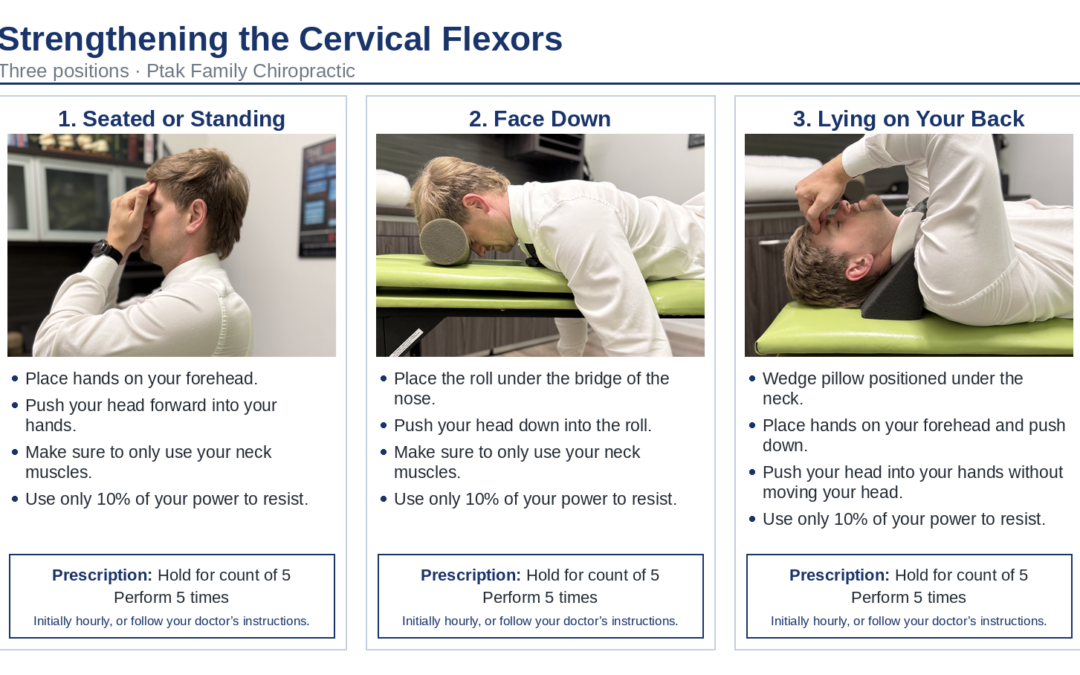
The Problem May Be on the Other Side The muscles in the back of your neck are relatively large and powerful. They help support and control your head all day long, as do the upper trapezius muscles. But the muscles in the front of your neck—the cervical flexors—are also essential. In our clinical experience, the strength and endurance of the cervical flexor muscles are critically important to maintaining normal cervical posture and the natural lordotic curve. When those muscles become weak relative to the more powerful cervical extensors and trapezius muscles, we frequently see forward head posture and loss—or even reversal—of the normal cervical curve. Now the muscles in the back of the neck have to work even harder. They tighten. They fatigue. They ache. And what do most people do? Stretch them again. It may feel good—but it may be treating the compensation rather than correcting the imbalance.
Your Neck Is Also Talking to Your Brain There’s another piece most people never hear about. The joints in your neck are filled with sensory receptors that continually send information to your brain about position and movement. This is part of proprioception—your body’s awareness of where it is in space. Your nervous system uses that information to help coordinate posture, muscle tone and balance. So, a joint problem isn’t simply a bone or muscle problem. It is also a neurological and proprioceptive problem. When normal neck-joint movement changes, the information reaching the nervous system can change. Muscle tone and function can become unbalanced, and some muscles may begin compensating for others. That’s why we don’t look at a chronically tight neck as simply a “tight muscle.” The joints, nerves and muscles work together.
So, What Can You Actually Do? If your neck is continually tight, don’t automatically stretch what’s tight. Find out why it’s tight. We look at questions such as: ● Is your neck moving properly? ● Are the cervical flexors weak or lacking endurance? ● Is your head moving forward? ● Has your normal cervical curve changed? ● Are the muscles in the back working overtime?
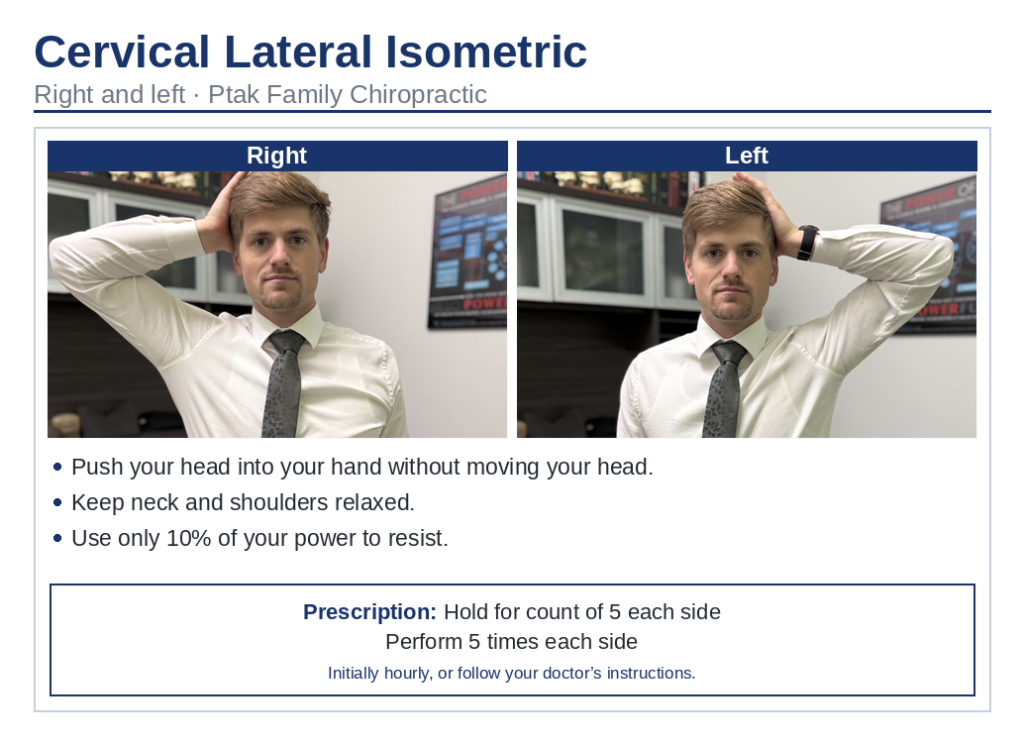
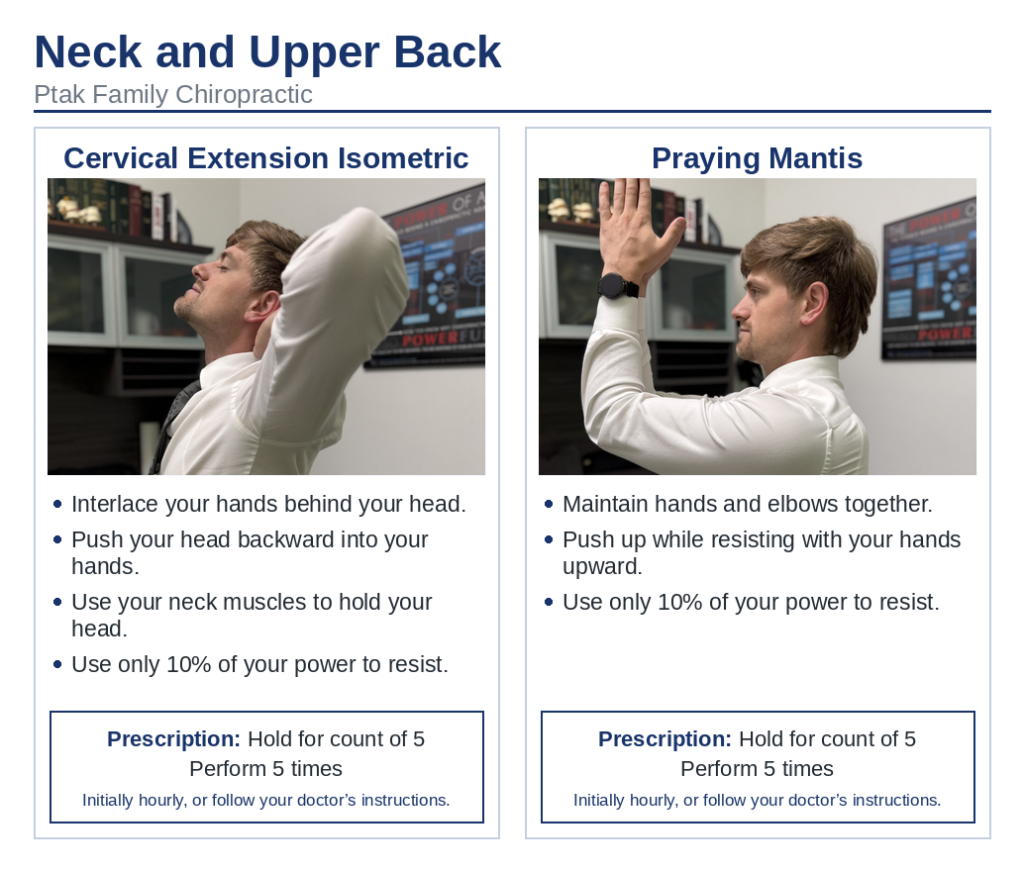
Then we address what we actually find. That may include restoring proper joint movement and alignment, activating and strengthening the cervical flexors, improving posture and proprioceptive control, and eventually strengthening the entire neck and upper back in balance.
The key is doing things in the right order.
Position first. Activate second. Strengthen third.
The Goal Isn’t a Better Stretch The goal is a neck that doesn’t need to keep tightening in the first place. So the next time you find yourself rubbing or stretching those same muscles, ask a different question: “What isn’t doing its share?” Because sometimes… Tight isn’t the problem. Tight is the compensation. Restore movement. Strengthen what’s weak. Rebalance the system.
Got Questions? Ask One of Our Doctors. Ptak Family Chiropractic 3122 Santa Monica Blvd., Suite 102 Santa Monica, CA 90404 310-473-7991
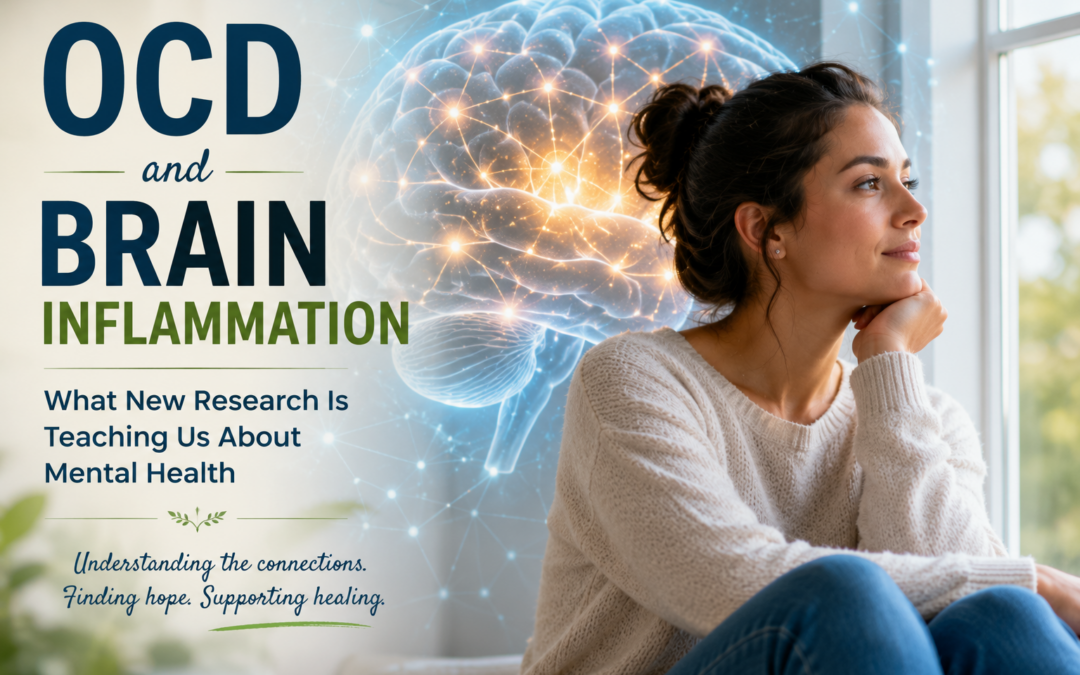
For many years, obsessive-compulsive disorder (OCD) was viewed almost exclusively as a psychiatric condition treated with medication and therapy. While those treatments remain extremely important, researchers are uncovering another piece of the puzzle: in some individuals, inflammation within the brain and immune system may also contribute to OCD symptoms.
This growing understanding is helping change the conversation from simply asking, “What’s wrong with the brain?” to “What factors may be affecting how the brain is functioning?”
What Is OCD?
Obsessive-compulsive disorder (OCD) is characterized by unwanted, intrusive thoughts (obsessions) that create anxiety and repetitive behaviors or mental rituals (compulsions) performed to temporarily relieve that anxiety.
These behaviors aren’t simply habits or personality quirks. OCD can significantly interfere with work, school, relationships, and daily life.
The Brain Inflammation Connection
One of the landmark imaging studies found that people with OCD had significantly higher levels of neuroinflammation than healthy control subjects. Researchers also observed that individuals with greater inflammation often experienced more severe symptoms.
Since that original study, additional research has continued exploring how immune system activation, inflammatory signaling molecules, and overactive brain immune cells (called microglia) may influence OCD in at least a subset of patients.
Scientists are still working to determine whether inflammation causes OCD, results from OCD, or both. The relationship is likely complex and varies from person to person.
Why Inflammation Matters
Inflammation is one of the body’s natural healing responses.
When balanced, it protects us from injury and infection.
However, chronic low-grade inflammation can interfere with normal brain communication, affecting areas involved with:
Emotional regulation
Habit formation
Decision making
Anxiety
Cognitive flexibility
Many of these same brain circuits are involved in OCD.
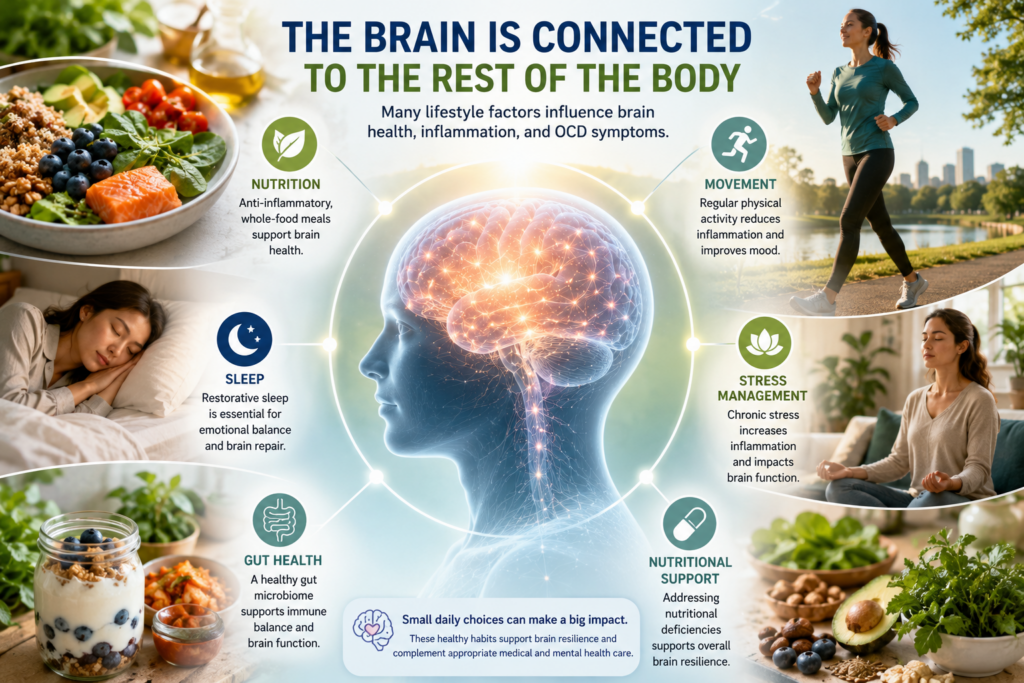
The Brain Is Connected to the Rest of the Body
One of the biggest lessons modern neuroscience has taught us is that the brain does not function in isolation.
Sleep quality, nutrition, gut health, exercise, stress, metabolic health, hormone balance, and immune function all influence brain performance.
Although no single lifestyle factor has been proven to cure OCD, optimizing overall health may help reduce inflammatory burden and improve brain resilience.
Areas that deserve attention include:
Eating an anti-inflammatory, whole-food diet
Maintaining stable blood sugar
Regular physical activity
Prioritizing restorative sleep
Managing chronic stress
Supporting a healthy gut microbiome
Correcting nutritional deficiencies when present
These approaches are not replacements for appropriate mental health care—they are complementary strategies that support overall brain health.
Head Injuries and Brain Health
Research also continues to show that concussions and repetitive head impacts can alter brain function and increase neuroinflammation.
Anyone experiencing persistent cognitive changes, mood changes, anxiety, or obsessive symptoms after a head injury should receive a thorough neurological evaluation.
Every Person Is Different
OCD is not caused by one single factor.
For some individuals, genetics play a major role.
Others may have significant environmental influences.
Still others may have immune-related conditions, infections, developmental factors, or neurological injuries that contribute to symptoms.
This is why a comprehensive evaluation is so important. Rather than focusing only on suppressing symptoms, it’s valuable to understand what factors may be contributing to the condition in each individual.
A Whole-Person Approach
At Ptak Family Chiropractic, we recognize that the nervous system does not exist apart from the rest of the body. Brain function is influenced by movement, nutrition, sleep, stress, immune health, and overall neurological integrity.
While chiropractic care is not a treatment for OCD, improving nervous system function and addressing lifestyle factors that support brain health may be valuable components of an individual’s overall wellness plan when used alongside appropriate medical and mental health care.
If you or someone you love struggles with OCD, remember that help is available. With advances in neuroscience, we continue to gain a better understanding of the many factors that influence brain health—and that creates new opportunities for hope.
Ask the Doctor
Have questions about brain health, neuroinflammation, or whether a neurological evaluation may be appropriate for you or a loved one? We’re always happy to help you better understand your options.
Contact Ptak Family Chiropractic today to schedule a consultation. We listen… We care… We get results.
Most people associate the word cannabinoid with cannabis or marijuana.
What many don’t realize is that your body already produces its own cannabinoids.
In fact, every one of us is born with an incredibly sophisticated communication network called the endocannabinoid system (ECS)—a system scientists now recognize as one of the body’s master regulators of health and balance.
Rather than existing solely to respond to cannabis, the ECS evolved to help keep your body functioning properly every single day.
Maintain balance (homeostasis) throughout the body.
When the body encounters physical injury, emotional stress, illness, poor nutrition, or environmental challenges, the endocannabinoid system works behind the scenes to help restore equilibrium.
Your Body Makes Its Own “Cannabinoids”
The two best-studied endocannabinoids are:
• Anandamide (AEA) — often nicknamed the “bliss molecule” • 2-Arachidonoylglycerol (2-AG)
Unlike hormones that circulate constantly, these compounds are produced only when needed and broken down quickly once their job is complete.
While it’s tempting to think of anandamide as a “happiness chemical,” the reality is more nuanced. It works together with dozens of other neurotransmitters and signaling molecules to help the nervous system adapt to changing conditions.
Can the Endocannabinoid System Become Imbalanced?
Researchers continue to investigate a concept called Clinical Endocannabinoid Deficiency (CECD).
The theory suggests that some individuals may have reduced endocannabinoid activity, making them more susceptible to certain chronic conditions.
Studies have explored possible links with disorders such as:
Maintaining a healthy balance between omega-3 and omega-6 fats appears particularly important.
Fill Your Plate with Color
Vegetables, fruits, herbs, and spices contain thousands of naturally occurring plant compounds that help regulate inflammation and oxidative stress.
Certain plant compounds—including beta-caryophyllene found in black pepper, cloves, oregano, rosemary, and hops—can interact with cannabinoid receptors without producing psychoactive effects.
A colorful, plant-rich diet supports far more than the ECS—it benefits nearly every system in the body.
Reduce Chronic Stress
Long-term stress places tremendous demands on the nervous system.
Mindfulness, meditation, breathing exercises, prayer, spending time outdoors, and meaningful relationships all help calm the body’s stress response and may indirectly support healthy ECS function.
Hands-On Care
Research has explored how therapies such as chiropractic care, massage therapy, acupuncture, and other forms of bodywork may influence endocannabinoid signaling and improve pain regulation.
Although more research is still needed to fully understand these mechanisms, many people report feeling calmer, more relaxed, and less painful following these therapies.
These benefits likely result from multiple overlapping physiological responses—including changes within the nervous system, improved movement, reduced stress, and potentially healthy endocannabinoid activity.
What About CBD?
Cannabidiol (CBD) continues to be one of the most studied compounds derived from cannabis and hemp.
Unlike THC, CBD does not produce intoxication.
Researchers are investigating its potential role in conditions such as:
While CBD has shown promise in specific situations, research is ongoing, product quality varies widely, and it is not appropriate for everyone. CBD may also interact with prescription medications.
If you’re considering CBD, discuss it with your healthcare provider to determine whether it’s appropriate for your individual situation.
The Bigger Picture
The discovery of the endocannabinoid system reminds us that the body possesses remarkable built-in mechanisms for healing, adaptation, and balance.
Rather than relying solely on external substances, many of the most powerful ways to support this system are the same habits that improve overall health:
• Move regularly. • Eat whole, nutrient-dense foods. • Sleep well. • Manage stress. • Stay socially connected. • Care for your nervous system.
When these habits become part of daily life, you’re not just supporting one system—you are creating an environment where your entire body can function at its best.
Ask the Doctor
Your nervous system is the master communication system of your body, and every system—including the endocannabinoid system—depends on it functioning optimally. If you’re dealing with chronic pain, stress, poor sleep, inflammation, headaches, or simply want to improve your overall health, we’d love to help you explore the underlying causes.
At Ptak Family Chiropractic, we take the time to listen, perform a thorough evaluation, and create personalized recommendations designed to help your body heal and function the way it was designed to.
Questions about your health? Ask Dr. Yates and Dr. Ptak
Talking to a child about their weight can feel overwhelming. Every parent wants to protect their child, but the words we choose can either build confidence or unintentionally create shame.
Today, childhood obesity remains a significant health concern. According to the CDC, nearly 1 in 5 children and adolescents in the United States lives with obesity. At the same time, children are growing up in an environment filled with highly processed foods, sugary drinks, endless screen time, and constant social media messages about appearance. It’s no wonder so many families struggle.
The good news? Healthy change begins with connection—not criticism.
The Goal Isn’t Weight. It’s Health.
One of the biggest mistakes adults make is focusing on the number on the scale.
Children rarely need to be told they are overweight. Most already know. Many have experienced teasing at school, comparisons on social media, or hurtful comments from others. Adding more attention to their weight often increases feelings of shame, anxiety, and low self-esteem rather than motivating positive change.
Instead of asking, “How do we get my child to lose weight?” try asking:
“How do we help our family become healthier together?”
That simple shift changes everything.
Shame Doesn’t Inspire Change
Research consistently shows that weight stigma and body shaming can actually make obesity worse.
Children who feel judged about their weight are more likely to:
Eat in secret or emotionally
Develop poor body image
Experience anxiety or depression
Avoid sports or physical activity
Carry unhealthy relationships with food into adulthood
Children thrive when they feel safe, accepted, and supported—not when they feel criticized.
Focus on Healthy Habits Instead of Appearance
Rather than talking about how your child looks, talk about how healthy habits help them:
Have more energy
Sleep better
Feel stronger
Think more clearly
Play longer
Recover faster
Build confidence
Health is something every child can work toward, regardless of what the scale says.
Small Changes Create Big Results
Families often believe they must completely overhaul their lifestyle overnight.
In reality, lasting change usually comes from small, consistent improvements.
Consider starting with simple goals such as:
Drinking more water and fewer sugary beverages
Adding one new fruit or vegetable each week
Taking a family walk after dinner
Limiting processed snacks in the home
Cooking more meals together
Reducing screen time before bed
Encouraging outdoor play every day
Children are far more likely to adopt healthy habits when they see their parents modeling them.
Make It a Family Lifestyle
One of the most powerful things parents can do is remove the spotlight from the child.
Avoid creating separate meals or singling one child out because of weight.
Instead, let the entire household embrace healthier choices together.
When healthy eating, movement, sleep, and stress management become “what our family does,” children don’t feel different—they simply grow up with healthier routines.
Celebrate the Child, Not Just Their Progress
Children need to know they are loved exactly as they are today.
Praise their kindness.
Celebrate their creativity.
Encourage their curiosity.
Recognize their effort—not just the outcome.
A child with strong self-esteem is often far more willing to try new things, stay active, and develop lifelong healthy habits.
Health Is More Than Food
A child’s health is influenced by many factors beyond calories, including:
Sleep quality
Physical activity
Stress levels
Emotional health
Family relationships
Time outdoors
Nervous system regulation
At Ptak Family Chiropractic, we also recognize the important role the nervous system plays in overall health. A well-functioning nervous system helps the body better adapt to physical, emotional, and environmental stressors, supporting healthier growth and development.
The Takeaway
Children need encouragement far more than judgment.
Instead of focusing on weight, focus on creating a home where healthy food, joyful movement, quality sleep, emotional support, and positive family habits become the norm.
The healthiest gift we can give our children isn’t simply a lower number on the scale—it’s helping them develop a lifelong relationship with health, confidence, and self-worth.
Ask the Doctor
If you have questions about your child’s health, posture, physical development, or how nervous system function may influence overall wellness, we’re here to help.
At Ptak Family Chiropractic, we believe every child deserves the opportunity to grow, thrive, and reach their fullest potential.
Years ago, scientists believed that our genes were like a permanent blueprint—something we inherited and simply had to live with.
Today we know the story is far more hopeful.
Research in the growing field of epigenetics suggests that life experiences—including significant trauma—may influence how certain genes are expressed. Even more fascinating, some of those changes may be passed from one generation to the next.
That sounds intimidating at first.
But there is another side to the story.
Just as difficult experiences can influence the nervous system, healthy experiences can help reshape it.
More Than Just Genetics
Studies involving families who survived major traumatic events, including the Holocaust, found differences in how stress-related genes were regulated in both survivors and their children.
Researchers believe trauma may leave biological “footprints” that influence future generations.
This does not mean someone is destined to experience anxiety, depression, or PTSD simply because a parent or grandparent experienced trauma.
Genes are not destiny.
They are possibilities.
Your environment, relationships, habits, mindset, and daily choices all influence how those genes are expressed.
That’s incredibly hopeful.
Your Nervous System Is Always Learning
One of the most amazing discoveries in neuroscience is that the brain remains adaptable throughout life.
This ability—called neuroplasticity—means your nervous system is constantly changing.
Every healthy habit sends your brain new information.
Movement.
Exercise.
Restorative sleep.
Healthy nutrition.
Positive relationships.
Prayer.
Meditation.
Breathing exercises.
Time in nature.
Learning new skills.
Chiropractic care that supports healthy nervous system function.
All of these experiences help teach the brain that it is safe, adaptable, and resilient.
Trauma Changes the Brain—But Healing Does Too
Traumatic experiences can alter how the brain processes stress.
Certain areas involved with fear, memory, and emotional regulation may become overactive or less efficient, leaving someone feeling constantly “on guard.”
People may notice:
• Increased anxiety
• Difficulty sleeping
• Heightened sensitivity to noise or crowds
• Emotional ups and downs
• Trouble concentrating
• Feeling constantly overwhelmed
• A persistent sense that something is wrong, even when life is going well
These are not signs of weakness.
They are signs of a nervous system that has adapted to survive.
The encouraging news is that the brain can continue adapting in healthier directions.
Healing Doesn’t Just Help You
When you begin caring for your nervous system, you may also be changing the environment your children and grandchildren experience.
Children learn far more from what we model than from what we say.
Calm creates calm.
Resilience teaches resilience.
Connection builds connection.
Every healthier choice has the potential to influence future generations—not just through biology, but through everyday life.
In many ways, healing can become just as contagious as trauma.
Where Chiropractic Fits In
At Ptak Family Chiropractic, we often remind patients that our goal isn’t simply to help someone feel better.
Our goal is to help their nervous system function better.
A well-regulated nervous system is better able to adapt to physical, emotional, and chemical stress.
While chiropractic care is not a treatment for PTSD or mental health disorders, supporting healthy nervous system function may be one important piece of a much bigger picture that also includes movement, nutrition, quality sleep, counseling when appropriate, healthy relationships, and meaningful purpose.
Healing rarely comes from one thing.
It comes from many small, consistent choices that move us toward greater health.
The Better Question
Instead of asking,
“What did I inherit?”
Perhaps a better question is,
“What am I choosing to pass on?”
Because while we may not choose the experiences that shaped our past, we have tremendous influence over the habits, beliefs, health, and hope we pass to the next generation.
The story of your family does not have to end where it began.
If this article resonates with you, or if you’ve been wondering whether your nervous system could be playing a role in your health challenges, we’d love to help.
At Ptak Family Chiropractic, we believe healing begins with understanding. Whether you’re struggling with chronic pain, stress, tension, headaches, fatigue, or simply want to function at your best, our team is here to listen, answer your questions, and help you explore your options.
You don’t have to figure it out alone.
Call our office to schedule a consultation, or simply stop by and ask us your questions. There is never any obligation—just an opportunity to learn more about your health and the incredible ability of the human body to heal and adapt.
Your future isn’t written by your past. Every step toward better health is a step toward changing your story—and perhaps the story of generations to come.




 Ptak Family Chiropractic
 (310) 473-7991