Most people think of chiropractic adjustments as something that “fixes the spine.”
But what if the real power of an adjustment is not just in the joint… but in the brain?
Research continues to show that chiropractic care does far more than improve movement. It directly influences how the brain processes pain, stress, and function throughout the body.
A study published in the Journal of Orthopaedic and Sports Physical Therapy examined how spinal adjustments affect key biochemical markers in the body. The findings were significant.
After cervical and thoracic adjustments, researchers observed increases in neuropeptides and hormones such as:
Neurotensin Oxytocin Orexin A Cortisol
These are not random chemicals. They play a direct role in how your body perceives pain and responds to stress.
In other words, adjustments help stimulate the brain to release natural substances that can reduce pain and improve overall regulation.
This helps explain something we see every day in practice.
People often feel better not just structurally, but neurologically.
The Brain–Body Connection at Work
Your spine is not just a structure. It is a communication highway between your body and your brain.
Every joint, muscle, ligament, and tendon contains specialized receptors that constantly send information to the brain.
Proprioceptors tell the brain about motion and position. Nociceptors signal inflammation, irritation, and potential damage.
When joints are not moving properly, these signals become distorted. The brain receives incomplete or altered information, which can lead to changes in muscle tone, coordination, and pain perception.
This is where chiropractic adjustments play a critical role.
An adjustment restores proper motion to the joint. But more importantly, it restores accurate communication between the body and the brain.
That improved communication changes how the brain responds.
Why Proper Motion Matters So Much:
Without proper joint motion, it becomes very difficult for the body to fully resolve:
Inflammation Stiffness Muscle tension Pain
Movement is not just mechanical. It is neurological.
When a joint moves properly, it sends healthy, accurate signals to the brain. This supports better coordination, improved muscle function, and a more balanced nervous system.
When motion is restricted, the opposite occurs.
Over time, this can lead to compensation patterns, increased tension, and persistent discomfort.
This is why restoring motion is one of the most important goals in any form of care.
The Role of Pain-Modulating Neuropeptides
One of the most exciting aspects of this research is the role of neuropeptides.
These are natural chemicals produced by the brain that influence how we experience pain.
The study suggests that chiropractic adjustments activate descending inhibitory pathways. These are systems within the brain and nervous system that help “turn down” pain signals.
Think of it as the brain applying its own natural brake on pain.
This is not masking symptoms. This is the body regulating itself more effectively.
It is one of the reasons patients often report:
Feeling relief after an adjustment Reduced tension and stress Improved sense of calm and well-being
The adjustment is not forcing the body to change. It is helping the body do what it is designed to do.
A Whole-Body Impact
This research reinforces an important principle.
The body and brain are not separate systems. They are deeply interconnected.
The signals coming from your joints influence brain function. And the brain’s response influences how your body feels and performs.
That is why proper joint motion is so essential.
It supports not only musculoskeletal health, but overall function and quality of life.
What This Means for You
If you are dealing with stiffness, discomfort, or ongoing tension, it may not just be a local issue.
It may be a communication issue between your body and your brain.
Chiropractic adjustments help restore that communication.
They improve motion They enhance neurological input They stimulate the brain’s natural pain-modulating systems
And in doing so, they help your body function the way it was designed to.
Chiropractors are uniquely trained to detect areas of restricted motion and correct them with precision. This is why chiropractic care remains one of the most effective, evidence-based approaches for improving joint function and reducing pain.
If you are curious how your spine and nervous system may be influencing how you feel, our doctors at Ptak Family Chiropractic are here to help guide you. Call us today at 310-473-7991 and receive a no-charge consultation to see if chiropractic can help you.
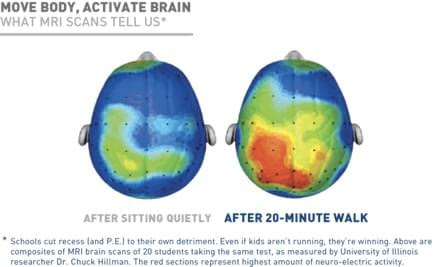
Most people think of exercise as something that benefits muscles, fitness, or weight. But what if one of its most powerful effects happens in the brain… and lasts a lifetime?
Emerging research continues to confirm something both simple and profound: movement in childhood helps build a better brain.
A study published in NeuroImage found that children who regularly participate in exercise develop stronger brain structure and function over time. Specifically, physical activity was linked to improved response inhibition, a critical part of cognitive control.
In simple terms, this means the ability to pause, think, and make better decisions.
And that ability impacts everything.
Academic performance Emotional regulation Focus and attention Impulse control Long-term health behaviors
This is not just about being active. This is about how the brain wires itself during development.
When children move, especially through activities that require coordination, balance, timing, and skill, the brain adapts. It becomes more efficient, more connected, and more capable of handling complex tasks.
The research highlights three key changes that occur in the brain with regular physical activity:
Increased cortical thickness, which supports higher-level thinking and processing Improved efficiency of neural pathways, meaning the brain works faster and more effectively Stronger communication between the left and right hemispheres of the brain
These changes are not temporary. They help shape how a child thinks, learns, and responds to the world well into adulthood.
One of the most important outcomes is improved inhibitory control.
This is the brain’s ability to override impulses and distractions in favor of better, more appropriate actions. It is what allows a child to focus in class, resist distractions, regulate emotions, and make healthier choices.
There are two main types of inhibitory control.
The first is attention control, which helps a child stay focused and filter out distractions.
The second is behavioral control, which allows a child to pause before reacting, rather than acting impulsively.
Both are essential for success in school and life. But behavioral control plays an even bigger role in long-term health, because it influences decision-making, habits, and self-regulation.
Here is where things become especially important.
Modern lifestyles are moving in the opposite direction.
Children today are spending more time sitting, more time on screens, and less time engaging in meaningful physical activity. In many cases, schools are reducing or replacing physical education in an effort to prioritize academics.
But the research suggests this may be doing the exact opposite of what is intended.
Reducing movement does not enhance learning. It may limit the brain’s ability to learn.
Exercise is not a break from learning. It is a foundation for it.
Activities that involve coordination and skill, such as sports, dancing, climbing, or even structured play, appear to have the greatest impact. These types of movements challenge the brain, not just the body.
They require timing, awareness, balance, and decision-making, all of which stimulate neurological development.
This is one of the most overlooked aspects of health today.
We often wait until there is a problem before we act. But brain development is happening every day, especially in childhood. The habits formed early can influence cognitive and emotional function for decades.
The takeaway is simple, but powerful.
Daily movement is not optional. It is essential.
Encouraging children to be active every day, both in school and at home, is one of the most important investments we can make in their future.
Play with them Move with them Encourage sports, exploration, and outdoor activity Support schools that prioritize physical education
Because what we are really supporting is not just physical health.
We are helping build stronger, more capable, more resilient brains.
And that is something that lasts a lifetime.
If you have questions about how movement, posture, and nervous system function impact your child’s development, our team at Ptak Family Chiropractic is here to help guide you.
Have you ever felt completely exhausted… but unable to relax?
Tired, but your mind keeps going.
Physically drained, yet your body still feels tense, tight, or “on edge.”
Most people assume this is just part of a busy life.
But what you are feeling is often your nervous system stuck in the wrong gear.
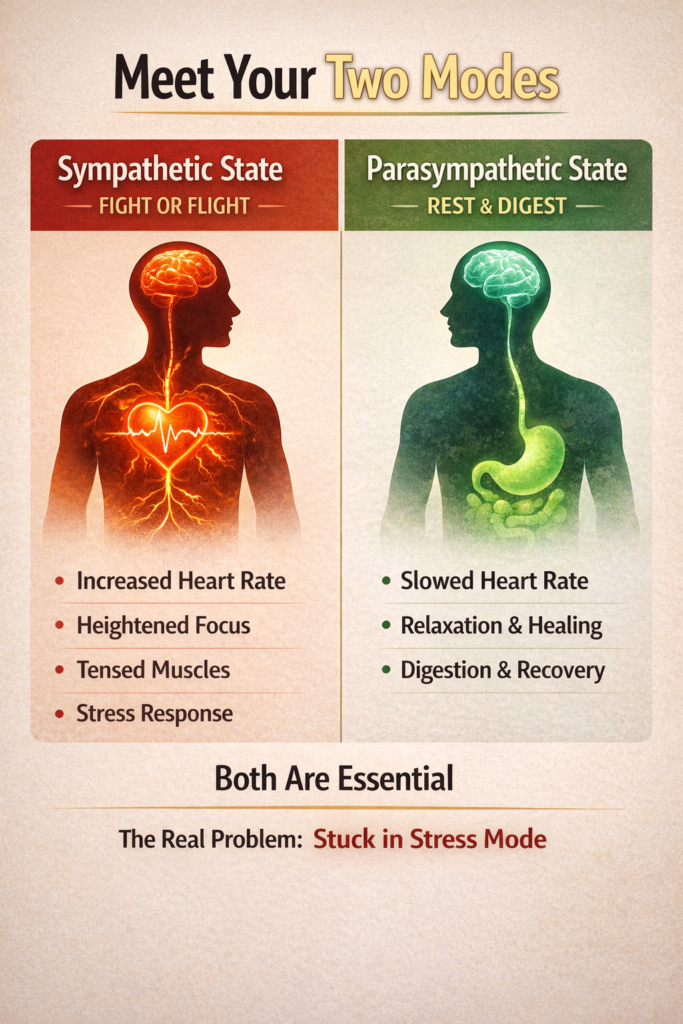
Meet Your Two Modes
Your nervous system is constantly working behind the scenes, regulating how your body responds to everything around you.
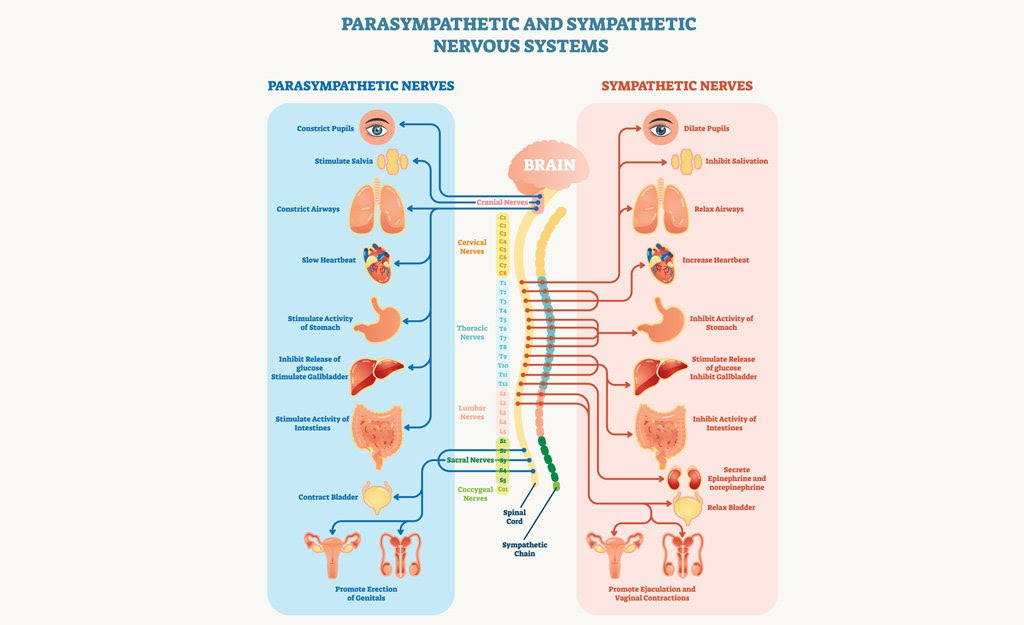
At its core, it operates in two primary modes.
The first is the sympathetic state, commonly known as “fight or flight.” This is your body’s survival mode. It increases heart rate, sharpens focus, tightens muscles, and prepares you to respond to stress or perceived danger.
The second is the parasympathetic state, often referred to as “rest and digest.” This is your recovery mode. It slows things down, supports digestion, promotes healing, and allows your body to repair and recharge.
Both systems are essential.
The problem is not stress.
The problem is when your body never fully shifts out of it.
When Stress Becomes the Default
In today’s world, most people spend far more time in a sympathetic state than they realize.
Deadlines, emails, traffic, constant notifications, family responsibilities… your body does not distinguish between a true physical threat and modern-day stress. It responds the same way.
Over time, this creates a pattern.
Your nervous system begins to live in a constant state of low-level alert.
This is when people start to notice things like tight shoulders, jaw clenching, shallow breathing, or difficulty falling asleep. You may feel restless, irritable, or unable to fully unwind even when you have the time.
What is happening is simple.
Your body has learned to stay “on.”
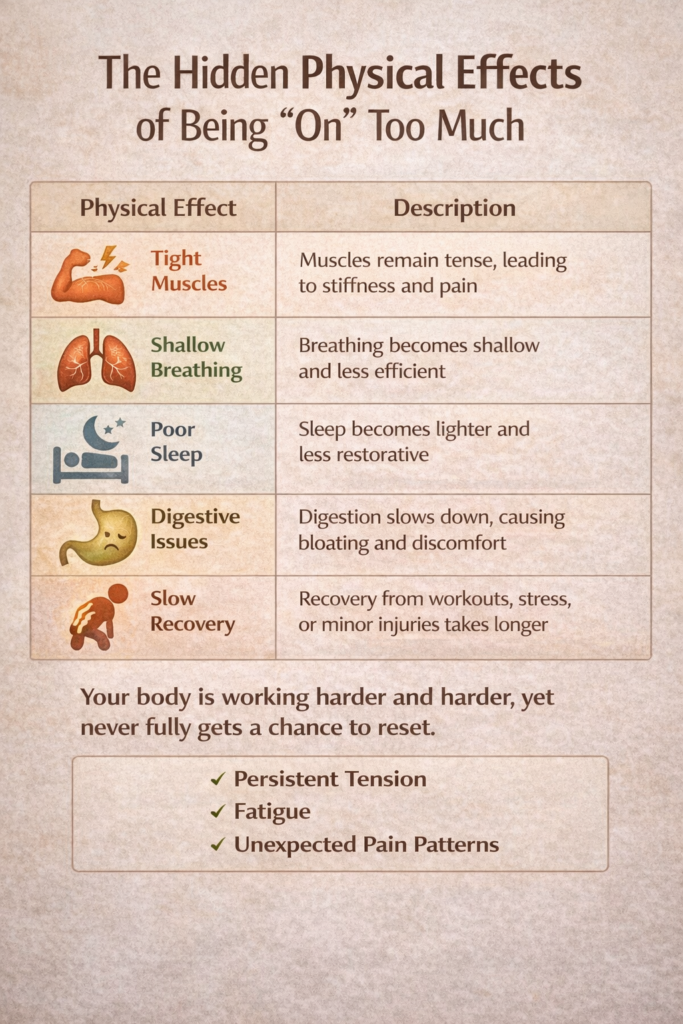
The Hidden Physical Effects of Being “On” Too Much
When your nervous system stays in a heightened state, it begins to affect more than just how you feel mentally.
Muscles remain tight longer than they should.
Breathing becomes shallow and inefficient.
Sleep becomes lighter and less restorative.
Digestion can slow down or become inconsistent.
Recovery—whether from workouts, daily stress, or even minor injuries—takes longer.
Over time, this creates a body that is working harder than it needs to, without ever getting the reset it requires.
This is often where people begin to notice persistent tension, fatigue, and even pain patterns that seem to come out of nowhere.
Why Your Body Doesn’t “Shut Off” Automatically
One of the biggest misconceptions is that your body should naturally relax once the day is over.
But if your nervous system has adapted to staying in a heightened state, it does not simply switch off.
Just like posture patterns or movement habits, your nervous system can learn dysfunction.
If the signals for relaxation are not registering clearly, the body continues to operate in the same pattern.
This is why some people can sit on the couch at night and still feel tense.
Or lie in bed and feel exhausted, yet wide awake.
The system has not been given the right input to shift gears.
How This Connects to the Spine and Body
Your nervous system and your spine are directly connected.
Every signal traveling between your brain and your body passes through the spine. When there is restriction, tension, or misalignment in the spine, it can influence how effectively those signals are transmitted.
This is where many people begin to experience a disconnect.
The body may be trying to relax, but the message is not being communicated clearly.
This can contribute to ongoing muscle tension, poor recovery, and a nervous system that struggles to downshift.
Our focus is always on restoring that communication.
Because when the nervous system functions better, everything else begins to follow.
Simple Ways to Support Your Nervous System
You do not need to overhaul your life to start making changes.
Small, consistent inputs create meaningful shifts over time.
Movement is one of the most powerful tools. Even brief breaks throughout the day help reset your system and prevent it from becoming locked into one pattern.
Breathing matters more than most people realize. Slow, controlled breathing can directly signal your body to shift toward a calmer state.
Sleep routines play a major role. Going to bed at consistent times and creating a wind-down routine helps your body recognize when it is safe to relax.
Time away from constant stimulation is essential. Stepping outside, reducing screen exposure, and giving your mind space all help your system reset.
None of these need to be extreme.
They simply need to be consistent.
Why Awareness Is the First Step
Most people are not aware of how much tension they are carrying.
It becomes normal.
Until one day it is not.
Learning to recognize the signs—tightness, restlessness, shallow breathing, difficulty relaxing—is the first step toward change.
Because once you are aware, you can begin to shift it.
A Different Way to Look at Stress
Stress is not something you eliminate.
It is something you learn to move through more effectively.
A well-functioning nervous system allows you to handle stress when needed… and recover from it when it is over.
That recovery is where healing happens.
That is where your body resets, repairs, and restores.
Without it, the system stays stuck.
Where We Come In
Our role is to help your body function the way it was designed to.
Through a neurologically focused approach, we work to improve communication within the nervous system, reduce interference, and help your body shift more effectively between states.
This is not about forcing relaxation.
It is about restoring the body’s ability to do it naturally.
When that happens, people often notice better sleep, less tension, improved focus, and a greater sense of ease in their body.
The Takeaway
If you feel wired but exhausted…
If you have trouble relaxing, even when you want to…
If your body feels constantly tense or “on”…
It is not just in your head.
It is your nervous system asking for support.
And the good news is, this is something that can change.
If you are ready to better understand how your body is functioning and what steps you can take to support it, the docotrs and the team at Ptak Family Chiropractic are here to help guide you.
Call today and lets see if it is sympathetic overload that is creating your healthg issues or it its a weakend parasympathetic system at the core of your health issues. 310-473-7991. Remember we never c hgarge anyone to sit down and see if your health issue is a chiropractic one.
Most people think neck pain starts when they feel it.
In reality, it starts long before that.
By the time discomfort shows up, your body has already been adapting, compensating, and quietly breaking down for weeks, months, or even years. Pain is not the beginning of the problem. It is the signal that your body can no longer keep up with the compensation.
This is why so many people say, “I don’t know what happened… it just started hurting.”
But it didn’t just start. Your body has been trying to manage the problem for a long time.
The Real Starting Point: Forward Head Posture
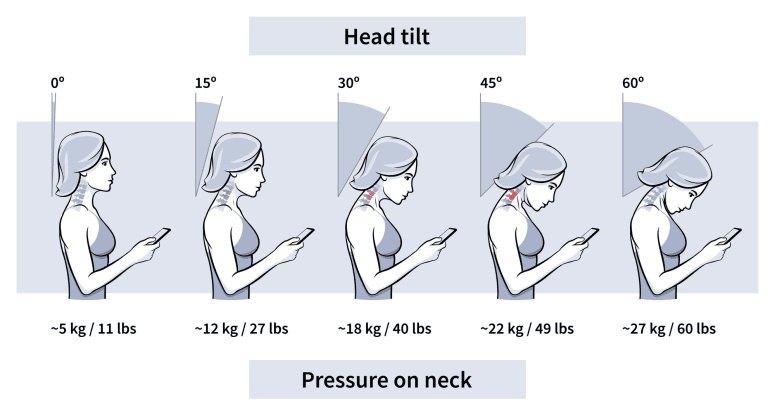
Your head weighs about 10 to 12 pounds. When it sits directly over your shoulders, your spine manages that weight efficiently.
But posture has changed.
Phones, laptops, and long hours at a desk have shifted the average head position forward. And when your head moves forward, even slightly, everything changes.
For every small forward shift, the load on your neck increases dramatically. At about a 45-degree tilt, your neck is no longer supporting 10 pounds… it is handling up to 50 pounds of force.
Think about that for a moment.
Your neck, upper back, and even your lower back are now working to support what is essentially a 50-pound bowling ball all day long.
This is not just a neck issue. This becomes a full spine problem.
As we discussed in our previous posture article, when the head moves forward, the body must compensate. The lower spine will either flatten and lose its natural curve or shift into a “butt-back” posture to keep you upright. Either way, the entire system is now under stress.
Why You Don’t Feel It Right Away
The body is incredibly adaptive.
It will do whatever it can to keep you moving and functioning, even if that means doing it inefficiently.
Muscles begin to tighten to hold you upright. Other muscles weaken because they are no longer being used properly. Your joints start moving differently. Your nervous system adapts to this new “normal.”
At first, you feel nothing.
Then maybe a little tightness.
Then stiffness.
Then one day, pain.
The key point is this: your body was unaware of the dysfunction in a way that would create immediate alarm, so the pattern continued. The signal for proper healing never fully registered, and the dysfunction persisted beneath the surface.
The Nerve-Muscle Loop Most People Miss
Most people believe neck pain is just a muscle problem.
It is not.
When your head sits forward, the joints in your cervical spine lose their normal alignment. This creates stress and irritation on the nerves exiting the spine.
Those nerves control muscles.
When a nerve is irritated, it sends an altered signal to the muscle. The muscle responds by tightening, guarding, or becoming dysfunctional. That dysfunction then reinforces the poor posture, which continues to irritate the nerve.
Over time, this loop becomes your default pattern.
This is also why neck issues often lead to headaches. The suboccipital region, where the skull meets the neck, is highly sensitive. Chronic irritation here can directly contribute to head pain. Many chronic headaches actually originate from the neck, not the head.
Why Sitting Is the Hidden Driver
Prolonged sitting is one of the biggest contributors to this problem.
When you sit for extended periods, especially at a computer, the muscles in the front of your body begin to shorten. Your chest tightens. Your shoulders roll forward. Your head follows.
At the same time, the muscles that are supposed to hold you upright weaken.
This imbalance becomes a pattern.
And the longer it continues, the more your body accepts it as normal.
We were not designed to sit for hours at a time. Yet for many people, this is exactly what they do every day. Over time, this repetitive stress can be just as damaging as heavy physical labor.
Why Neck Pain Is Rarely “Just Acute”
There are two broad categories we look at in practice.
An acute injury, such as a car accident or sudden strain, is usually more straightforward. The body has not yet built long-term compensations, so care tends to progress more quickly.
Chronic postural dysfunction is different.
This is where most people fall.
If your posture has been off for months or years, your body has adapted at multiple levels. Muscles, joints, and your nervous system have all learned a new pattern. Changing that requires more than a quick fix.
It requires retraining.
What Chiropractic Care Actually Does
An adjustment is not just about “cracking your neck.”
It is about restoring communication.
When we adjust the spine, we are reducing interference within the nervous system. This allows muscles to receive a clearer signal and begin functioning the way they were designed to.
Over time, this helps reset patterns that have been dysfunctional for far too long.
But adjustments alone are not enough.
That is why our approach includes specific pre-adjustment preparation designed to activate the brain and nervous system before the adjustment even takes place. This is where real change begins.
When the brain is engaged and the body is prepared, the adjustment becomes more effective and more lasting.
Why Recovery Takes Time
One of the biggest misconceptions is how long it takes to truly correct this problem.
If your body has been compensating for years, it is unrealistic to expect full correction in a few visits.
Most people begin to experience meaningful, stabilizing changes around the six-month mark. True correction and long-term improvement take longer because you are rewiring patterns that have been deeply ingrained.
The good news is that progress builds.
Each visit reinforces the last. Each change compounds over time.
Prevention Is Simpler Than Correction
If you are not currently in pain, this is where you have the greatest opportunity.
You do not need perfect posture. That is not realistic.
What you need is variability and resilience.
Change your position regularly. Move every 30 to 60 minutes. Strengthen the muscles that support your posture. Give your body the ability to handle the stress you place on it.
Because the goal is not perfection.
It is adaptability.
When to Take Action
The earlier you address this, the easier it is to correct.
Do not wait for severe pain.
Do not ignore recurring stiffness or headaches.
Do not assume it will resolve on its own.
If you are experiencing neck discomfort, chronic tension, headaches, or even shoulder and arm symptoms, your body is already telling you something.
The longer you wait, the more compensation builds, and the longer it takes to unwind.
The Bigger Picture
Neck pain is rarely just about the neck.
It is about how your body has adapted over time.
When you restore alignment, reduce nerve interference, and retrain movement patterns, the body responds the way it was designed to.
Your body is not failing you.
It has been protecting you.
Now it is simply asking for a better strategy.
If you are ready to understand what is really causing your neck issues and what can be done to correct it, our office is here to help guide you through that process.
When most people think about chiropractic care, they think about pain. Back pain. Neck pain. Injuries. But in our office, many of the children we see are not in pain at all. They are healthy, active, and thriving. So why do parents bring them in?
Because health is not just about how you feel. It is about how well your body is functioning.
Children are constantly growing, adapting, and developing. From the moment they are born, their brain and nervous system are shaping how they move, think, heal, and interact with the world. Every fall, every step, every sport, every hour spent sitting in school or looking down at a device influences that development.
Chiropractic care is not about fixing something that is broken. It is about making sure everything is working the way it is designed to work as your child grows.
A Different Way to Look at Health
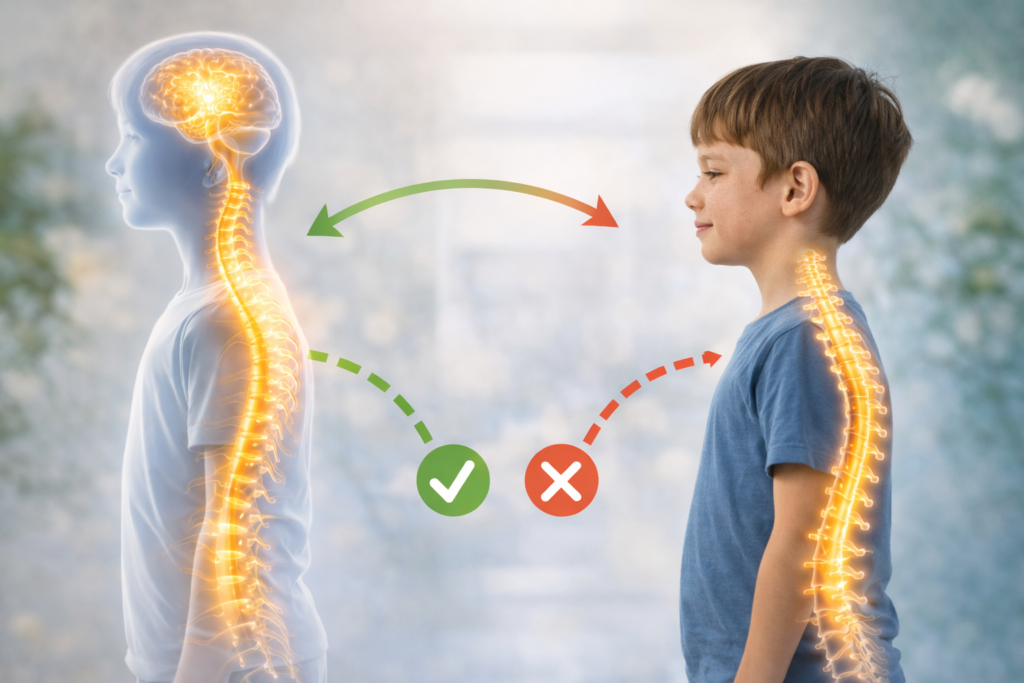
Your child’s spine protects their nervous system, which controls and coordinates every function in the body. When the spine is moving well and the nervous system is communicating clearly, the body has the best opportunity to grow, adapt, and function at a high level.
When there are subtle imbalances, even without pain, the body adapts. Just like adults, children can compensate. The difference is that children are still developing, so those patterns can become part of how they grow.
That is why many parents choose to be proactive instead of reactive.
They are not waiting for a problem. They are supporting their child’s development from the start.
10 Reasons Parents Bring Healthy Kids to a Chiropractor
To encourage proper brain and nerve development through healthy neural plasticity
To support clear and efficient communication throughout the nervous system
To help strengthen immune system function and resilience
To help with common early challenges such as breastfeeding issues or colic
To reduce the impact of modern lifestyle stress on a child’s body
To support digestive function and overall internal balance
To improve focus, learning, and concentration
To promote better posture, balance, and coordination
To help children stay active, engaged, and full of energy
To keep kids functioning at their highest level as they grow
These are not about treating conditions. They are about supporting function. And when function improves, many parents notice positive changes in how their child feels, moves, and behaves.
What About Growing Pains and Activity?
Kids fall. They twist. They run. They climb. They sit in classrooms. They carry backpacks. They spend time on devices. All of these are normal parts of childhood, but they also place stress on a developing spine and nervous system.
Sometimes that stress shows up as growing pains, stiffness, poor posture, or fatigue. Other times, it does not show up at all. The body simply adapts.
Chiropractic care helps restore motion, improve balance in the body, and support the nervous system so those adaptations do not become long-term patterns.
The Approach Is Gentle and Specific
One of the biggest concerns parents have is whether chiropractic care is safe for children. The answer is yes, and it is very different from what most people expect.
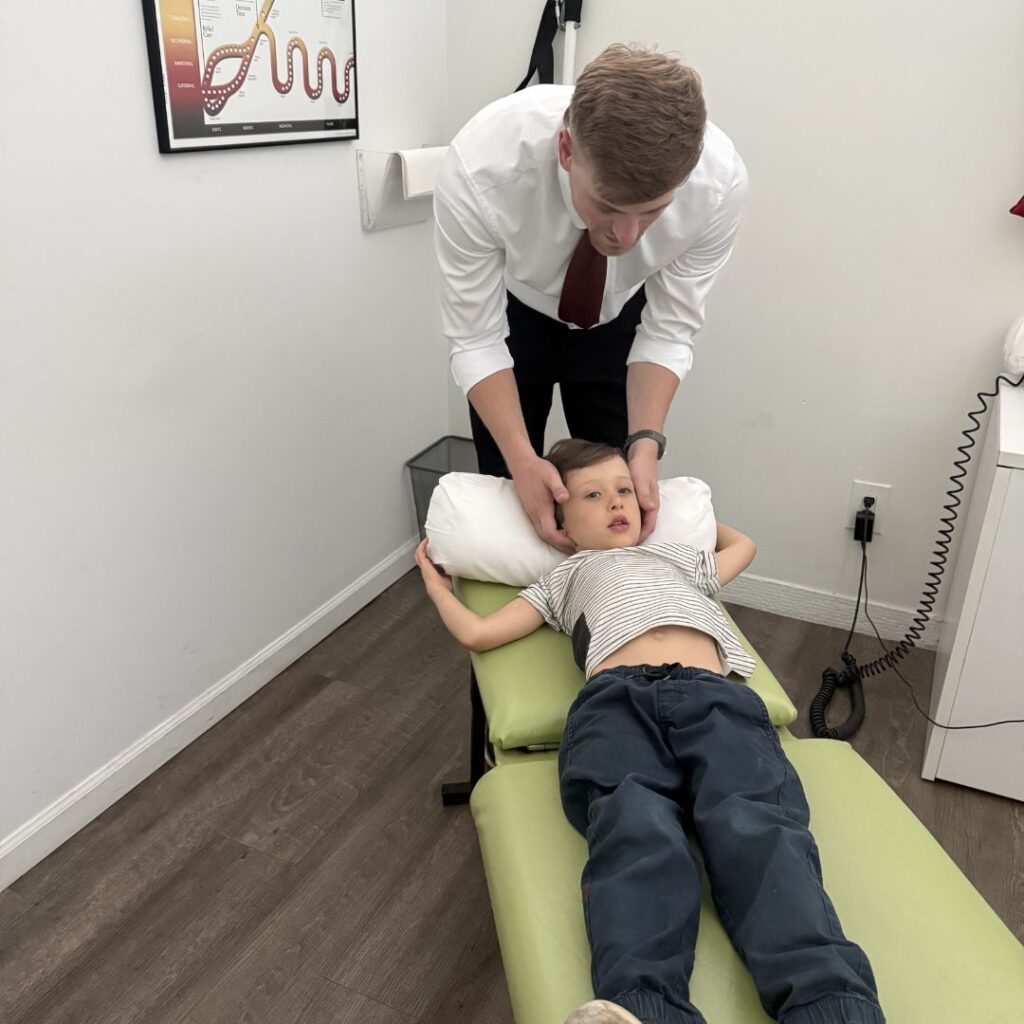
Adjustments for children are incredibly gentle. Often, the pressure used is no more than what you would use to check the ripeness of a tomato. The goal is not force. The goal is precision, comfort, and supporting the body’s natural ability to function.
Each child is evaluated individually, and care is tailored specifically to their age, development, and needs.
Why Start Early?
The earlier we support the nervous system, the better the foundation for growth.
Think of it this way. If a child develops strong patterns of movement, balance, and nervous system coordination early on, those patterns tend to carry forward into adolescence and adulthood.
Instead of trying to correct years of compensation later, we help guide development as it is happening.
That is why many families make chiropractic care part of their child’s wellness routine, just like nutrition, movement, and sleep.
A Proactive Choice for Long-Term Health
Parents who bring in healthy children are not looking for a quick fix. They are making a long-term investment in their child’s health and development.
They understand that the body is always adapting. The question is whether it is adapting in the right direction.
At Ptak Family Chiropractic, our focus is on helping your child’s body function at its best so they can grow, develop, and live life fully.
If you have ever wondered whether your child could benefit from care, we invite you to come in for a no-charge consultation. Dr. Jeffrey Ptak and Dr Jakob Yates will walk you through exactly what we look for, what we find, and whether care makes sense for your child.
Because when it comes to your child’s health, waiting for symptoms is not the only option.