If you are a parent, you want the best for your child. You want them to be active. You want them to be engaged. You want them to develop confidence, discipline, and skills that will serve them for life.
So you say yes. Yes to tennis on Monday. Yes to gymnastics Tuesday, Thursday, and Saturday. Yes to ballet on Wednesday. Yes to piano lessons on Sunday, with practice every day in between.
It feels like you are giving them opportunity. And in many ways, you are.
But there is a side of this that very few parents are being told.
Because while your child is growing, their body is also adapting. And adaptation, when repeated often enough, becomes structure.
From the outside, everything looks positive. Your child is active. They are involved. They are building skills. But underneath the surface, something else may be happening.
Repetition without balance creates stress. Too much sitting combined with intense activity creates imbalance. Constant activity without recovery creates fatigue in the nervous system. And the body adapts to all of it, not by resisting it, but by changing.
Arthritis does not begin at 50. It begins with patterns that start much earlier.
Movement is essential for a healthy joint. Every time your child moves, their joints draw in nutrients, release waste, and send signals to the brain. This is how the body stays balanced and coordinated.
But when movement becomes repetitive, limited, or unbalanced, those signals begin to change.
At first, it is subtle. Tightness. Fatigue. Postural changes. Nothing that seems serious.
But over time, these patterns can lead to compensation, imbalance, early degeneration, and subluxation.
Subluxation is when a joint is not moving or functioning properly, interfering with how the nervous system communicates with the body. This is where the process begins. Not with pain, but with dysfunction.
Today’s kids are not less active. They are differently stressed.
They are sitting more than ever. They are on devices more than ever. They are training harder than ever. And they are recovering less than ever.
This combination creates a perfect storm.
Periods of inactivity followed by bursts of repetitive stress, day after day, week after week, year after year.
The body adapts to whatever it experiences most. And those adaptations become the foundation for future health or future problems.
This is not about pulling your child out of activities. It is about awareness. It is about balance. It is about understanding that more is not always better.
Because without the right support, even good activities can create stress on a developing body.
The goal is not to limit your child. The goal is to support how their body adapts to everything they are doing.
At Ptak Family Chiropractic, we see this every day. Children adapting to the demands placed on them. Some adapting well. Others showing early signs of imbalance, restriction, and stress in their spine and nervous system.
The difference is not the child. It is the awareness and the support.
When you support your child’s movement, posture, and nervous system early, you change the trajectory. You help their body adapt in a healthier way. You reduce the likelihood of long-term patterns leading to degeneration. You give them an advantage that most people do not get until much later in life.
Your child’s body is not fragile. It is incredibly intelligent. But it is always adapting.
The question is not whether your child is adapting.
The question is what they are adapting to.
Because the patterns being built today will shape how their body functions tomorrow.
If your child has a busy schedule, spends time on devices, or you simply want to be proactive about their long-term health, this is the time to take a closer look.
At Ptak Family Chiropractic, we specialize in helping children and families improve movement, function, and long-term health.
Call 310-473-7991 today and ask how we can support your child’s development and well-being.
Because the patterns that shape their future are happening right now.
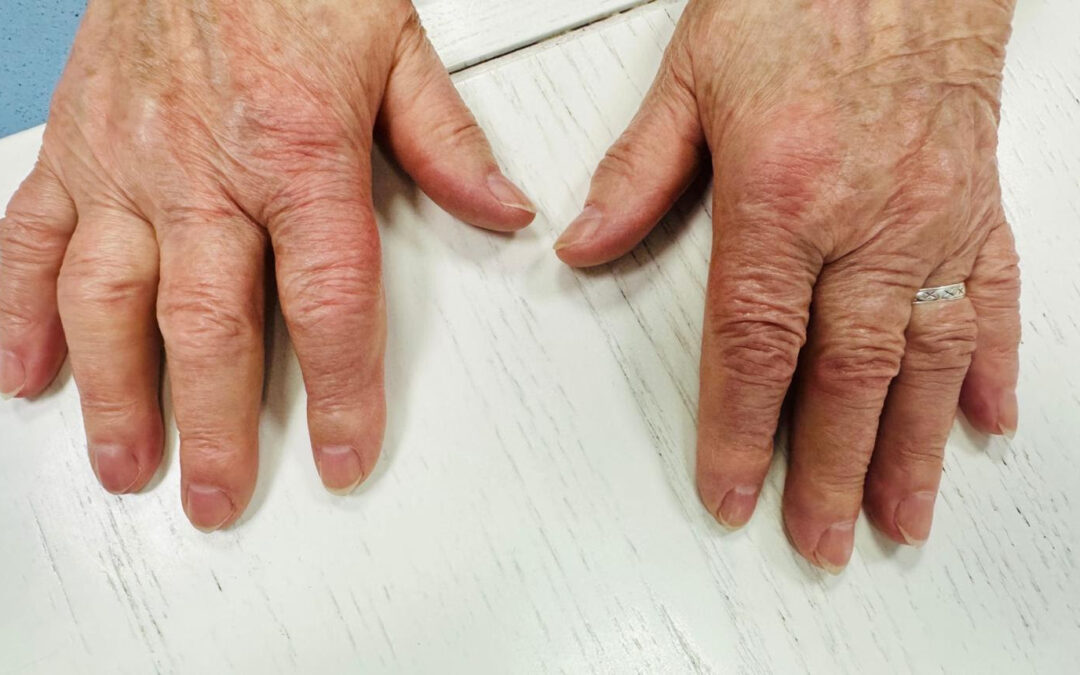
If you have been diagnosed with arthritis, you were likely told some version of this. It is wear and tear. It comes with age. It is something you will have to manage. But what if that is not the full story?
What if arthritis is not the beginning of decline, but the result of patterns that have been building for years?
Because arthritis does not begin when you feel pain, and it does not begin when you get older. It begins much earlier.
To understand arthritis more clearly, we need to look at what it really is. There are two primary categories people are diagnosed with. Osteoarthritis and autoimmune arthritis. They share a name, but they are very different processes.
Osteoarthritis is often described as wear and tear, but that explanation is incomplete. Your body does not simply wear out. It adapts. When joints are not moving properly, when there is restriction, imbalance, or repetitive stress, the forces through that joint begin to change. Pressure becomes uneven. Motion becomes altered. Inflammation begins. Over time, this leads to degeneration.
Autoimmune arthritis, such as Rheumatoid Arthritis, follows a different path. In these cases, the immune system mistakenly attacks the body’s own tissues, creating inflammation and damage within the joints. But even here, the joints are not acting alone. The immune system is closely connected to the nervous system, and that connection changes everything.
Whether you are dealing with osteoarthritis or autoimmune arthritis, there is one system that connects them both. The nervous system.
Every joint in your body is constantly communicating with your brain. Movement is not just mechanical. It is neurological. When a joint moves properly, it sends clear, accurate signals to the brain. This supports coordination, balance, muscle function, and even how your body regulates inflammation. When motion is restricted, those signals change. Over time, that changes how your body moves, how it compensates, and how it functions.
One of the most important truths about arthritis is this. It does not start with pain. It starts with patterns.
Movement is essential for joint health. Every time a joint moves, it draws in nutrients, pushes out waste, and stimulates the nervous system. But when movement is reduced, even for short periods, things begin to change.
Within days to weeks, reduced motion can lead to decreased fluid exchange, increased stiffness, and altered neurological communication. Over time, this leads to compensation patterns, chronic imbalance, early degeneration, and subluxation.
Subluxation is when a joint is not moving or functioning properly, interfering with how the nervous system communicates with the body. This is where arthritis truly begins. Not with pain, but with dysfunction.
At Ptak Family Chiropractic, we are seeing early signs of degeneration in patients as young as 13 years old. That would have been rare decades ago. But today’s environment has changed.
People are sitting more, moving less, spending hours on devices, repeating the same movements daily, and living in constant stress. The body adapts to whatever it is exposed to most. And over time, those adaptations become structure.
The same patterns that create stiffness in your teens become arthritis later in life.
Did You Know Fun Facts Instagram Post – 7
Here is what most people are never told. The body has the ability to change.
When the right inputs are introduced consistently, structure and function can improve.
At Ptak Family Chiropractic, we utilize a comprehensive corrective care approach designed to restore motion, improve neurological communication, and support long-term structural change.
This includes specific chiropractic adjustments combined with wobble chair exercises to promote motion and disc hydration, cervical dynamic traction to improve alignment, fulcrum exercises to support spinal structure, head weighting to retrain posture, body weighting systems to improve balance and neurological input, and hydration strategies to support disc health.
These are performed both in-office and at home, often twice per day.
Over time, we have seen measurable improvements in disc spacing, joint function, posture, and movement patterns. Not overnight, but through consistency.
This is where chiropractic care changes the trajectory. Not by masking symptoms, but by restoring function.
When motion improves, joint stress becomes more balanced, muscles function more efficiently, and neurological communication improves.
In osteoarthritis, this can help reduce abnormal wear and improve movement. In autoimmune conditions, chiropractic care does not treat the disease itself, but it supports the nervous system, helping the body regulate and adapt more effectively.
Patients often experience improvements in pain, mobility, energy, sleep, and overall quality of life.
You are not your diagnosis. Your body is not breaking down. It is adapting. And when you change the inputs, you change the outcome.
Too often, people are told to wait, to manage, to accept limitation. But there is another path. A path focused on function over symptoms, cause over condition, and restoration over resignation.
Whether you are 13 or 73, it is never too early and it is never too late.
If you have been diagnosed with arthritis or are beginning to notice stiffness, tension, or reduced mobility, this is your opportunity to take control of your health.
At Ptak Family Chiropractic, we specialize in helping people restore motion, improve function, and support their body’s natural ability to heal.
Call 310-473-7991 today and ask how our corrective care approach can help you move better, feel better, and live with greater ease.
Because arthritis may be part of your story, but it does not have to define it.
The nervous system sits at the magnificent interface between spirit and matter. It is the physical manifestation of consciousness, providing the order and coordination that allow us to self-maintain, self-heal, and adapt to an ever-changing world.
This view — that the whole is greater than the sum of its parts — is calledvitalism. Vitalism holds that the body is more than just tissues and chemicals; it is a living, self-organizing system, intimately connected within itself and animated by something greater.
Every part of the body matters, but none functions in isolation. What connects the parts, orchestrates their functions, and links them to the field of consciousness is the nervous system. In chiropractic philosophy, which is grounded in vitalism, this is foundational:
“There exists a Universal Intelligence, present in all matter, continuously giving it all of its animating properties.”— Chiropractic Principle #1, Ralph W. Stephenson
This Universal Intelligence animates all life — whether in rocks, bacteria, or humans — but it is through the human nervous system that this consciousness finds its most refined expression. Unlike a rock, we can move, feel, speak, create, love, and imagine — all because of the differentiated, complex systems working harmoniously inside us. At the helm of this coordination is the nervous system.
The simplicity behind the body’s complexity is this: the nervous system connects it all. It enables cellular healing, organ communication, and adaptation to the environment. But beyond the physical, it connects the human body to consciousness itself, a force far greater than we can fully comprehend.
This is why chiropractic adjustments are so profound. By introducing acorrective force, chiropractors facilitate increased expression of consciousness in the body. The intention and love behind this force are essential, guiding the nervous system to realign, balance, and heal.
Neuroscience explains part of this throughneuroplasticity— the nervous system’s ability to rewire itself, form new connections, and dissolve old patterns. When nerve pathways are stimulated, processes likesynaptogenesis(the creation of new synaptic connections) take place. This means that through intentional stimulation, we can help the body become more adaptable, resilient, and integrated.
Chiropractic adjustments are one powerful way to support nervous system health, but they aren’t the only way. There are many practices you can incorporate into daily life to cultivate coherence and integrity within your system:
Breathwork: Reset the nervous system.
Belly Breathing: Place your hands over your belly and take deep, slow breaths, letting the belly expand on the inhale and contract on the exhale.
Meditation: Create coherence within the mind-body system.
Mercy Meditation: Visualize white light rising from the lower energy centers, descending from the upper centers, and merging at the heart.
Cervical Resistance Stretches: Gently guide your head and neck with your hand to stretch specific muscles.
Functional Movement: Engage the body’s larger systems.
Uphill Hiking: Walk a route with elevation, maintaining a neutral spine and engaged core.
Core Activation: Build core stability and spinal balance.
Pelvic Tilt: Lying on your back, pull your belly button toward your spine and press your lower back into the floor, holding briefly and repeating.
Emotional Processing: Create safe spaces for authentic expression.
Community Groups: Join or form a group focused on meaningful conversations and shared growth.
Mindfulness: Release limiting beliefs and cultivate presence.
The Clarity Strategy: Remind yourself that no matter the circumstance, you are never truly alone; consciousness is always available.
When we tend to the health of our nervous system, we amplify our ability to perceive, express, and experience consciousness. We open the door to a fuller, richer life. And when we extend this coherence outward — into our families, communities, and the wider world — we magnify collective healing.
This is the heart of chiropractic philosophy. This is thebigness of vitalism: the understanding that healing moves from the inside out, and as we realign ourselves, we help realign the world.
If this resonates with you, don’t wait — take a step today.
Whether it’s booking your next chiropractic adjustment, beginning a daily breathwork practice, or simply sitting in stillness to listen within, know that every small act of care strengthens the coherence of your system. When you invest in your own healing, you also contribute to the healing of the world. Let’s expand our individual and collective vitality — starting now.
Why should you consider a chiropractic adjustment when experiencing a fever?
Many holistic-minded parents at Ptak Family Chiropractic in Santa Monica, CA bring their children for chiropractic adjustments when they have a fever. It’s important to note that chiropractors do not treat the fever itself or its symptoms.
A fever is not a disease but rather a natural response of the body to combat infection by raising its temperature. When a healthy body encounters an infection, it initiates a fever to help eliminate the infection. Once the infection is cleared, the fever naturally subsides. Experiencing colds, runny noses, and fevers actually contributes to developing a robust immune system that promotes overall health.
Parents choose chiropractic adjustments for their children with fevers because health relies on the body’s ability to adapt to its environment. The brain, spinal cord, and nerves play a crucial role in this system by detecting infection and signaling the body to initiate and eventually cease the fever. If there is misalignment in the spine or vertebrae, this communication may be disrupted, affecting the body’s ability to regulate the fever effectively. By seeking adjustments, parents aim to optimize communication between the brain and body cells, facilitating the body’s natural healing process.
Chiropractic care does not treat symptoms like fever but focuses on correcting misalignments (subluxations) that may interfere with the body’s innate intelligence and communication pathways. Chiropractors are therefore referred to as “cause adjustors,” aiming to ensure there is no interference between the body’s innate intelligence and its cellular functions.
Although brain injury symptoms may subside enough for you to return to daily life, trauma to the brain can continue to subtly wreak havoc on how your body functions and feels for month and even years later. For instance, many people notice their hormone function isn’t the same after a brain injury.
Your hormonal command center — the hypothalamus and pituitary gland — is in the brain. Although a head injury may occur in an isolated area, the vast networks of communication across the entire brain mean that damage to one area affects the entire brain. And because the brain runs the body, it only makes sense daily operations of the body take a hit too.
Estimates on how many people suffer from hormone disorders caused by brain injury vary, however, one study of 1,000 patients with traumatic brain injury (TBI) found almost 30 percent had compromised pituitary function.
Ours is a tricky culture in which to raise a child. We idolize thinness, shame the fat, yet live in a society that constantly begs — if not harasses — us to over indulge in sugary, fattening foods. Also, thanks to busy working parents, many kids are left to their own devices when it comes to meals and it’s no surprise they go for junk food and sodas. As a result, about 20 percent of America’s children are now obese and rates of type 2 diabetes among children are on the rise.
Children who are obese are more likely to be bullied. Research shows that not only does bullying impact a child’s mental health and self-esteem, it also further promotes obesity. The bullied kid eats more and is further sedentary in an attempt to cope with the painful emotions of being bullied.
The way children are spoken to, or in front of, by doctors and by their parents, as well as teased by family members, can also further promote obesity, according to research.