
OCD and Brain Inflammation: What New Research Is Teaching Us About Mental Health
For many years, obsessive-compulsive disorder (OCD) was viewed almost exclusively as a psychiatric condition treated with medication and therapy. While those treatments remain extremely important, researchers are uncovering another piece of the puzzle: in some individuals, inflammation within the brain and immune system may also contribute to OCD symptoms.
This growing understanding is helping change the conversation from simply asking, “What’s wrong with the brain?” to “What factors may be affecting how the brain is functioning?”
What Is OCD?
Obsessive-compulsive disorder (OCD) is characterized by unwanted, intrusive thoughts (obsessions) that create anxiety and repetitive behaviors or mental rituals (compulsions) performed to temporarily relieve that anxiety.
These behaviors aren’t simply habits or personality quirks. OCD can significantly interfere with work, school, relationships, and daily life.
The Brain Inflammation Connection
One of the landmark imaging studies found that people with OCD had significantly higher levels of neuroinflammation than healthy control subjects. Researchers also observed that individuals with greater inflammation often experienced more severe symptoms.
Since that original study, additional research has continued exploring how immune system activation, inflammatory signaling molecules, and overactive brain immune cells (called microglia) may influence OCD in at least a subset of patients.
Scientists are still working to determine whether inflammation causes OCD, results from OCD, or both. The relationship is likely complex and varies from person to person.
Why Inflammation Matters
Inflammation is one of the body’s natural healing responses.
When balanced, it protects us from injury and infection.
However, chronic low-grade inflammation can interfere with normal brain communication, affecting areas involved with:
- Emotional regulation
- Habit formation
- Decision making
- Anxiety
- Cognitive flexibility
Many of these same brain circuits are involved in OCD.
The Brain Is Connected to the Rest of the Body
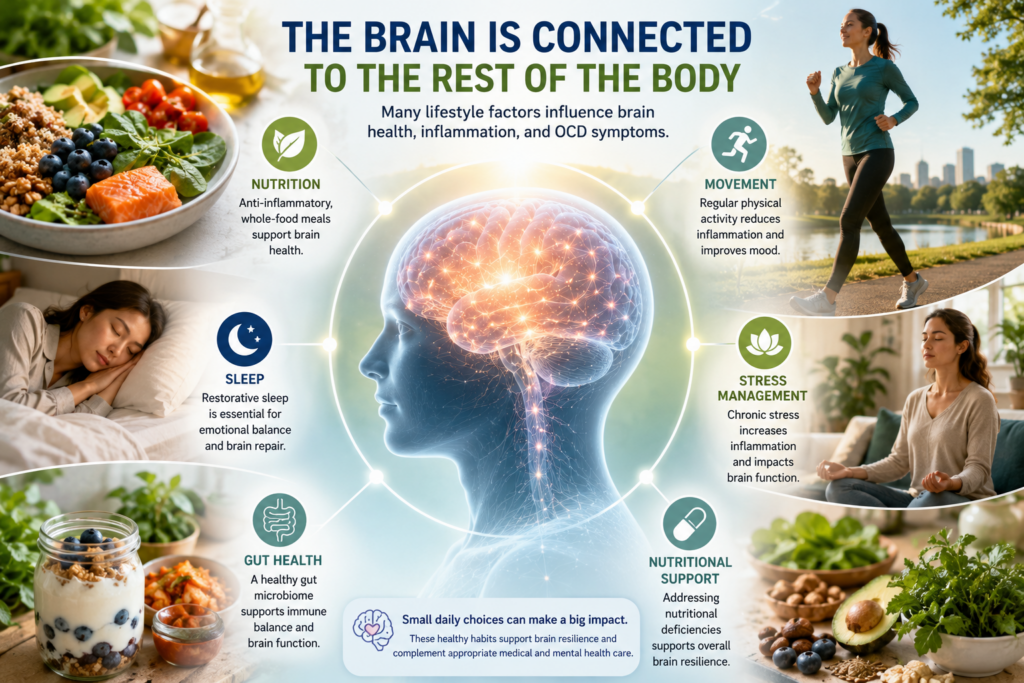
One of the biggest lessons modern neuroscience has taught us is that the brain does not function in isolation.
Sleep quality, nutrition, gut health, exercise, stress, metabolic health, hormone balance, and immune function all influence brain performance.
Although no single lifestyle factor has been proven to cure OCD, optimizing overall health may help reduce inflammatory burden and improve brain resilience.
Areas that deserve attention include:
- Eating an anti-inflammatory, whole-food diet
- Maintaining stable blood sugar
- Regular physical activity
- Prioritizing restorative sleep
- Managing chronic stress
- Supporting a healthy gut microbiome
- Correcting nutritional deficiencies when present
These approaches are not replacements for appropriate mental health care—they are complementary strategies that support overall brain health.
Head Injuries and Brain Health
Research also continues to show that concussions and repetitive head impacts can alter brain function and increase neuroinflammation.
Anyone experiencing persistent cognitive changes, mood changes, anxiety, or obsessive symptoms after a head injury should receive a thorough neurological evaluation.
Every Person Is Different
OCD is not caused by one single factor.
For some individuals, genetics play a major role.
Others may have significant environmental influences.
Still others may have immune-related conditions, infections, developmental factors, or neurological injuries that contribute to symptoms.
This is why a comprehensive evaluation is so important. Rather than focusing only on suppressing symptoms, it’s valuable to understand what factors may be contributing to the condition in each individual.
A Whole-Person Approach
At Ptak Family Chiropractic, we recognize that the nervous system does not exist apart from the rest of the body. Brain function is influenced by movement, nutrition, sleep, stress, immune health, and overall neurological integrity.
While chiropractic care is not a treatment for OCD, improving nervous system function and addressing lifestyle factors that support brain health may be valuable components of an individual’s overall wellness plan when used alongside appropriate medical and mental health care.
If you or someone you love struggles with OCD, remember that help is available. With advances in neuroscience, we continue to gain a better understanding of the many factors that influence brain health—and that creates new opportunities for hope.
Ask the Doctor
Have questions about brain health, neuroinflammation, or whether a neurological evaluation may be appropriate for you or a loved one? We’re always happy to help you better understand your options.
Contact Ptak Family Chiropractic today to schedule a consultation. We listen… We care… We get results.
