Maybe the muscles that feel tight aren’t the muscles that need stretching—or strengthening.
You stretch your neck. You massage it. Maybe you use heat.
It feels better.
Then a few hours later—or the next morning—it’s tight again. Why? Because sometimes the muscles that feel tight aren’t the problem. They’re the muscles working overtime.
The Problem May Be on the Other Side The muscles in the back of your neck are relatively large and powerful. They help support and control your head all day long, as do the upper trapezius muscles. But the muscles in the front of your neck—the cervical flexors—are also essential. In our clinical experience, the strength and endurance of the cervical flexor muscles are critically important to maintaining normal cervical posture and the natural lordotic curve. When those muscles become weak relative to the more powerful cervical extensors and trapezius muscles, we frequently see forward head posture and loss—or even reversal—of the normal cervical curve. Now the muscles in the back of the neck have to work even harder. They tighten. They fatigue. They ache. And what do most people do? Stretch them again. It may feel good—but it may be treating the compensation rather than correcting the imbalance.
Your Neck Is Also Talking to Your Brain There’s another piece most people never hear about. The joints in your neck are filled with sensory receptors that continually send information to your brain about position and movement. This is part of proprioception—your body’s awareness of where it is in space. Your nervous system uses that information to help coordinate posture, muscle tone and balance. So, a joint problem isn’t simply a bone or muscle problem. It is also a neurological and proprioceptive problem. When normal neck-joint movement changes, the information reaching the nervous system can change. Muscle tone and function can become unbalanced, and some muscles may begin compensating for others. That’s why we don’t look at a chronically tight neck as simply a “tight muscle.” The joints, nerves and muscles work together.
So, What Can You Actually Do? If your neck is continually tight, don’t automatically stretch what’s tight. Find out why it’s tight. We look at questions such as: ● Is your neck moving properly? ● Are the cervical flexors weak or lacking endurance? ● Is your head moving forward? ● Has your normal cervical curve changed? ● Are the muscles in the back working overtime?
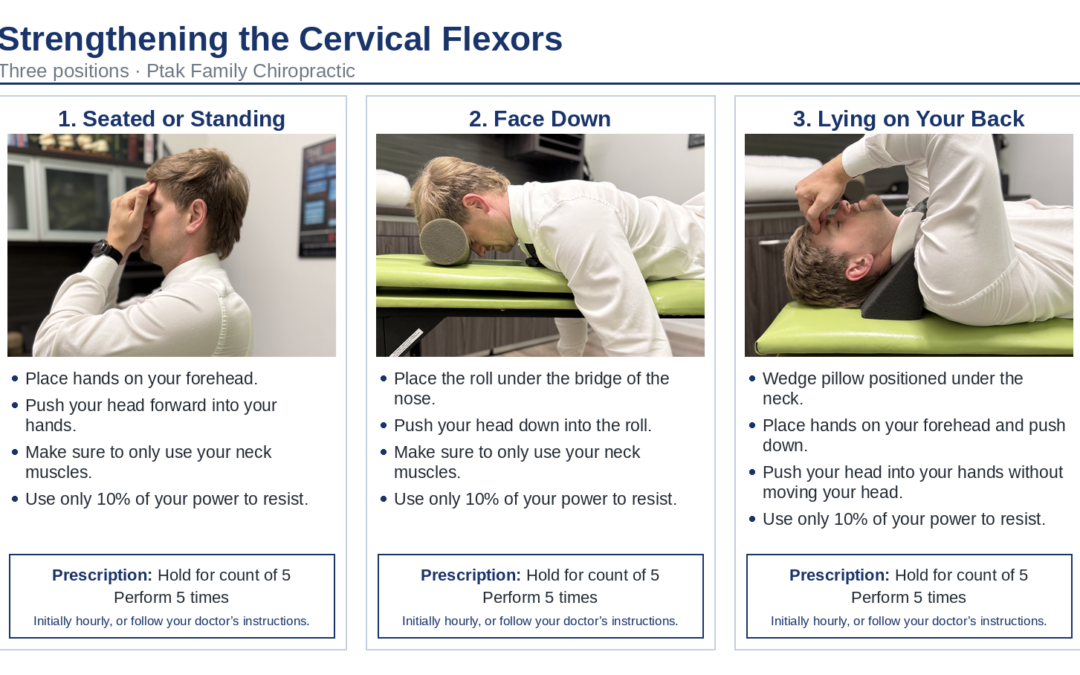
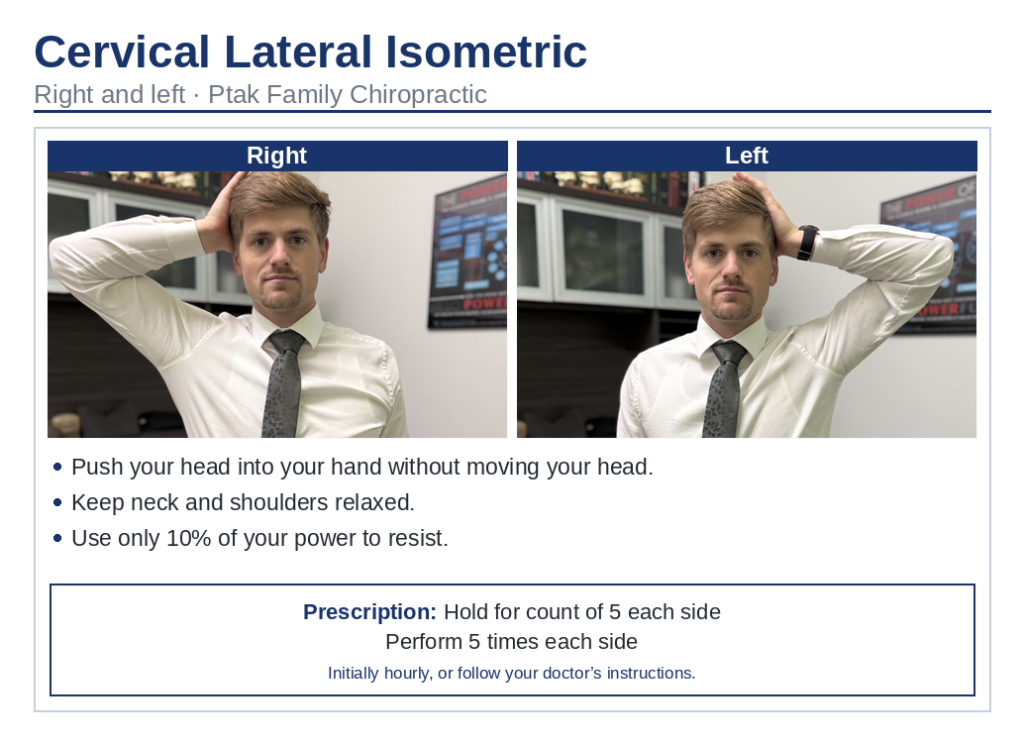
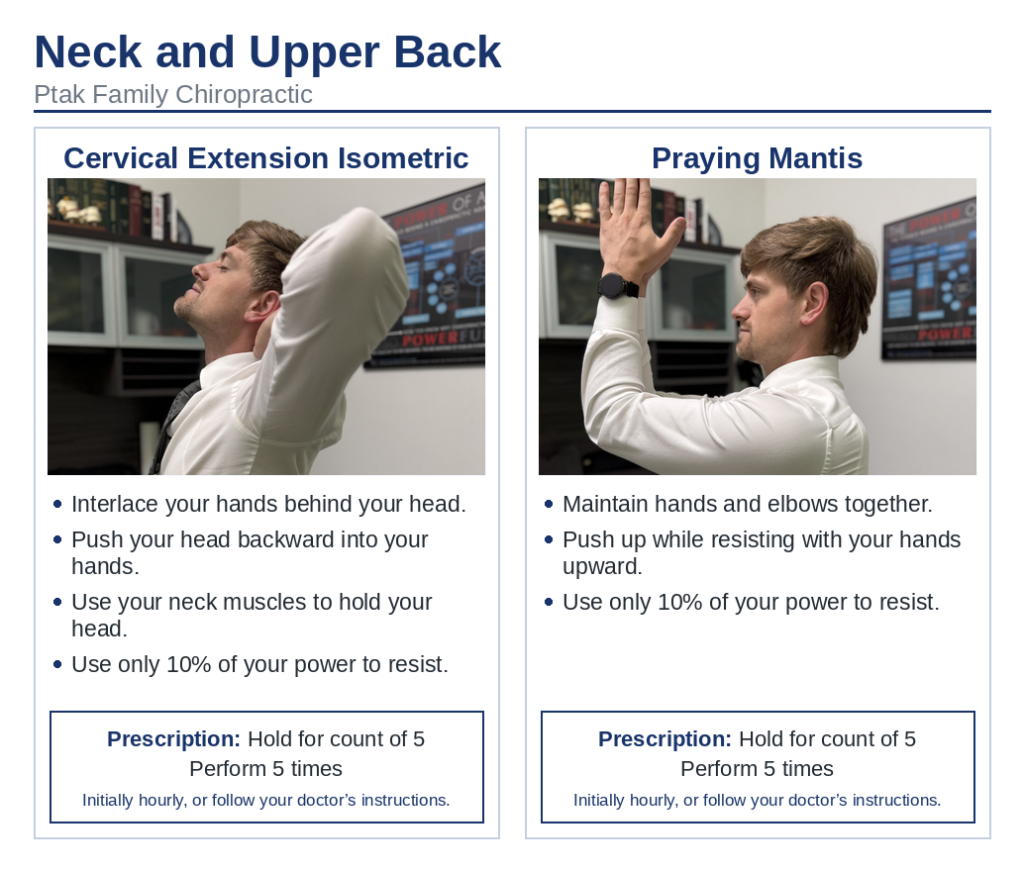
Then we address what we actually find. That may include restoring proper joint movement and alignment, activating and strengthening the cervical flexors, improving posture and proprioceptive control, and eventually strengthening the entire neck and upper back in balance.
The key is doing things in the right order.
Position first. Activate second. Strengthen third.
The Goal Isn’t a Better Stretch The goal is a neck that doesn’t need to keep tightening in the first place. So the next time you find yourself rubbing or stretching those same muscles, ask a different question: “What isn’t doing its share?” Because sometimes… Tight isn’t the problem. Tight is the compensation. Restore movement. Strengthen what’s weak. Rebalance the system.
Got Questions? Ask One of Our Doctors. Ptak Family Chiropractic 3122 Santa Monica Blvd., Suite 102 Santa Monica, CA 90404 310-473-7991
Your low back gets better. Then it comes back.Then it gets better. Then it gets WORSE.
Why?
After 40 years of treating low-back pain, we’ve learned to look beyond the place that hurts.
An injury—or physical, mental, or emotional stress—can alter spinal and pelvic joint function. And because joints are richly supplied with sensory receptors, including mechanoreceptors, a joint problem is also a nervous-system problem.
Change joint function → change neurological input → muscle function can change.
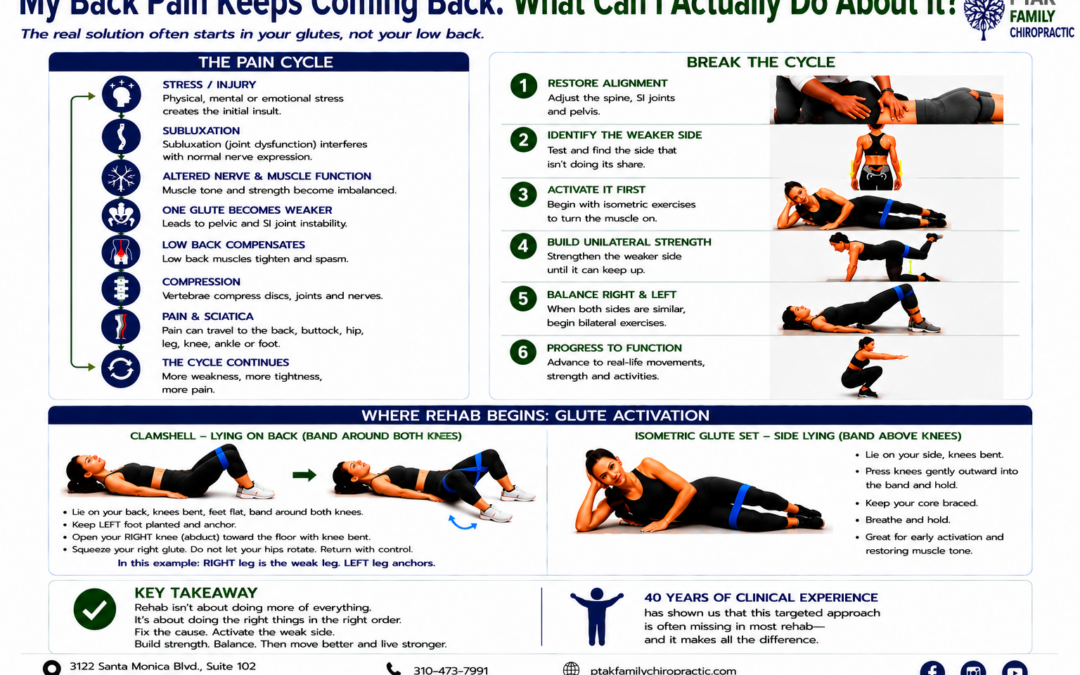
One glute may become weaker. The pelvis becomes less stable. The low-back muscles compensate by tightening, guarding and eventually going into spasm.
That can increase stress on the joints, discs and nerves—and the cycle continues.
So Why Doesn’t Exercise Always Fix It?
If one glute is weaker and you immediately exercise both sides together, the stronger side may simply keep doing more of the work.
You can exercise without correcting the imbalance.
That’s why our approach may begin differently:
Adjust and restore joint function. Identify the weaker side. Activate and strengthen that side FIRST. Restore right-to-left balance. THEN strengthen both sides together.
Sometimes this takes weeks. Sometimes months.
Crawl before you walk. Walk before you run.
After 40 years in practice, this is one of the most important missing pieces we see in people whose low-back pain improves…and then keeps coming back.
Don’t just chase the pain.
Find the imbalance. Break the cycle. Restore balance. Then build strength.
Still wondering why your low back pain keeps coming back?
Got Questions? Ask One of Our Doctors.
Ptak Family Chiropractic 3122 Santa Monica Blvd., Suite 102 Santa Monica, CA 90404 310-473-7991
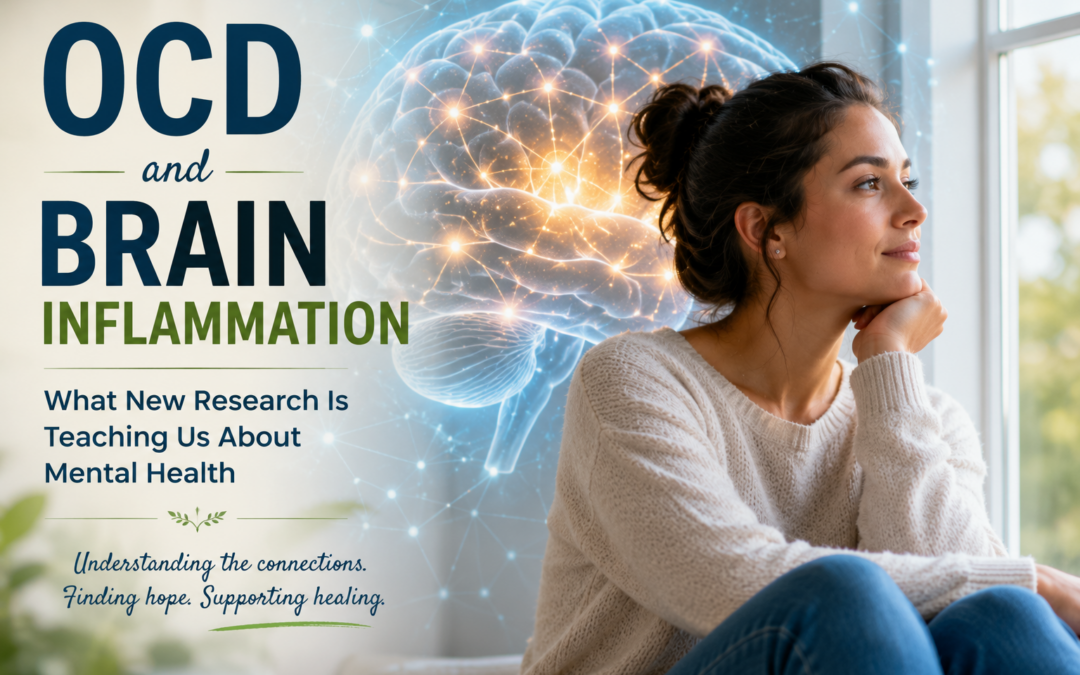
For many years, obsessive-compulsive disorder (OCD) was viewed almost exclusively as a psychiatric condition treated with medication and therapy. While those treatments remain extremely important, researchers are uncovering another piece of the puzzle: in some individuals, inflammation within the brain and immune system may also contribute to OCD symptoms.
This growing understanding is helping change the conversation from simply asking, “What’s wrong with the brain?” to “What factors may be affecting how the brain is functioning?”
What Is OCD?
Obsessive-compulsive disorder (OCD) is characterized by unwanted, intrusive thoughts (obsessions) that create anxiety and repetitive behaviors or mental rituals (compulsions) performed to temporarily relieve that anxiety.
These behaviors aren’t simply habits or personality quirks. OCD can significantly interfere with work, school, relationships, and daily life.
The Brain Inflammation Connection
One of the landmark imaging studies found that people with OCD had significantly higher levels of neuroinflammation than healthy control subjects. Researchers also observed that individuals with greater inflammation often experienced more severe symptoms.
Since that original study, additional research has continued exploring how immune system activation, inflammatory signaling molecules, and overactive brain immune cells (called microglia) may influence OCD in at least a subset of patients.
Scientists are still working to determine whether inflammation causes OCD, results from OCD, or both. The relationship is likely complex and varies from person to person.
Why Inflammation Matters
Inflammation is one of the body’s natural healing responses.
When balanced, it protects us from injury and infection.
However, chronic low-grade inflammation can interfere with normal brain communication, affecting areas involved with:
Emotional regulation
Habit formation
Decision making
Anxiety
Cognitive flexibility
Many of these same brain circuits are involved in OCD.
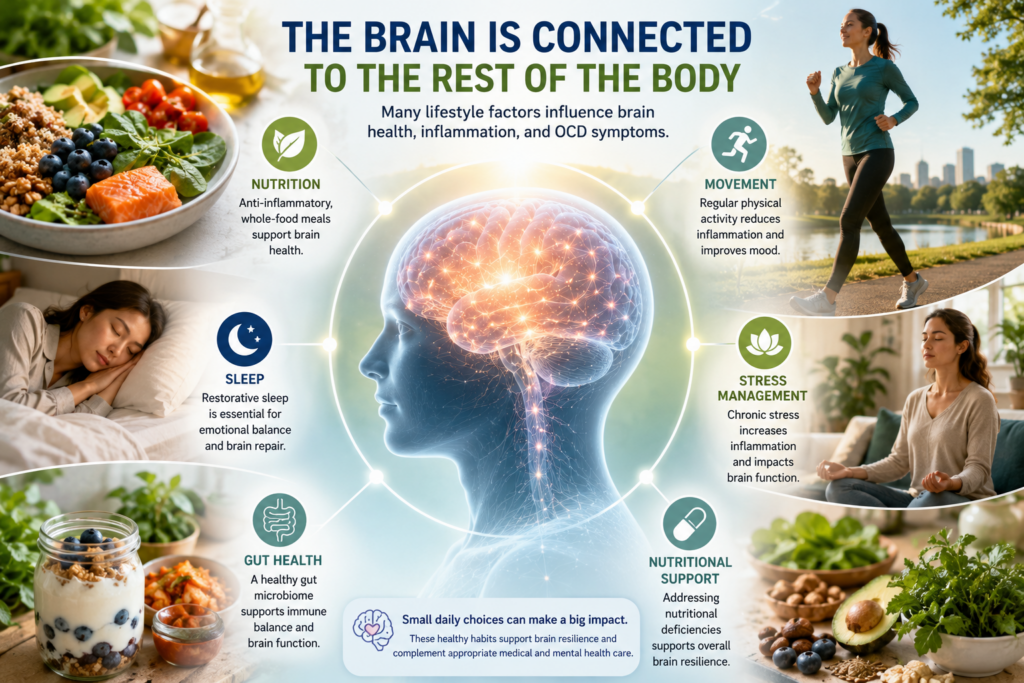
The Brain Is Connected to the Rest of the Body
One of the biggest lessons modern neuroscience has taught us is that the brain does not function in isolation.
Sleep quality, nutrition, gut health, exercise, stress, metabolic health, hormone balance, and immune function all influence brain performance.
Although no single lifestyle factor has been proven to cure OCD, optimizing overall health may help reduce inflammatory burden and improve brain resilience.
Areas that deserve attention include:
Eating an anti-inflammatory, whole-food diet
Maintaining stable blood sugar
Regular physical activity
Prioritizing restorative sleep
Managing chronic stress
Supporting a healthy gut microbiome
Correcting nutritional deficiencies when present
These approaches are not replacements for appropriate mental health care—they are complementary strategies that support overall brain health.
Head Injuries and Brain Health
Research also continues to show that concussions and repetitive head impacts can alter brain function and increase neuroinflammation.
Anyone experiencing persistent cognitive changes, mood changes, anxiety, or obsessive symptoms after a head injury should receive a thorough neurological evaluation.
Every Person Is Different
OCD is not caused by one single factor.
For some individuals, genetics play a major role.
Others may have significant environmental influences.
Still others may have immune-related conditions, infections, developmental factors, or neurological injuries that contribute to symptoms.
This is why a comprehensive evaluation is so important. Rather than focusing only on suppressing symptoms, it’s valuable to understand what factors may be contributing to the condition in each individual.
A Whole-Person Approach
At Ptak Family Chiropractic, we recognize that the nervous system does not exist apart from the rest of the body. Brain function is influenced by movement, nutrition, sleep, stress, immune health, and overall neurological integrity.
While chiropractic care is not a treatment for OCD, improving nervous system function and addressing lifestyle factors that support brain health may be valuable components of an individual’s overall wellness plan when used alongside appropriate medical and mental health care.
If you or someone you love struggles with OCD, remember that help is available. With advances in neuroscience, we continue to gain a better understanding of the many factors that influence brain health—and that creates new opportunities for hope.
Ask the Doctor
Have questions about brain health, neuroinflammation, or whether a neurological evaluation may be appropriate for you or a loved one? We’re always happy to help you better understand your options.
Contact Ptak Family Chiropractic today to schedule a consultation. We listen… We care… We get results.
Living with a chronic autoimmune condition while raising a family can feel overwhelming. On some days, even getting out of bed takes tremendous effort. Fatigue, pain, brain fog, digestive issues, anxiety, and unpredictable flare-ups can make it difficult to be the parent you hoped you would be.
Many parents quietly carry guilt, wondering if they are giving their children enough.
The truth is this: your children do not need a perfect parent. They need a loving, authentic one.
Ironically, many of the challenges that come with chronic illness can also teach children some of life’s most valuable lessons.
The Myth of the “Perfect Parent”
Social media often paints an unrealistic picture of parenthood—endless energy, homemade meals, spotless homes, and constant activities.
Real life looks different.
Children don’t remember whether every lunch was Pinterest-worthy. They remember whether they felt loved, listened to, and safe.
Even on difficult days, those things are still possible.
What Children Can Learn From a Parent Living With Chronic Illness
While no one would choose chronic illness, many families discover unexpected strengths that develop along the way.
Patience
Autoimmune illnesses often slow life down.
Doctor appointments, periods of rest, and recovery teach children that not everything happens instantly. Learning patience is a skill that serves them throughout life.
Flexibility
Plans sometimes change because symptoms flare unexpectedly.
Although disappointing, children learn resilience and adaptability—qualities that help them navigate life’s inevitable surprises.
Independence
When parents need help, children often learn age-appropriate responsibilities earlier.
They may help prepare meals, care for pets, do laundry, or assist around the house.
These aren’t burdens—they’re opportunities to build confidence, responsibility, and life skills.
Compassion
Watching someone they love struggle helps children recognize that everyone faces challenges they cannot always see.
This often creates greater empathy toward friends, classmates, and eventually their own families.
Healthy Habits
Many autoimmune conditions require attention to nutrition, sleep, stress management, movement, and recovery.
Children raised in these environments often gain an appreciation for healthy living that benefits them for years to come.
Emotional Intelligence
Living with chronic illness means acknowledging difficult emotions instead of pretending they don’t exist.
When children see healthy expressions of sadness, frustration, hope, perseverance, and gratitude, they learn that emotions are a normal part of being human—not something to hide.
Taking Care of Yourself Is Not Selfish
Parents with chronic illness often put everyone else’s needs first.
Unfortunately, this usually leads to greater exhaustion and more frequent flare-ups.
Remember:
You cannot pour from an empty cup.
Rest is productive.
Accepting help is strength.
Setting healthy boundaries teaches your children to do the same.
When you care for yourself, you’re also modeling one of the most important life lessons your children can learn.
Supporting the Nervous System
Many autoimmune conditions involve more than the immune system alone. Chronic inflammation, ongoing stress, disrupted sleep, and persistent pain can all place additional strain on the nervous system.
Supporting overall nervous system function through healthy lifestyle choices—including restorative sleep, regular movement, stress reduction, anti-inflammatory nutrition, and appropriate healthcare—may help improve resilience and quality of life. While chiropractic care is not a treatment for autoimmune disease itself, optimizing spinal motion and nervous system function may help some individuals better adapt to physical stress as part of a comprehensive care plan directed by their healthcare team.
Your Children Don’t Need Perfection
Years from now, your children are unlikely to remember every canceled outing or every day you needed to rest.
They are far more likely to remember:
That you loved them.
That you kept showing up.
That you taught them resilience.
That your courage inspired their own.
Sometimes the greatest gift we give our children isn’t showing them a life without struggle.
It’s showing them how to live with hope, grace, and love in the middle of it.
Ask the Doctor
If you’re living with a chronic autoimmune condition and wondering how your nervous system, lifestyle, and overall health may be affecting your quality of life, we’d love to help you explore your options.
At Ptak Family Chiropractic, we believe every person deserves to function at their highest potential. If you have questions about nervous system health, chiropractic care, or ways to better support your body’s ability to adapt and heal, we’re here to listen.
Most people associate the word cannabinoid with cannabis or marijuana.
What many don’t realize is that your body already produces its own cannabinoids.
In fact, every one of us is born with an incredibly sophisticated communication network called the endocannabinoid system (ECS)—a system scientists now recognize as one of the body’s master regulators of health and balance.
Rather than existing solely to respond to cannabis, the ECS evolved to help keep your body functioning properly every single day.
Maintain balance (homeostasis) throughout the body.
When the body encounters physical injury, emotional stress, illness, poor nutrition, or environmental challenges, the endocannabinoid system works behind the scenes to help restore equilibrium.
Your Body Makes Its Own “Cannabinoids”
The two best-studied endocannabinoids are:
• Anandamide (AEA) — often nicknamed the “bliss molecule” • 2-Arachidonoylglycerol (2-AG)
Unlike hormones that circulate constantly, these compounds are produced only when needed and broken down quickly once their job is complete.
While it’s tempting to think of anandamide as a “happiness chemical,” the reality is more nuanced. It works together with dozens of other neurotransmitters and signaling molecules to help the nervous system adapt to changing conditions.
Can the Endocannabinoid System Become Imbalanced?
Researchers continue to investigate a concept called Clinical Endocannabinoid Deficiency (CECD).
The theory suggests that some individuals may have reduced endocannabinoid activity, making them more susceptible to certain chronic conditions.
Studies have explored possible links with disorders such as:
Maintaining a healthy balance between omega-3 and omega-6 fats appears particularly important.
Fill Your Plate with Color
Vegetables, fruits, herbs, and spices contain thousands of naturally occurring plant compounds that help regulate inflammation and oxidative stress.
Certain plant compounds—including beta-caryophyllene found in black pepper, cloves, oregano, rosemary, and hops—can interact with cannabinoid receptors without producing psychoactive effects.
A colorful, plant-rich diet supports far more than the ECS—it benefits nearly every system in the body.
Reduce Chronic Stress
Long-term stress places tremendous demands on the nervous system.
Mindfulness, meditation, breathing exercises, prayer, spending time outdoors, and meaningful relationships all help calm the body’s stress response and may indirectly support healthy ECS function.
Hands-On Care
Research has explored how therapies such as chiropractic care, massage therapy, acupuncture, and other forms of bodywork may influence endocannabinoid signaling and improve pain regulation.
Although more research is still needed to fully understand these mechanisms, many people report feeling calmer, more relaxed, and less painful following these therapies.
These benefits likely result from multiple overlapping physiological responses—including changes within the nervous system, improved movement, reduced stress, and potentially healthy endocannabinoid activity.
What About CBD?
Cannabidiol (CBD) continues to be one of the most studied compounds derived from cannabis and hemp.
Unlike THC, CBD does not produce intoxication.
Researchers are investigating its potential role in conditions such as:
While CBD has shown promise in specific situations, research is ongoing, product quality varies widely, and it is not appropriate for everyone. CBD may also interact with prescription medications.
If you’re considering CBD, discuss it with your healthcare provider to determine whether it’s appropriate for your individual situation.
The Bigger Picture
The discovery of the endocannabinoid system reminds us that the body possesses remarkable built-in mechanisms for healing, adaptation, and balance.
Rather than relying solely on external substances, many of the most powerful ways to support this system are the same habits that improve overall health:
• Move regularly. • Eat whole, nutrient-dense foods. • Sleep well. • Manage stress. • Stay socially connected. • Care for your nervous system.
When these habits become part of daily life, you’re not just supporting one system—you are creating an environment where your entire body can function at its best.
Ask the Doctor
Your nervous system is the master communication system of your body, and every system—including the endocannabinoid system—depends on it functioning optimally. If you’re dealing with chronic pain, stress, poor sleep, inflammation, headaches, or simply want to improve your overall health, we’d love to help you explore the underlying causes.
At Ptak Family Chiropractic, we take the time to listen, perform a thorough evaluation, and create personalized recommendations designed to help your body heal and function the way it was designed to.
Questions about your health? Ask Dr. Yates and Dr. Ptak