Why So Many Children Keep Getting Them, And What Most Parents Are Never Told About the Immune System, Drainage, the Upper Neck, and the Nervous System
Few things frustrate parents more than recurring ear infections.
The sleepless nights. The crying. The fevers. The repeated antibiotics. The temporary improvement… only for the infection to return weeks later.
Eventually many parents begin asking:
“Why does this keep happening?”
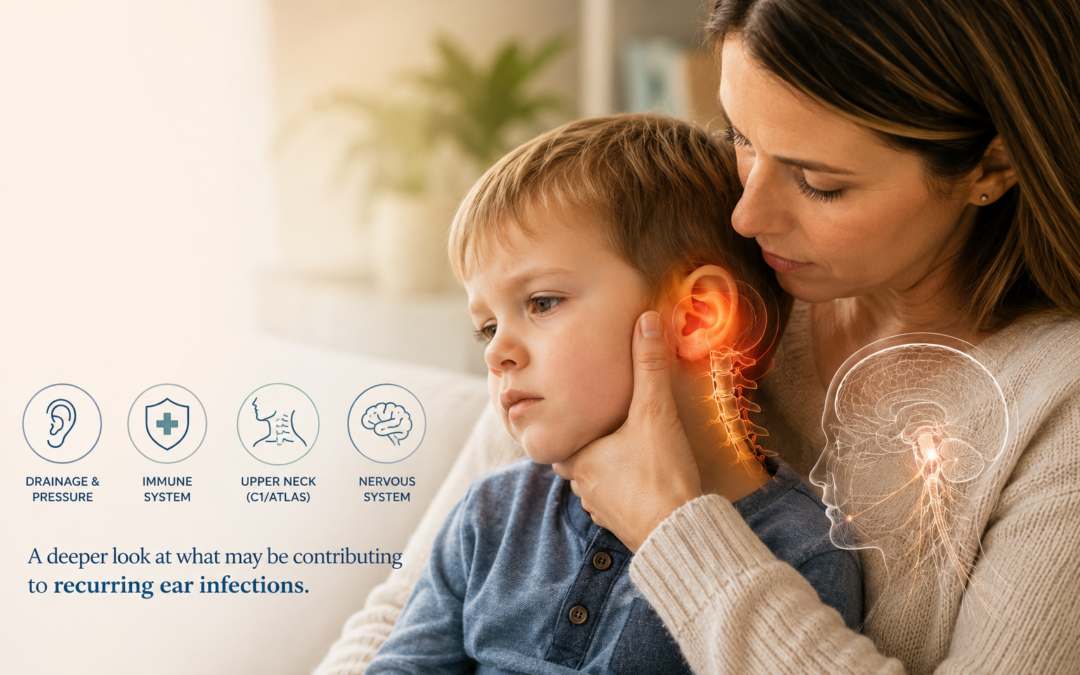
Because while ear infections are extremely common in childhood, recurring ear infections are often a sign that the body may be struggling with pressure regulation, drainage, inflammation, immune adaptation, or nervous system stress.
At Ptak Family Chiropractic, we believe parents deserve a broader understanding of what may contribute to recurrent ear infections — not simply repeated symptom suppression.
Because sometimes the issue is not that the body is weak.
Sometimes the issue is that the body is overwhelmed, congested, inflamed, mechanically stressed, or struggling to adapt efficiently.
What Is an Ear Infection?
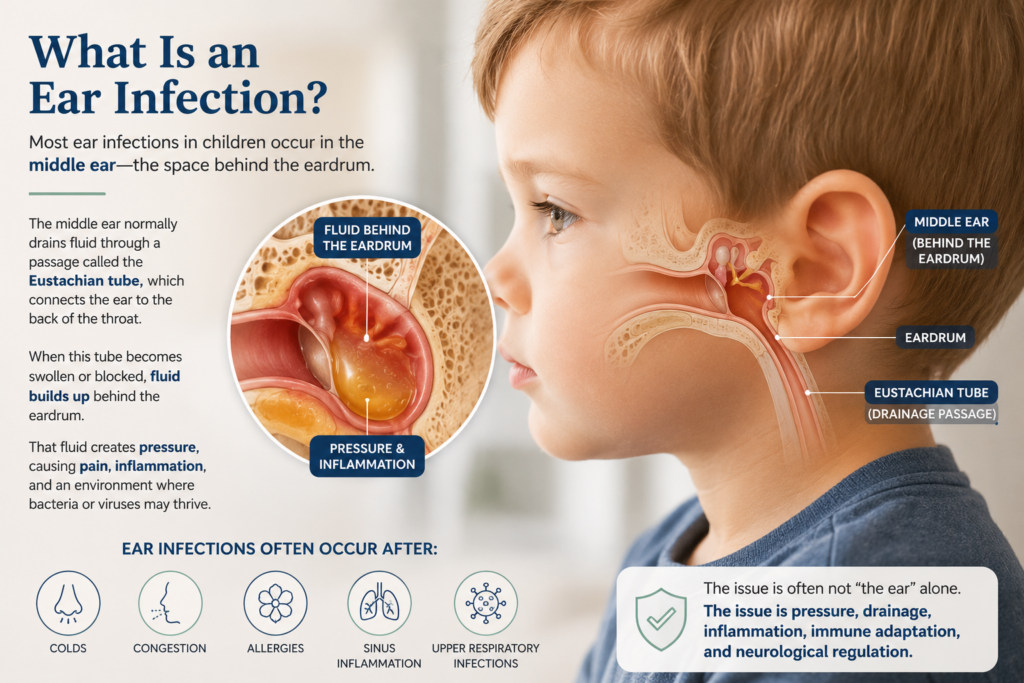
Most childhood ear infections involve the middle ear — the space behind the eardrum.
This condition is known as: Acute Otitis Media.
The middle ear normally drains fluid through a narrow passageway called the Eustachian tube, which connects the ear to the back of the throat.
When this drainage system becomes swollen, inflamed, or unable to function efficiently, fluid may accumulate behind the eardrum.
That fluid creates:
pressure
pain
inflammation
irritation
and an environment where bacteria or viruses may thrive
This is why ear infections often occur after:
colds
congestion
allergies
sinus inflammation
upper respiratory infections
The issue is often not “the ear” alone.
The issue is pressure, drainage, inflammation, immune adaptation, and neurological regulation.
Why Children Are More Susceptible
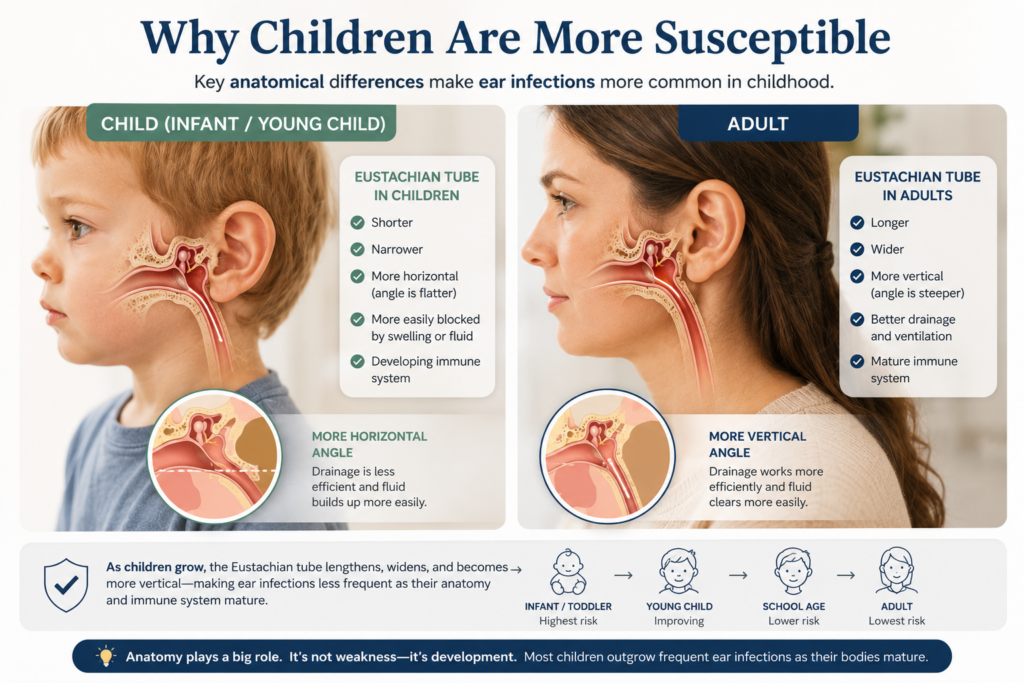
Children’s anatomy makes them more vulnerable to ear infections.
Compared to adults, children have:
shorter Eustachian tubes
narrower drainage pathways
more horizontal tube angles
developing immune systems
This makes drainage less efficient — especially during congestion or inflammation.
In many children, these issues improve naturally as the skull, neck, airway, and drainage pathways mature.
But in other children, infections become recurrent.
And this is where many parents begin searching for deeper answers.
The Often Overlooked Role of the Upper Neck and Atlas (C1)
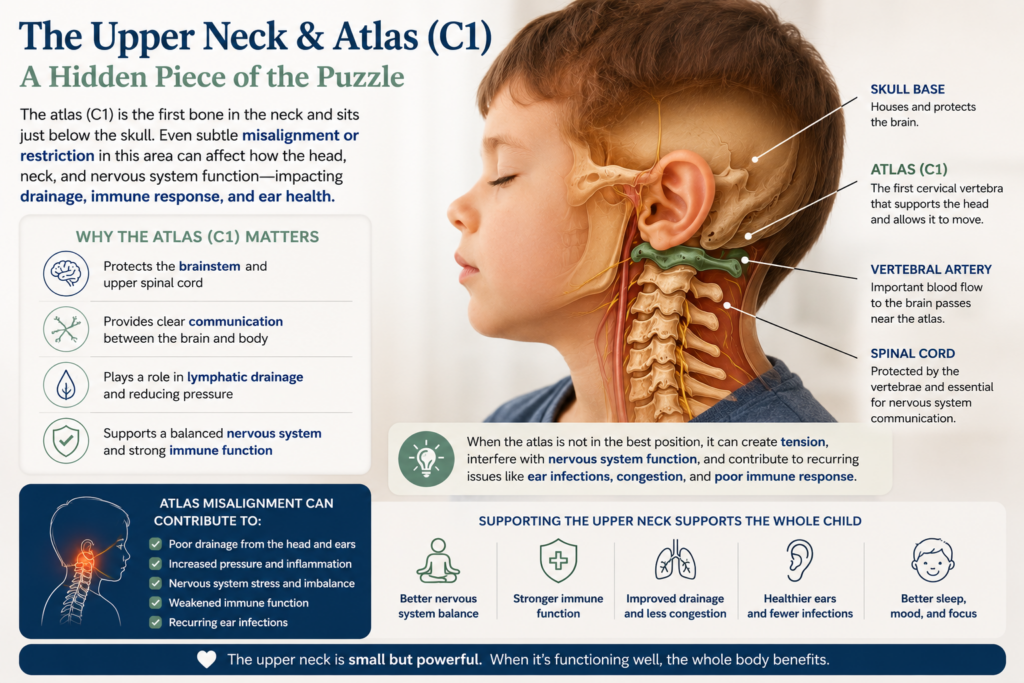
One area many parents never hear discussed in relation to recurring ear infections is the upper cervical spine — particularly the atlas vertebra, also known as C1.
The atlas is the top bone in the neck and sits directly beneath the skull.
This region is incredibly important because it is closely associated with:
head and neck mechanics
muscle tension patterns
jaw function
lymphatic drainage
neurological communication
pressure regulation near the Eustachian tube
The muscles surrounding the upper neck and jaw help influence the function of the Eustachian tube.
If tension, restricted motion, postural imbalance, or upper cervical dysfunction develop, some chiropractors believe this may contribute to:
impaired drainage
fluid retention
altered pressure regulation
muscular tension near the ear and jaw
autonomic nervous system stress
reduced adaptability
Birth stress, falls, repetitive strain, posture, and physical tension patterns may all influence this area.
This does not mean the atlas is the sole cause of ear infections.
But many chiropractors believe it may be one contributing factor affecting how efficiently the body drains, adapts, and heals.
Why Chiropractors Evaluate the Upper Cervical Spine
At Ptak Family Chiropractic, children with recurring ear infections are commonly evaluated for:
upper cervical motion restrictions
tension patterns
spinal mechanics
postural imbalances
nervous system stress
overall adaptability
Why?
Because the nervous system controls and coordinates healing throughout the body.
The upper cervical spine is particularly important because of its close relationship to:
brainstem function
muscle tone
autonomic regulation
lymphatic movement
inflammatory responses
adaptation and recovery
Chiropractic adjustments are designed to improve spinal motion and reduce interference within the nervous system.
Some chiropractors propose that improving upper cervical function may help support:
healthier drainage mechanics
reduced muscular tension
improved pressure regulation
more efficient neurological communication
better adaptability during immune stress
Many parents report improvements in:
congestion
comfort
sleep quality
recurrent episodes
overall well-being
following chiropractic care.
While more research is still needed to fully understand the exact mechanisms involved, many families appreciate an approach that focuses on supporting the body’s natural ability to regulate, drain, adapt, and heal.
Why Antibiotics Sometimes Help… But Don’t Solve the Bigger Problem
Antibiotics can absolutely be necessary in certain situations.
They can be life-saving when bacterial infections become severe or persistent.
But many parents notice something important:
The infection improves… then returns.
Why?
Because while antibiotics may help address bacteria, they do not necessarily address:
chronic congestion
inflammation
drainage dysfunction
recurring immune stress
upper cervical tension
postural mechanics
nervous system stress
repeated respiratory irritation
Additionally, many childhood ear infections are viral — meaning antibiotics may not always be the primary solution.
This is one reason many pediatric guidelines now recommend careful evaluation before immediate antibiotic use in every situation.
The Nervous System and Immune Function
One of the most overlooked concepts in children’s health is the relationship between the nervous system and immune function.
The nervous system helps regulate:
inflammation
immune signaling
lymphatic flow
stress responses
healing
sleep
muscle tone
recovery and adaptation
When the nervous system becomes overwhelmed by stress, inflammation, tension, or repeated immune challenges, the body’s ability to adapt efficiently may become compromised.
Health is not simply about eliminating symptoms.
Health is about adaptability.
Why Some Children Seem to Get Sick Constantly
Many parents notice their child experiences:
repeated ear infections
chronic congestion
poor sleep
mouth breathing
frequent colds
lingering inflammation
repeated antibiotic use
irritability during illness
The question should not only be: “What infection is present?”
Sometimes the deeper question is: “Why is the body struggling to adapt repeatedly?”
Possible contributing factors may include:
chronic inflammation
immune stress
allergies
daycare exposure
poor sleep
dietary stressors
environmental irritants
upper cervical dysfunction
postural strain
nervous system overload
The body is interconnected.
A Different Way to Think About Children’s Health
At Ptak Family Chiropractic, we believe children’s bodies are designed for:
adaptation
healing
regulation
resilience
Symptoms are often signals.
Not failures.
The goal is not simply suppressing every symptom as quickly as possible.
The goal is helping the body function more efficiently.
Because when the nervous system functions better, the body may be better able to:
drain
regulate inflammation
recover
adapt
heal naturally
Ear Tubes: Sometimes Necessary, But Not the Entire Conversation
For some children, ear tubes may become medically necessary — especially when infections are severe, persistent, or affecting hearing and development.
But even then, many parents still wonder:
Why was the body struggling repeatedly in the first place?
Procedures may address the immediate mechanical issue while broader contributing factors may still remain.
This is why many families seek a more comprehensive understanding of health and adaptation.
When Parents Should Seek Medical Attention Immediately
Parents should always contact a healthcare professional if a child experiences:
difficulty breathing
severe lethargy
dehydration
swelling around the ear
persistent high fever
stiff neck
fluid or blood drainage from the ear
worsening symptoms
hearing changes
severe pain
symptoms in very young infants
or anything concerning or unusual
Trust your instincts.
Looking for a More Neurologically Focused Approach?
At Ptak Family Chiropractic, our focus is helping families better understand the relationship between the nervous system, spinal function, adaptation, and long-term wellness.
If your child has been struggling with recurring ear infections, congestion, sleep challenges, or repeated immune stress, schedule a no-charge consultation with our office to learn more about a neurologically focused approach to health and healing. (310) 473-7991.
Research & References
American Academy of Pediatrics. Clinical Practice Guideline: The Diagnosis and Management of Acute Otitis Media. Pediatrics.
Tasnee Chonmaitree et al. Viral upper respiratory tract infection and otitis media complication in young children. Clinical Infectious Diseases. 2008;46(6):815–823.
Joan Fallon. The role of chiropractic care in children with recurrent otitis media: a pilot study. Journal of Clinical Chiropractic Pediatrics. 1997.
Jennifer H. Alcantara, Joel Alcantara. Chiropractic care of pediatric patients with otitis media: case reports and review of the literature. Explore. 2009.
International Chiropractic Pediatric Association. Vertebral subluxation and pediatric otitis media: clinical observations and chiropractic considerations.
Jerome O. Klein. The burden of otitis media. Vaccine. 2000;19:S2–S8.
Aleksandra Skotnicka et al. Anatomy and physiology of the Eustachian tube related to otitis media in children. International Journal of Pediatric Otorhinolaryngology.
Centers for Disease Control and Prevention. Appropriate antibiotic use and watchful waiting recommendations for pediatric ear infections.
What Most Parents Were Never Told About Fever, the Immune System, and the Body’s Natural Intelligence
Few things make a parent anxious faster than seeing their child develop a fever.
The warmth. The flushed cheeks. The fatigue. The number on the thermometer climbing higher.
For decades, parents have been taught to fear fever and immediately try to “bring it down.”
But what if fever is not the problem?
What if fever is actually one of the body’s most intelligent healing responses?
At Ptak Family Chiropractic, we believe one of the most important conversations parents can have is learning the difference between a body that is failing… and a body that is working.
Because in many cases, fever is not evidence that the body is weak.
It is evidence that the immune system is active, responsive, adaptive, and doing exactly what it was designed to do.
Fever Is Not a Mistake
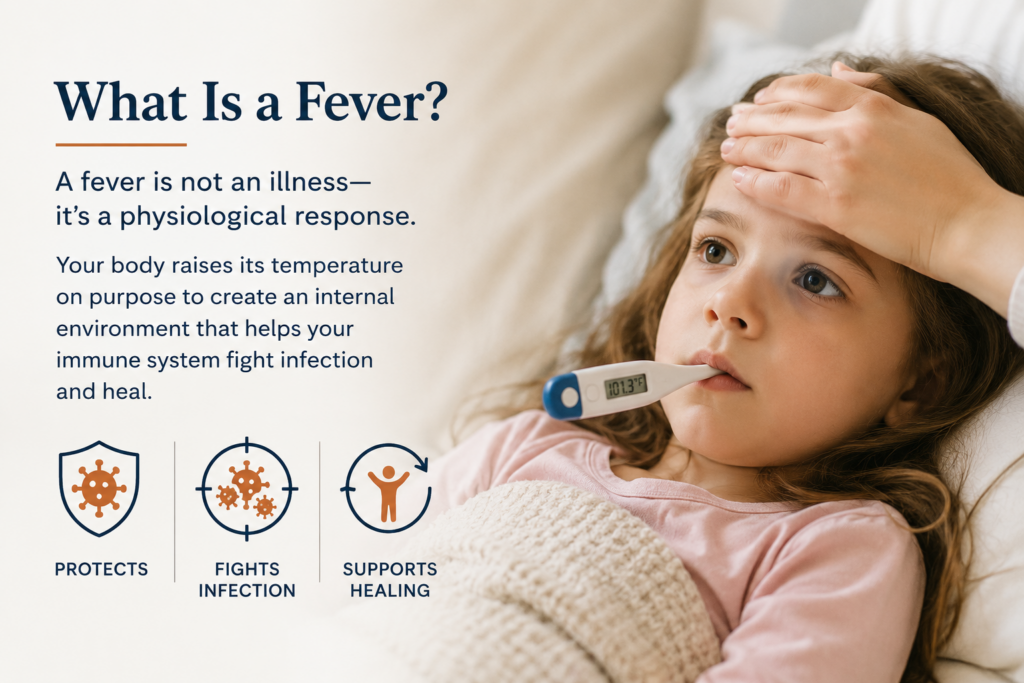
A fever is not a disease.
A fever is a physiological response.
When the immune system detects viruses, bacteria, or other immune challenges, the brain intentionally raises body temperature as part of the healing process.
This response is coordinated primarily through the hypothalamus — the part of the brain responsible for regulating temperature and many survival functions.
The body does this for a reason.
Higher temperatures can:
Support immune cell activity
Slow the replication of certain viruses and bacteria
Enhance metabolic and repair processes
Improve immune communication
Increase white blood cell efficiency
In other words:
The body raises temperature because it may help the body heal more efficiently.
Fever is not the body losing control.
Fever is often the body taking control.
Why Fever Frightened an Entire Generation of Parents
Many parents grew up hearing:
“A fever is dangerous.”
“You must bring it down immediately.”
“A high fever means something is terribly wrong.”
But much of modern “fever fear” developed from misunderstanding and anxiety — not always from physiology itself.
In fact, many healthcare professionals now acknowledge that fever is a normal and beneficial immune response in many situations.
That does NOT mean fever should always be ignored.
And it does NOT mean parents should never seek medical care.
But it DOES mean fever should be understood properly rather than automatically feared.
The Difference Between Monitoring and Panicking
A fever alone is not the most important factor.
What matters more is:
The child’s responsiveness
Hydration status
Breathing
Energy levels
Behavior
Medical history
Duration of symptoms
Associated symptoms
A child with a fever who is:
drinking fluids
making eye contact
resting comfortably
responsive
periodically playful
may be handling the illness quite differently than a child with:
labored breathing
lethargy
dehydration
confusion
severe pain
persistent vomiting
concerning neurological symptoms
The body is dynamic.
Numbers alone do not tell the whole story.
Why the Immune System Needs Challenge
One of the most overlooked concepts in health is this:
The immune system develops through adaptation.
Just like muscles grow stronger through challenge, the immune system learns, responds, remembers, and adapts through exposure and experience.
This does not mean children should be unnecessarily exposed to illness.
But it does mean the body was designed with intelligent defense mechanisms.
Fever is one of them.
Suppressing every fever immediately may interfere with some aspects of the body’s natural immune processes.
The goal should not always be: “How quickly can we stop the fever?”
Sometimes the better question is: “How can we support the body while it heals?”
The Nervous System and Immune Function
The immune system does not function independently from the nervous system.
The brain and immune system are in constant communication.
The nervous system helps regulate:
Inflammation
Stress responses
Immune signaling
Recovery
Sleep
Adaptation
Healing responses
When the nervous system becomes overwhelmed by chronic stress, poor sleep, inflammation, or physiological overload, the body’s ability to adapt efficiently may become compromised.
This is one reason many families are beginning to look at health more holistically.
Not simply asking: “How do we suppress symptoms?”
But instead: “How do we support the body’s ability to function?”
Why Some Children Seem to Get Sick Constantly
Many parents notice:
recurrent ear infections
repeated colds
lingering congestion
chronic inflammation
frequent antibiotic use
poor sleep
fatigue
behavioral changes during illness
While there are many factors involved, one important concept is adaptability.
Children’s nervous systems are constantly developing.
Their immune systems are constantly learning.
Their bodies are constantly adapting to:
stress
environmental exposures
sleep changes
nutrition
inflammation
posture
physical trauma
birth stress
emotional stressors
Health is not simply the absence of symptoms.
Health is the ability to adapt.
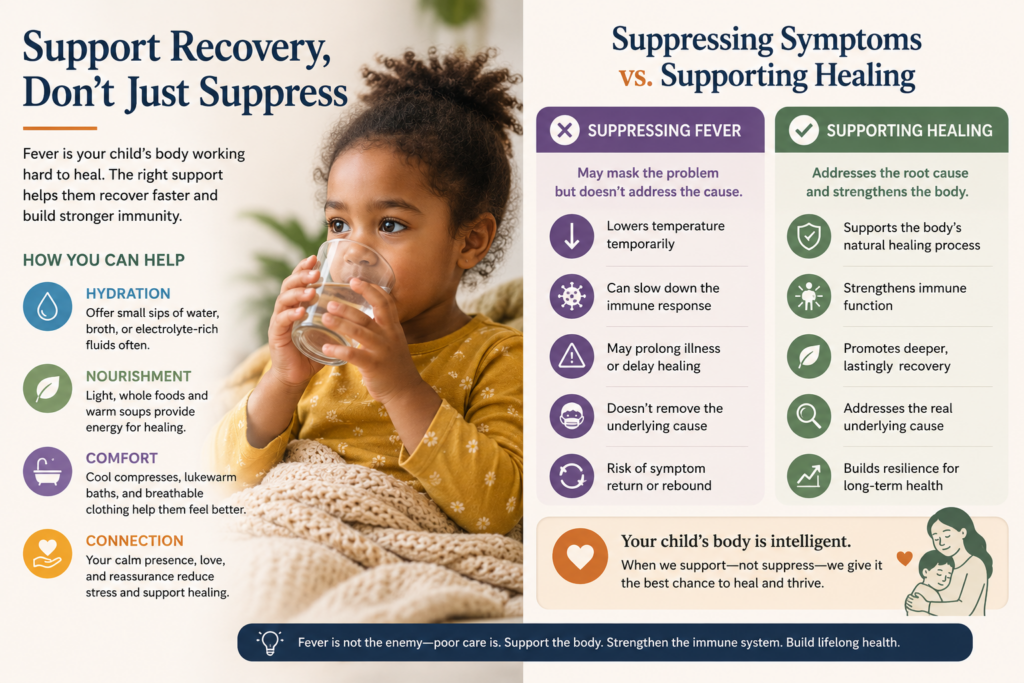
Supporting the Body During a Fever
Many parents today are seeking balanced approaches that support healing while also knowing when professional medical care is necessary.
Helpful supportive strategies may include:
hydration
rest
reducing overstimulation
proper nutrition
monitoring symptoms carefully
supporting recovery instead of panicking
consulting appropriate healthcare professionals when necessary
Every child is different.
And parents should always seek medical attention when symptoms are severe, persistent, or concerning.
What About Febrile Seizures?
Few things terrify parents more than hearing the words “febrile seizure.”
And while febrile seizures can be frightening, they are often misunderstood.
Most febrile seizures are believed to be related more to rapid changes in temperature than to the actual height of the fever itself.
Importantly:
Most febrile seizures do not cause long-term neurological damage.
Many occur in otherwise healthy children.
Parents should still seek immediate medical evaluation if one occurs.
This is another example of why education matters more than fear.
The Bigger Problem May Not Be Fever
Sometimes the real issue is not that the body creates fever.
Sometimes the issue is that modern life has weakened our ability to trust and understand the body.
We have become conditioned to believe:
symptoms are always bad
discomfort always means danger
suppression equals healing
But healing is often active.
Healing can involve:
inflammation
fatigue
temperature changes
immune activation
recovery phases
The body is not always malfunctioning when symptoms appear.
Sometimes the body is fighting, adapting, and healing.
Fever Is Often Evidence of a Working Immune System
This may be one of the most important concepts parents can understand:
A fever is often evidence that the body recognizes a challenge and is responding to it.
That response is intelligent.
That response is coordinated.
That response is purposeful.
And while there are certainly times medical intervention is necessary, fear should not be the default response to every elevated temperature.
A Different Conversation About Children’s Health
At Ptak Family Chiropractic, we believe parents deserve a deeper understanding of how the body works.
Not fear. Not panic. Not confusion.
But education.
Because when parents understand:
the nervous system
adaptation
immune responses
recovery physiology
the body’s innate intelligence
they can make more informed, empowered decisions about their family’s health.
When to Seek Medical Attention
Parents should always contact a healthcare professional immediately if a child experiences:
difficulty breathing
severe lethargy
dehydration
seizures
stiff neck
persistent vomiting
unresponsiveness
bluish skin color
symptoms worsening rapidly
fever in very young infants
or any symptom that feels concerning or unusual
Trust your instincts.
Ready to Learn More About Supporting Your Child’s Health Naturally?
At Ptak Family Chiropractic, our focus is helping families better understand the relationship between the nervous system, adaptation, healing, and long-term wellness.
If you would like to learn more about a neurologically focused approach to health and development, schedule a no-charge consultation with our office today (310) 473-7991.
3122 Santa Monica Blvd. Ste 102 Santa Monica, CA 90404
Research & References
Barton D. Schmitt. Fever phobia: misconceptions of parents about fevers. American Journal of Diseases of Children. 1980;134(2):176–181.
Barton D. Schmitt. Fever in childhood. Pediatrics. 1984;74(5 Pt 2):929–936.
Matthew J. Kluger. Fever: role of pyrogens and cryogens. Physiological Reviews. 1991;71(1):93–127.
David M. Morens and Jeffery K. Taubenberger. The mother of all pandemics is 100 years old (discussion of fever and immune response physiology). American Journal of Public Health. 2018;108(11):1449–1454.
Andrew J. Pollard and Michael Levin. Vaccines and fever physiology in immune activation. Archives of Disease in Childhood. 2000;82(3):238–239.
Katherine A. Autry et al. Fever as an adaptive immune response. Comprehensive Physiology. 2011;1(3):1341–1358.
Understanding the Brain-Body Connection Behind Menstrual Cycles, PMS, Fatigue, Mood Changes, and Hormonal Imbalance
Every month, millions of women are told the same thing:
“Your hormones are just off.”
But what if hormones are only part of the story?
What if the real issue is how the brain and nervous system are communicating with the body?
Many women struggling with painful periods, irregular cycles, PMS, mood swings, fatigue, bloating, headaches, infertility challenges, sleep disruption, anxiety, or exhaustion often feel like their body is working against them. Some are prescribed medications. Others are told their labs are “normal” despite feeling far from normal.
And many never hear this:
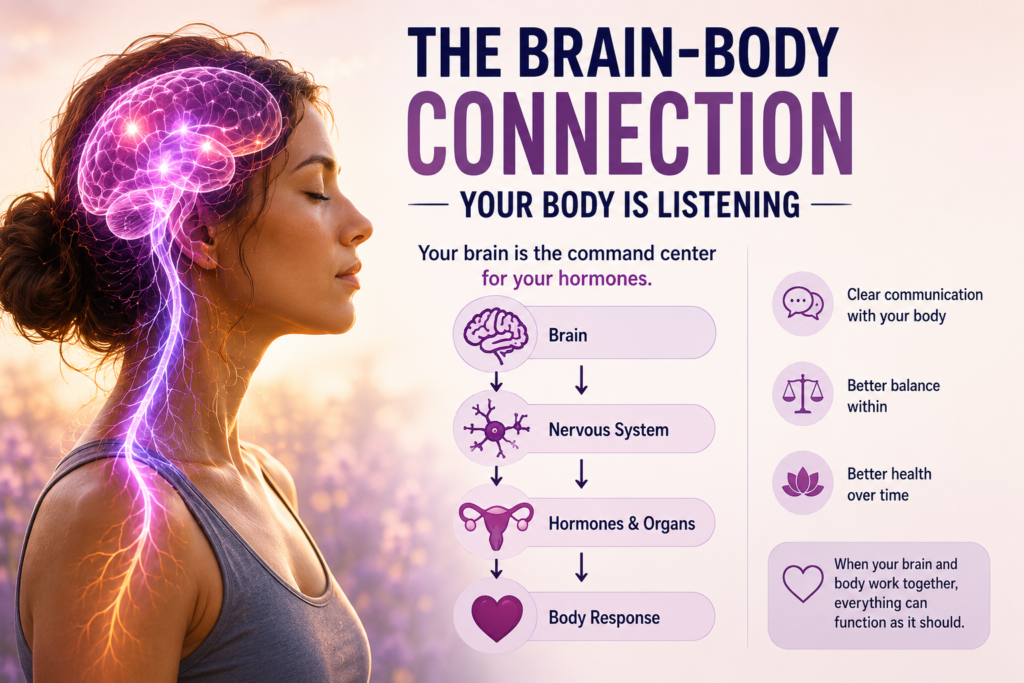
Hormones do not work independently. They are controlled, regulated, and influenced by the nervous system.
At Ptak Family Chiropractic, we look at the body differently.
Instead of only asking: “What hormone is high or low?”
We also ask: “Why is the body struggling to regulate itself in the first place?”
Because the body was designed for balance.
And when communication between the brain and body becomes distorted, adaptation becomes harder, stress responses become amplified, and hormone patterns can begin to shift.
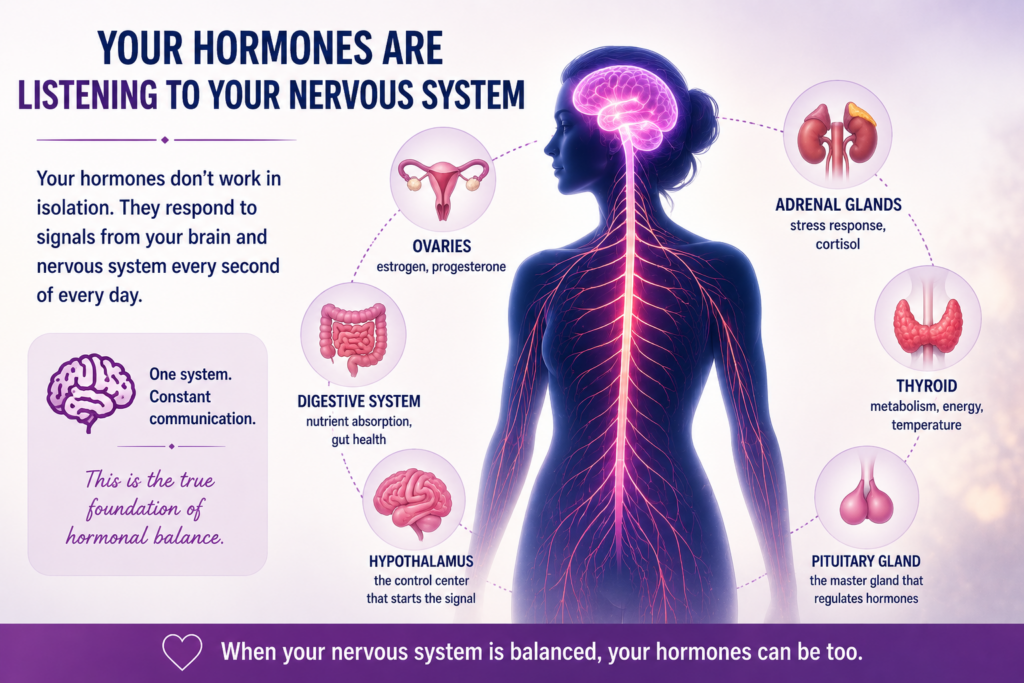
Your Hormones Are Listening to Your Nervous System
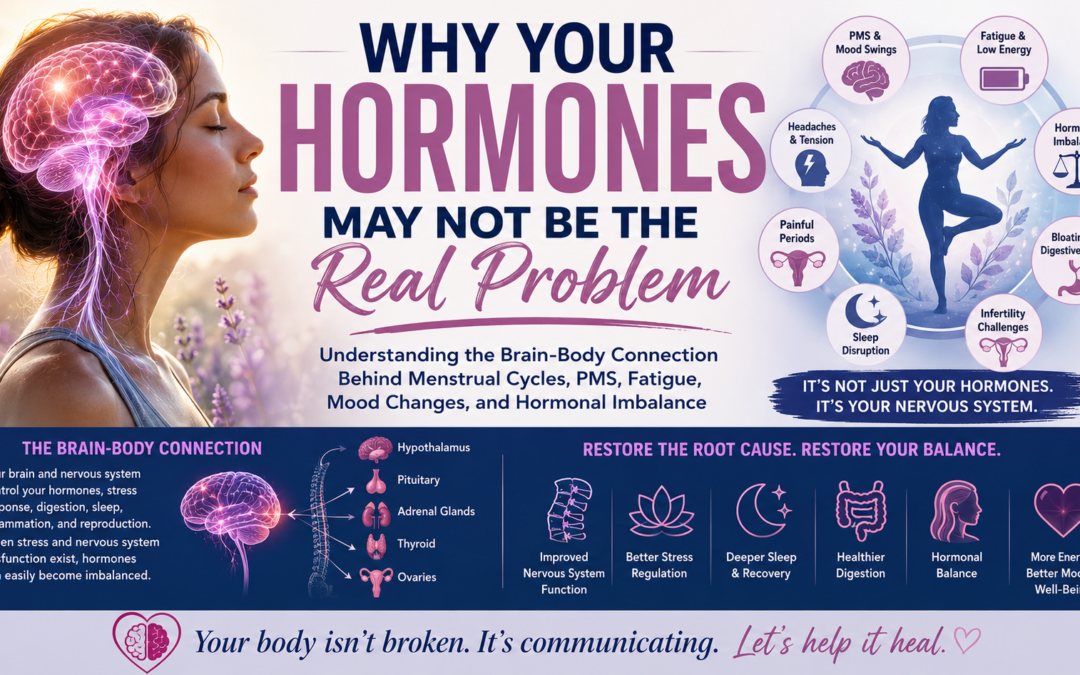
The endocrine system and nervous system are deeply connected.
Your brain constantly communicates with organs and glands throughout the body:
Ovaries
Adrenal glands
Thyroid
Pituitary gland
Hypothalamus
Digestive system
These systems do not operate separately.
The brain interprets stress, sleep, posture, inflammation, nutrition, emotions, movement, and environmental input — then tells the body how to respond.
When the nervous system perceives stress or imbalance for long periods of time, the body often shifts into survival physiology.
That can influence:
Cortisol levels
Estrogen and progesterone balance
Ovulation patterns
Blood sugar regulation
Sleep quality
Energy production
Digestion
Pain sensitivity
Mood stability
This is why many women notice that symptoms worsen during periods of:
Emotional stress
Poor sleep
Chronic tension
High workloads
Pregnancy
Postpartum changes
Menopause transitions
Trauma
Chronic inflammation
The body adapts neurologically before it adapts hormonally.
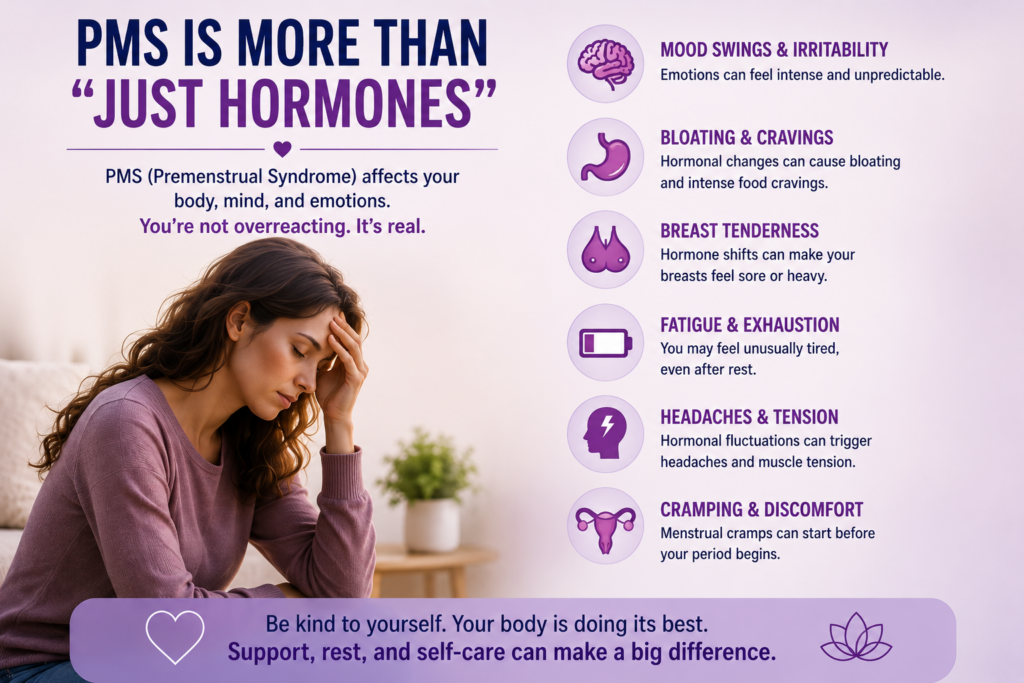
Why PMS Is More Than “Just Hormones”
PMS is often minimized.
But for many women, it can feel overwhelming.
Symptoms may include:
Irritability
Anxiety
Depression
Breast tenderness
Fatigue
Headaches
Cramping
Brain fog
Digestive changes
Low back pain
Food cravings
Sleep disruption
While hormones certainly play a role, the nervous system influences how the body experiences and responds to these shifts.
Two women can have similar hormone levels but completely different symptom experiences.
Why?
Because the brain’s ability to regulate stress, inflammation, pain perception, and autonomic balance matters.
If the nervous system is already overwhelmed, even normal hormonal fluctuations may feel amplified.
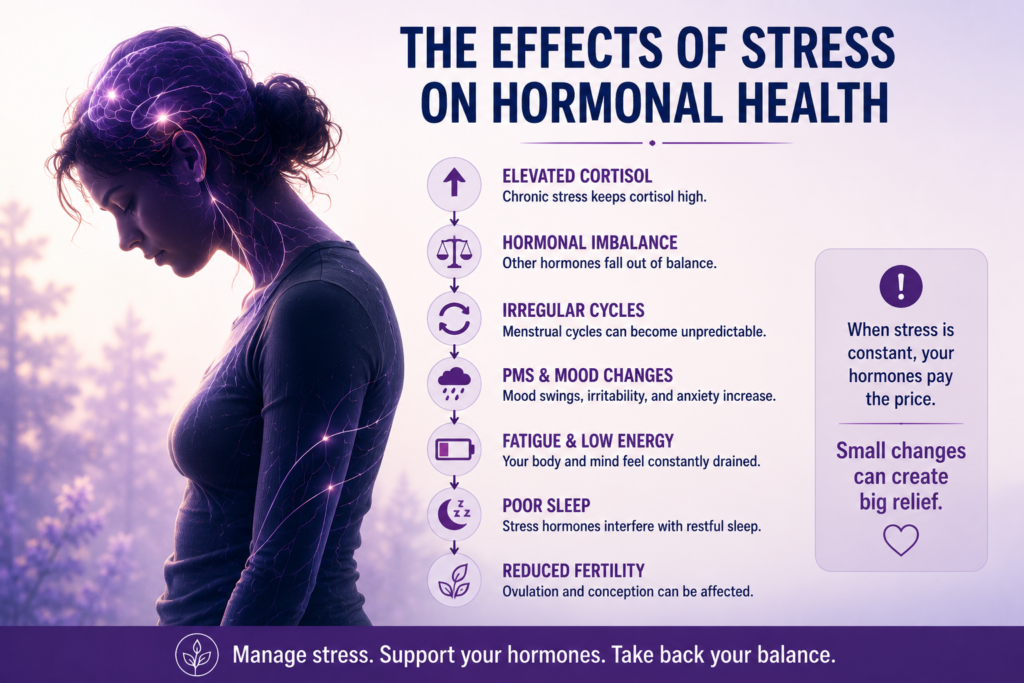
The Stress-Hormone Connection
The body cannot fully prioritize repair, balance, and reproductive health while stuck in chronic stress physiology.
When stress responses remain elevated for long periods, the body often diverts resources toward survival rather than restoration.
This can affect:
Menstrual regularity
Libido
Fertility
Sleep
Digestion
Energy
Emotional resilience
The autonomic nervous system plays a major role here.
The sympathetic nervous system is your “fight or flight” response.
The parasympathetic nervous system is responsible for:
Recovery
Healing
Hormonal regulation
Digestion
Rest
Adaptation
Many women today are functioning in a chronically sympathetic-dominant state.
Always “on.” Always pushing. Always adapting.
Until eventually the body begins signaling distress.
Why Some Women Feel Better After Chiropractic Care
Many patients report improvements in:
Menstrual discomfort
Pelvic tension
Sleep quality
Stress levels
Energy
Mood
Headaches
Low back pain
Overall well-being
Why might this happen?
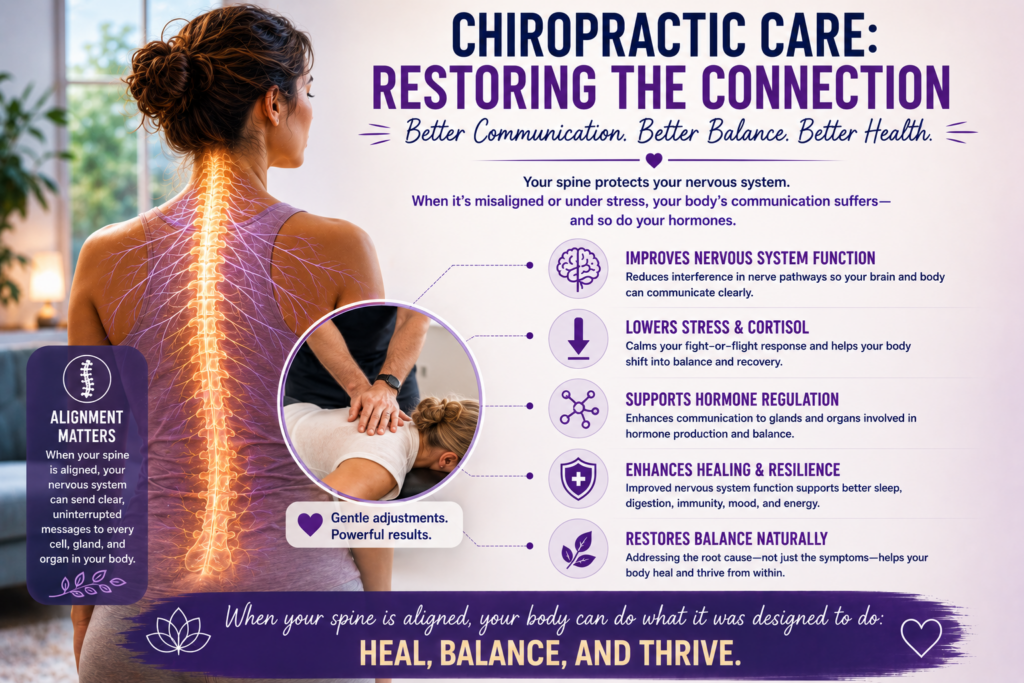
Because chiropractic care focuses on improving nervous system function and reducing interference within the body’s communication systems.
The spine protects the nervous system.
When spinal dysfunction, abnormal movement patterns, tension, stress adaptation, and postural distortions develop, the body may compensate in ways that alter mechanics, muscle tension, and neurological input.
Chiropractic adjustments are designed to help restore proper movement and improve communication between the brain and body.
This is not about “treating hormones.”
It is about helping the body function better as a whole.
And when the body functions better neurologically, many systems — including hormonal systems — may operate more efficiently.
The Hidden Role of Sleep, Digestion, and Blood Sugar
Hormonal health is rarely isolated.
Women struggling with hormonal symptoms frequently also experience:
Poor sleep
Digestive issues
Chronic inflammation
Fatigue
Blood sugar instability
Anxiety
Neck tension
Headaches
Why?
Because the nervous system coordinates all of it.
Sleep affects cortisol regulation.
Digestion influences estrogen metabolism and inflammation.
Blood sugar instability affects stress hormones.
Chronic inflammation can alter hormone signaling.
And poor neurological adaptability can amplify the entire cycle.
This is why a more complete approach matters.
Your Body Is Not Betraying You
One of the most important things women need to hear is this:
Your body is not working against you.
Your body is responding.
Responding to stress. Responding to overload. Responding to inflammation. Responding to poor recovery. Responding to neurological imbalance. Responding to years of adaptation.
Symptoms are often signals.
Not failures.
And while no single approach fixes everything, supporting the nervous system may help the body regain efficiency, adaptability, and resilience.
A Different Conversation About Women’s Health
For too long, women have been taught to ignore symptoms, normalize exhaustion, and simply “push through.”
But health is more than surviving.
Your body was designed for:
Adaptation
Healing
Regulation
Recovery
Balance
At Ptak Family Chiropractic, our focus is helping patients understand how the nervous system influences overall function so they can make more informed decisions about their health and future.
Because sometimes the question is not simply: “What hormone is wrong?”
Sometimes the deeper question is: “What has the body been adapting to for years?”
And that changes the entire conversation.
Ready to Learn More?
If you have been struggling with:
PMS
Irregular cycles
Stress-related tension
Sleep issues
Chronic fatigue
Headaches
Neck or back pain
Hormonal-related discomfort
A comprehensive evaluation may help uncover underlying stress patterns and neurological imbalances contributing to how your body is functioning.
Schedule a no-charge consultation with one of our doctors at Ptak Family Chiropractic and learn how a nervous-system-focused approach may help support your body’s ability to heal, regulate, and adapt naturally.
Call us today at
(310) 473-7991
3122 Santa Monica Blvd. Ste 102 Santa Monica, CA 90404
If your child is involved in gymnastics, their body is under constant demand.
Even when everything looks great on the outside, small changes can be happening beneath the surface.
This checklist is designed to help you catch early signs before they turn into bigger problems.
Go through each section and simply note what applies to your child.
Movement & Flexibility
Does your child have one side that is tighter than the other? Do they struggle more on one side during skills or stretches? Have you noticed a decrease in flexibility over time? Do certain movements look less smooth or controlled than before?
If you answered yes to any of these, it may indicate developing imbalances.
Posture & Alignment
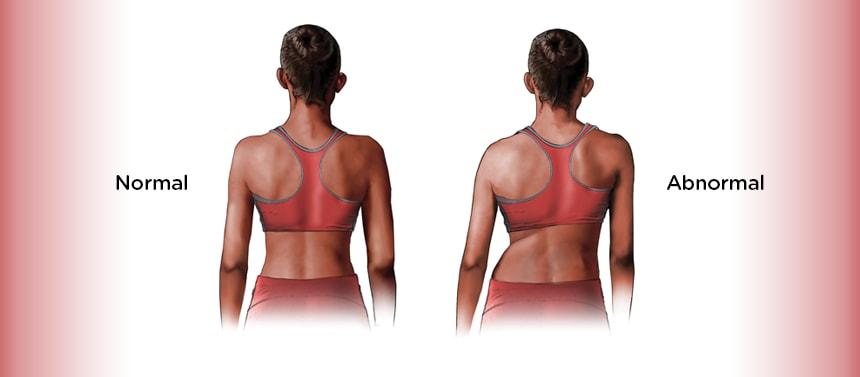
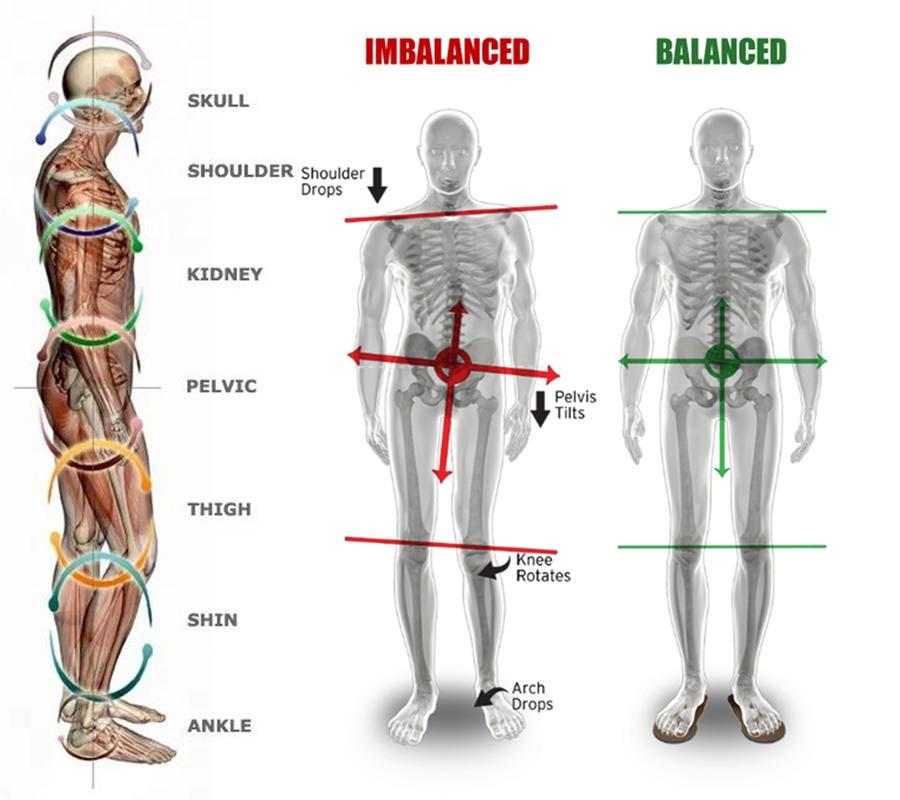
Does your child stand with uneven shoulders or hips? Does their posture look different than it used to? Do they tend to lean or shift weight to one side? Do they sit slouched or consistently favor one position?
Postural changes are often one of the earliest signs of compensation.
Training & Recovery
Does your child feel sore after most practices? Do they take longer to recover than expected? Do they complain of tightness more than pain? Have they recently increased training intensity or frequency?
These are signs the body may be under more stress than it can efficiently handle.
Growth & Development
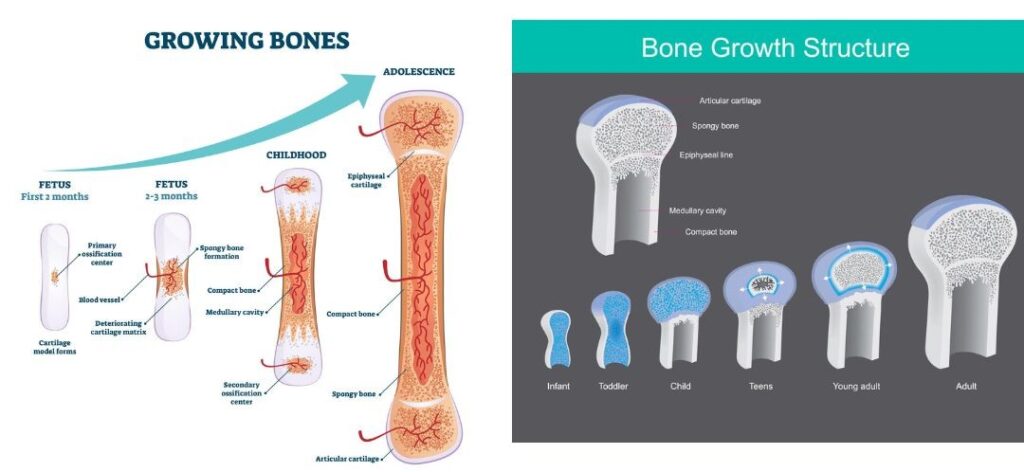
Has your child had a recent growth spurt? Have you noticed increased clumsiness or coordination changes? Are they suddenly tighter than they used to be?
Growth changes everything, and the body does not always adapt smoothly.
Performance Change
Has your child hit a plateau despite continued training? Do skills that were once easy now seem harder? Do they look less confident or more hesitant?
Sometimes performance changes are not about effort. They are about how the body is functioning.
Early Warning Signs
Does your child frequently stretch or “crack” certain areas? Do they complain of recurring tightness in the same spot? Have they had minor injuries that keep coming back? Do they say things like “my back feels tight” or “my legs feel off”?
These are often early signals, not random complaints.
What This Means
If you checked even a few of these boxes, it does not mean something is wrong.
It means your child’s body may be adapting to the demands being placed on it.
And that is the key.
Adaptation is normal. But unchecked adaptation can lead to compensation. And compensation is what eventually leads to injury or decreased performance.
What You Can Do Next
The goal is not to wait for pain.
The goal is to support your child’s body while it is still adapting well.
Chiropractic care focuses on:
Restoring proper motion in the spine Supporting the nervous system Helping the body move and function more efficiently
This allows your child to handle training, growth, and recovery at a higher level.
Our Approach at Ptak Family Chiropractic
We take a corrective care approach focused on how your child’s body is functioning, not just how it feels.
Care is designed to support:
Movement Balance Coordination Recovery
So your child can continue to perform, improve, and enjoy gymnastics without unnecessary setbacks.
If You Checked Multiple Boxes…
It may be time to have your child evaluated.
We offer a no-charge consultation to help determine if chiropractic care would be beneficial for your child.
Ptak Family Chiropractic 3122 Santa Monica Blvd, Ste 102 Santa Monica, CA 90404
The word “subluxation” is one of the most important concepts in chiropractic.
It is also one of the most misunderstood.
Many people think it simply means a bone out of place.
It doesn’t.
Subluxation is about function.
More specifically, it is about how well your brain and body are communicating.
A Simple Way to Understand Subluxation
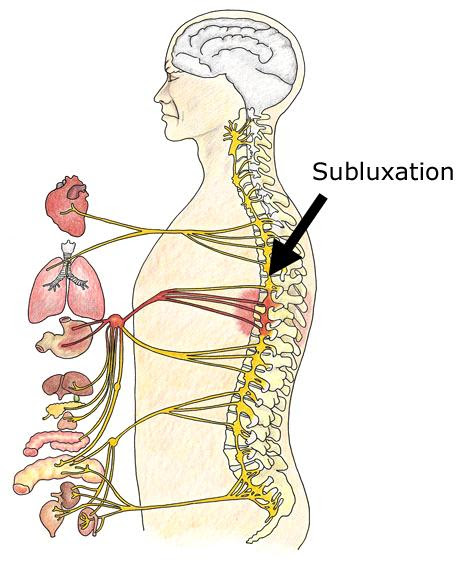
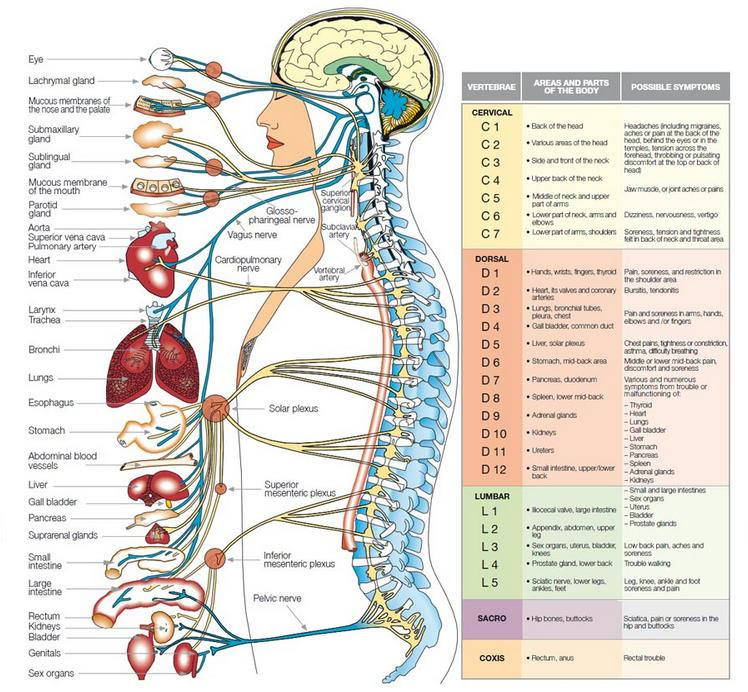
At its core, a subluxation is a change in normal spinal motion and function that interferes with communication within the nervous system.
Your brain controls and coordinates everything your body does.
Every organ, every muscle, every cell depends on clear communication through the nervous system.
Your spine protects that system.
When spinal joints are not moving properly, the quality of communication between the brain and body can change.
Not always completely blocked.
But altered.
And when communication is altered, function is altered.
This is where problems begin.
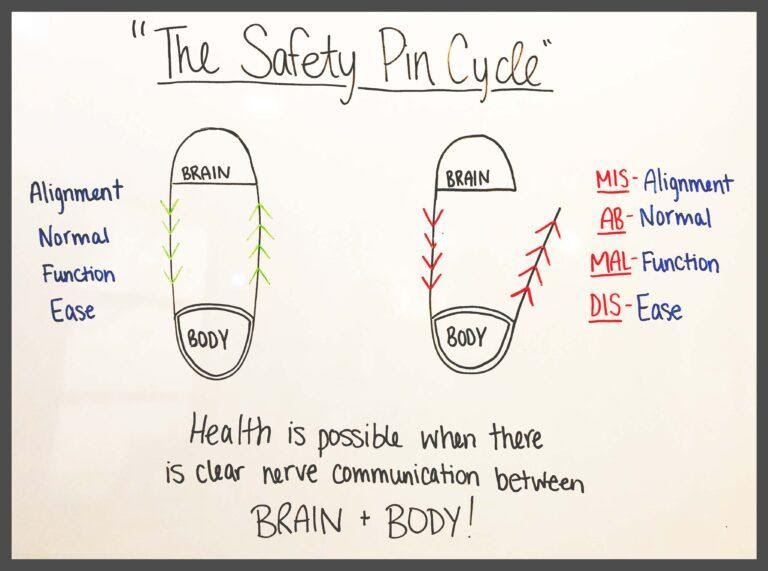
The Safety Pin Cycle: Understanding How the Body Communicates
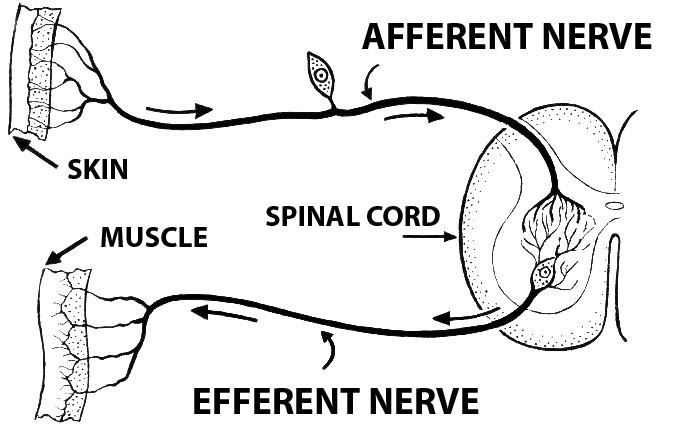
One of the simplest ways to understand how your body functions is through something called the Safety Pin Cycle.
Think of it as a continuous loop of communication between your body and your brain.
First, your body sends information to your brain. This is afferent input.
Every movement, every position, every sensation is being reported upward through the nervous system.
Your brain then processes that information and sends instructions back to the body. This is efferent output.
That output controls everything from movement and posture to organ function and adaptation.
Input → Processing → Output And then the cycle repeats continuously.
This loop is what allows your body to adapt, heal, and function.
When a subluxation is present, the quality of that input can become distorted, and the output can become less efficient.
The message is still moving.
But it is not as clear.
This is where interference affects the expression of life through the body.
The body is still functioning.
But it may not be functioning at its full potential.
The goal of chiropractic care is to restore clarity to this cycle.
Better input. Better output. Better function.
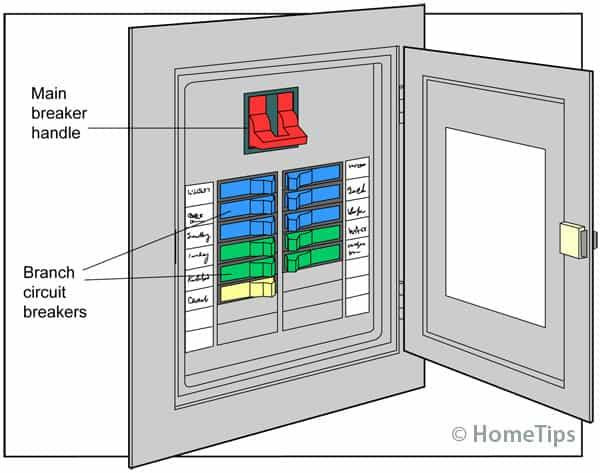
A Simple Analogy: The Fuse Box
Another way to understand this is to think about the electrical system in your home.
Your brain is like the main power source.
Your body is the house.
Your nervous system is the wiring that carries energy and information to every room.
And your spine acts like a fuse box.
When everything is functioning properly, power flows where it needs to go. Lights turn on. Appliances work. The system runs smoothly.
But if a fuse is not functioning properly, the pathway it controls is affected.
A room may go dark. An appliance may stop working. Things may flicker or work inconsistently.
The problem is not the light.
It is not the appliance.
It is the interruption in the system.
In the same way, when a subluxation is present, it affects how information flows through the nervous system.
The result may show up somewhere else in the body.
Pain. Tension. Poor function.
But the source of the issue is not always where the symptom appears.
The goal is not just to fix the symptom.
The goal is to restore the system.
The Original Chiropractic Perspective
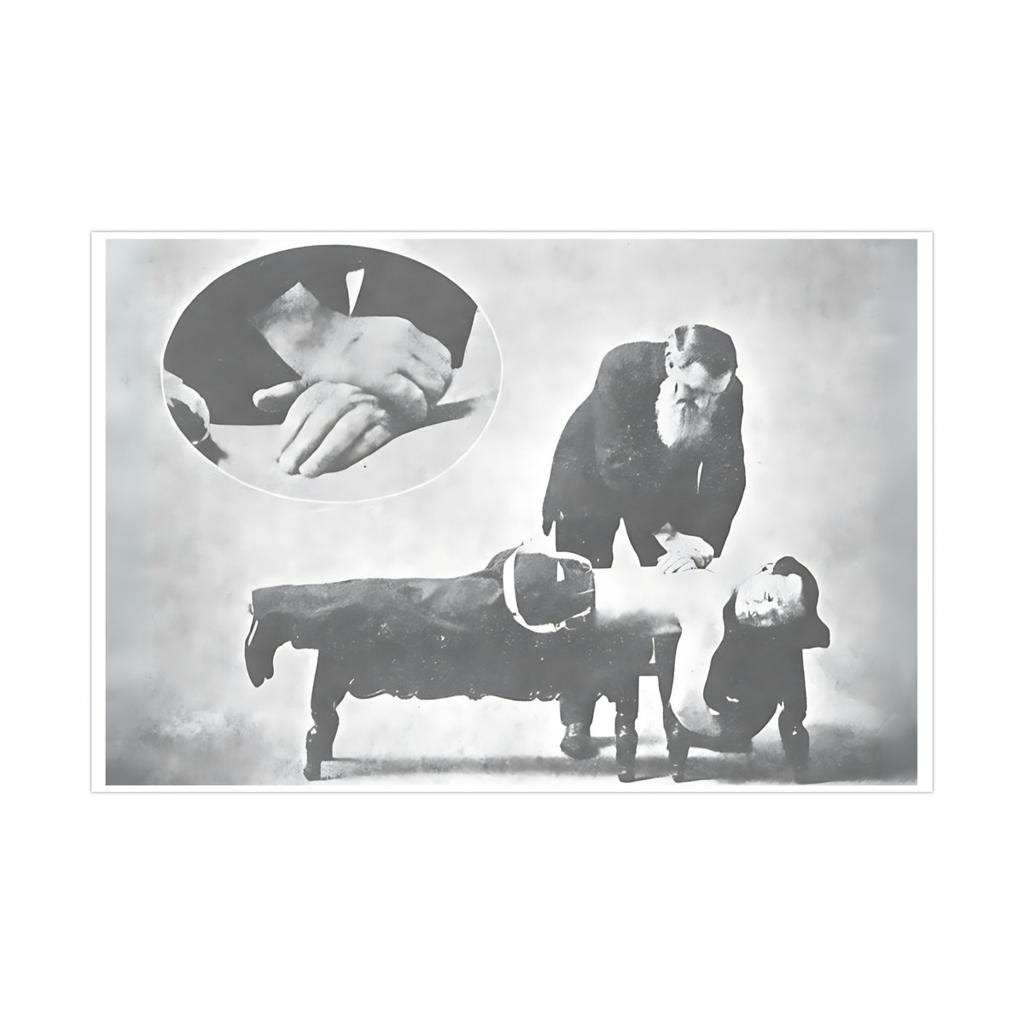
Chiropractic began in 1895 with D.D. Palmer, who recognized that the body has an inherent ability to regulate and heal itself.
He described this as innate intelligence, a built-in guidance system that directs the body toward health.
His son, B.J. Palmer, expanded on these ideas and emphasized the central role of the nervous system.
He described three primary causes of interference:
Trauma Toxins Thoughts
All of which can influence how the nervous system functions and contribute to subluxation.
They also distinguished between disease and dis-ease.
Disease is a diagnosable condition.
Dis-ease is a state where the body is not functioning in harmony, even before symptoms appear.
This distinction matters.
Because many people are functioning with interference long before they feel anything at all.
A Modern Understanding of Subluxation
Today, we understand more about how the spine influences the nervous system.
Every joint in your spine contains receptors that send information to your brain about movement and position.
This is called proprioception.
When joints are moving well, they send clear, accurate input.
When they are restricted, that input becomes altered.
Over time, this can affect coordination, posture, balance, and how the brain organizes movement.
This is why a subluxation is not just structural.
It is neurological.
It changes how the brain perceives and controls the body.
Why You May Not Feel a Problem
Pain is often the last sign of dysfunction, not the first.
The body is incredibly adaptive. It can compensate for imbalances for long periods of time before symptoms appear.
By the time you feel pain, the process has often been developing for months or years.
This is why waiting for symptoms is not always the best strategy.
Function matters before symptoms.
What Causes Subluxation
Subluxations are typically the result of accumulated stress over time.
Physical stress Poor posture Repetitive movement Injuries or accidents
Chemical stress Inflammation Poor nutrition
Emotional stress Mental overload Chronic tension
These stresses gradually influence how the body moves and how the nervous system functions.
What Chiropractic Care Does
Chiropractic adjustments are designed to restore motion and improve communication within the nervous system.
When motion improves, the input to the brain improves.
Better input leads to better output.
This can influence how your body moves, adapts, and functions.
The goal is not simply to reduce pain.
The goal is to improve how your body works.
A Different Way to Think About Health
Health is not just the absence of symptoms.
It is the ability of your body to function, adapt, and express itself fully.
When communication within the nervous system is clear, the body has the best opportunity to do that.
When interference is present, that ability is reduced.
This is why subluxation matters.
It is about the expression of life through the body.
Take the First Step Toward Better Function
At Ptak Family Chiropractic, our focus is on helping your body function the way it was designed to.
By improving spinal motion and supporting the nervous system, we help create the conditions for better movement, better adaptability, and a higher level of health.
If you are ready to experience what your body is capable of when it is functioning at its best, we are here to help.
Schedule your consultation today and take the first step toward a healthier, more connected you. (310) 473-7991
Most parents have never heard of primitive reflexes.
Yet they play a foundational role in how a child’s brain develops, how their body moves, and how they learn, focus, and behave.
When these reflexes develop and integrate properly, they quietly set the stage for coordination, attention, emotional regulation, and academic success.
When they don’t, the effects can show up in ways that are often misunderstood.
What looks like ADHD, clumsiness, poor posture, or learning challenges may actually be rooted in something much earlier in development.
Primitive reflexes.
What Are Primitive Reflexes
Primitive reflexes are automatic movement patterns that are present at birth. They originate in the brainstem and are designed to help infants survive and begin interacting with their environment.
These reflexes guide early movements like sucking, grasping, turning the head, and reacting to stimuli.
As a child grows, higher centers of the brain begin to take over. These reflexes are meant to integrate, meaning they fade away and are replaced by more controlled, voluntary movement.
This process is one of the earliest and most important steps in neurological development.
If integration does not occur properly, the nervous system can remain in a more primitive, less efficient state.
And that affects everything built on top of it.
Why Primitive Reflexes Matter More Than You Think
Retained primitive reflexes can interfere with how the brain and body communicate.
This can show up as:
Difficulty sitting still Poor posture Trouble focusing Impulsivity Emotional sensitivity Challenges with reading and writing Coordination issues Sensory sensitivities
These are not random symptoms.
They are signals that the nervous system may not be developing as efficiently as it could.
When the foundation is unstable, everything built on top of it becomes more difficult.
The Major Primitive Reflexes and When They Should Integrate
Understanding a few key reflexes can help you recognize patterns in your child.
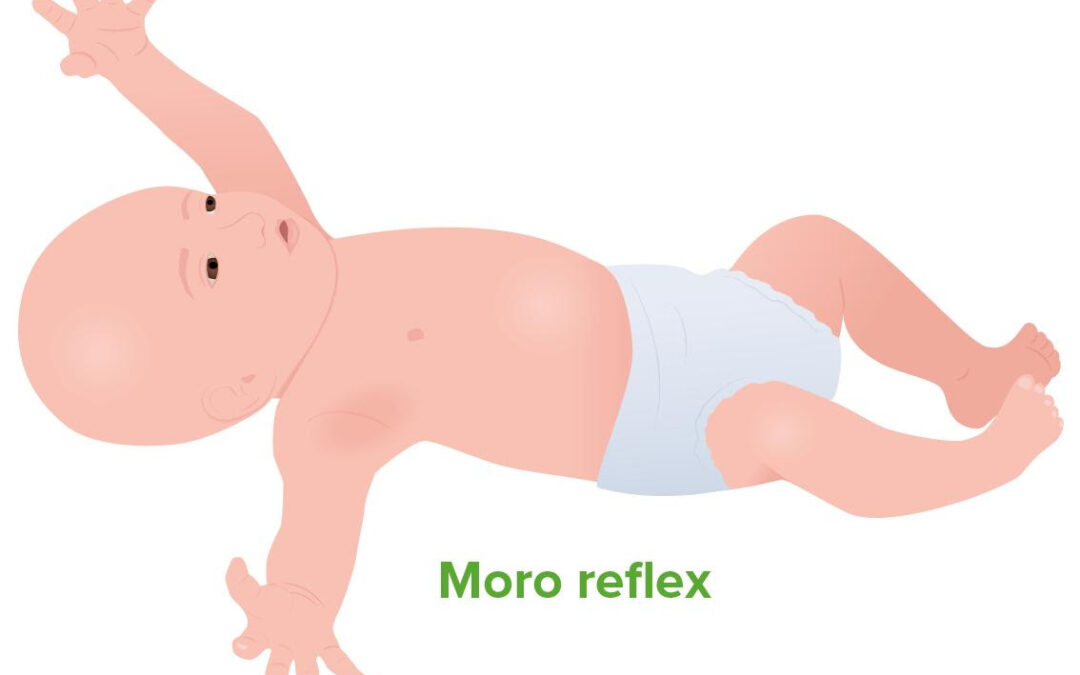
Moro Reflex (Startle Reflex) Present at birth Should integrate by 4–6 months
This reflex causes a sudden extension of the arms and legs in response to stimuli, followed by a contraction.
If retained, it may contribute to anxiety, emotional reactivity, difficulty handling stress, and hypersensitivity to sound or light.
These children often appear “on edge” or easily overwhelmed.
ATNR (Asymmetrical Tonic Neck Reflex) Present at birth Should integrate by 5–7 months
When the head turns to one side, the arm and leg on that side extend while the opposite side flexes.
If retained, it can interfere with crossing midline, which is essential for reading and writing.
Children may struggle with handwriting, tracking words across a page, or coordinating both sides of the body.
STNR (Symmetrical Tonic Neck Reflex) Develops around 6–9 months Should integrate by 9–11 months
This reflex helps a child transition from lying to crawling.
If retained, it can affect posture and sitting still. These children may slump, fidget constantly, or have difficulty maintaining attention at a desk.
TLR (Tonic Labyrinthine Reflex) Present at birth Should integrate by around 6 months
This reflex influences muscle tone based on head position.
If retained, it may lead to poor balance, coordination issues, motion sensitivity, and difficulty with spatial awareness.
Spinal Galant Reflex Present at birth Should integrate by 3–9 months
This reflex is activated when the lower back is stimulated.
If retained, it can contribute to fidgeting, poor sitting tolerance, bedwetting, and sensitivity to clothing around the waist.
What Happens If These Reflexes Remain
When primitive reflexes are retained, the brain is essentially working with interference.
Instead of smooth, coordinated communication, there are competing signals.
The body may react when it doesn’t need to.
The brain may struggle to filter input.
Energy that should be used for learning and focus is instead used for compensation.
This is why a child can be intelligent, capable, and trying hard, yet still struggle.
It is not a lack of effort.
It is a lack of integration.
How to Help Integrate Primitive Reflexes
The encouraging news is this.
The brain is adaptable.
With the right input, these reflexes can be reduced or integrated over time.
The key is specific, repetitive movement patterns that mimic early developmental stages.
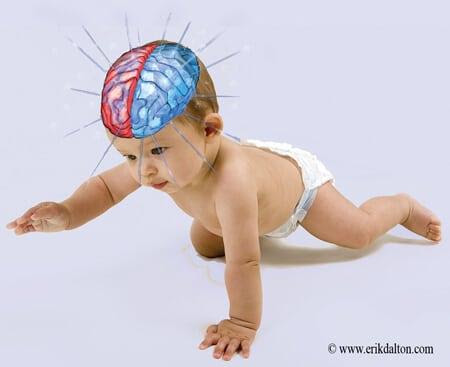
Cross Crawl
Have your child touch their right elbow to their left knee, then alternate sides.
This improves coordination between both sides of the brain and supports integration of reflexes like ATNR.
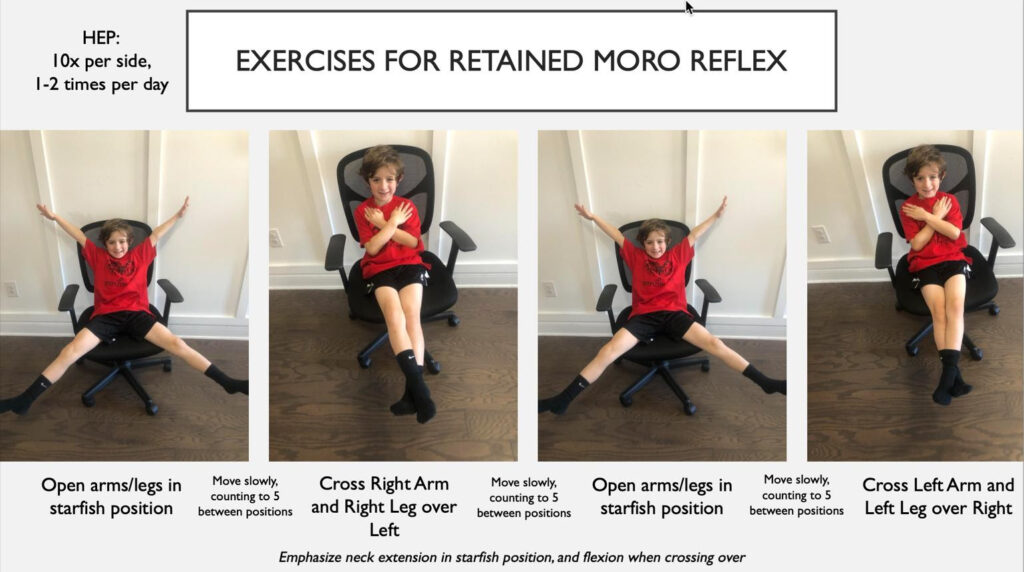
Starfish Exercise (for Moro Reflex)
Start curled up, then slowly extend arms and legs outward while breathing deeply, then return to a curled position.
This helps regulate the nervous system and reduce startle reflex sensitivity.
Rocking on Hands and Knees
Position your child on hands and knees and gently rock forward and backward.
This mimics early developmental movement and supports integration of STNR.
Superman Hold
Lift arms and legs while lying face down and hold steady.
This strengthens postural muscles and improves body awareness.
Snow Angels (on Floor)
Lying on the back, move arms and legs in a slow, controlled pattern like making a snow angel.
This supports coordination and full-body awareness.
Why Consistency Is Everything
These exercises are not quick fixes.
They are inputs.
And the brain changes through repetition.
Done occasionally, they help.
Done consistently, they can create meaningful improvements in focus, behavior, coordination, and learning.
A Different Way to Look at Your Child’s Challenges
At Ptak Family Chiropractic, we view these patterns through a neurological lens.
The body and brain are not separate.
Movement, posture, and spinal function all influence how the brain processes information and how a child experiences the world.
When we improve the foundation, everything else has the opportunity to improve as well.
This is not about labeling your child.
It is about understanding them.
Helping Your Child Reach Their Potential
If your child is struggling with focus, coordination, behavior, or learning, there is always a reason.
And there is always a path forward.
When we identify what may be interfering with development and apply the right strategies, we can help the brain and body work together more effectively.
If you would like help understanding what may be affecting your child and what steps you can take, we are here for you.
Call our office or schedule a consultation today.
Let’s help your child build the foundation they need to grow, learn, and thrive. (310) 473-7991.