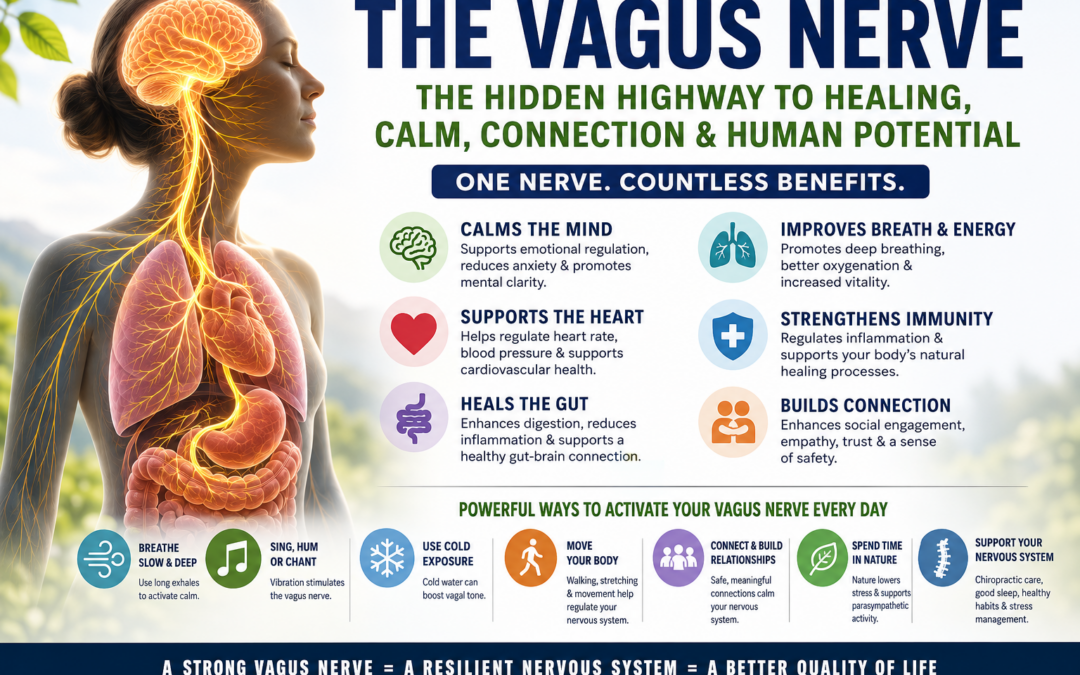
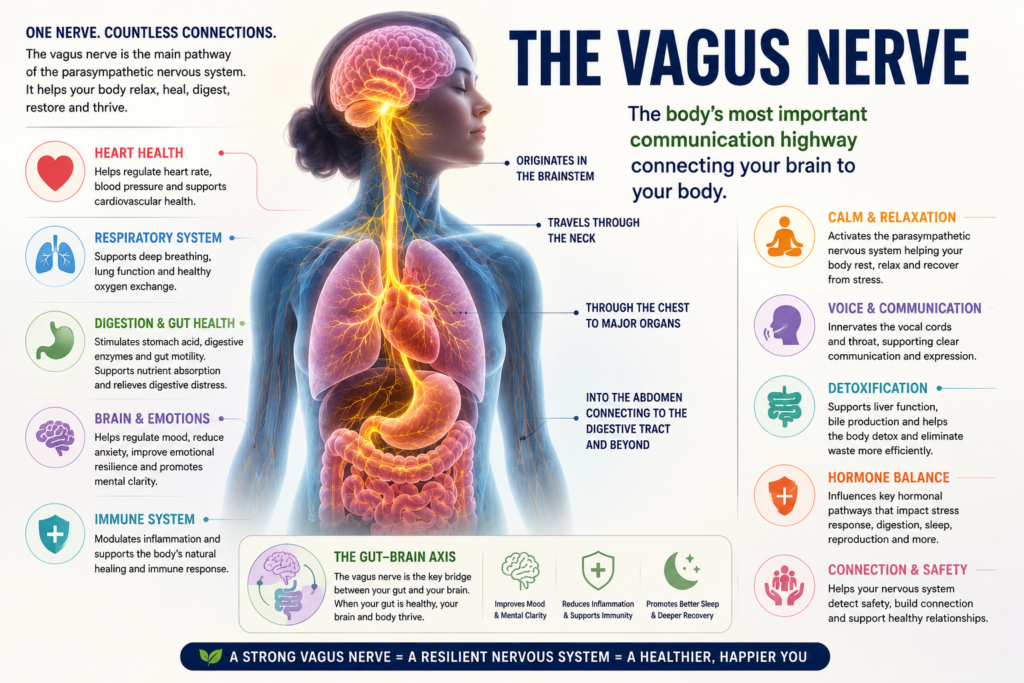
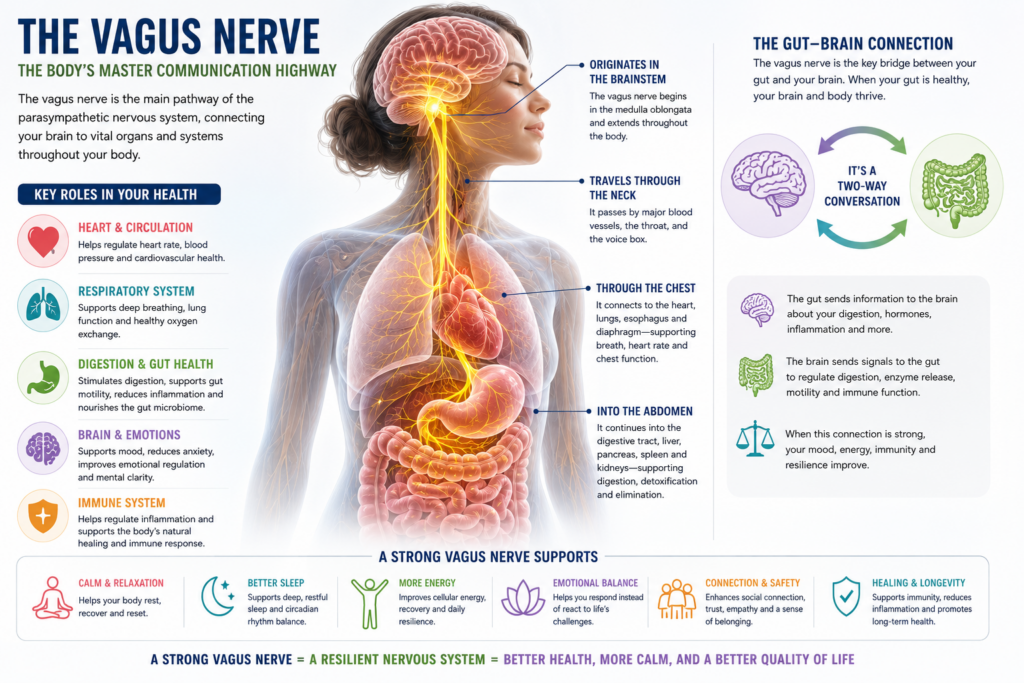
The Vagus Nerve The Hidden Highway to Healing, Calm, Connection, and Human Potential
There may be no structure in the human body more important — and more misunderstood — than the vagus nerve.
Most people have never heard of it.
Yet this extraordinary neurological pathway influences nearly every major system in your body including your heart, lungs, digestion, immune system, inflammation levels, sleep, hormones, emotional state, resilience, recovery, healing ability, and overall quality of life.
The vagus nerve is not simply “a nerve.” It is one of the master communication highways between your brain and body.
It is one of the primary regulators of the parasympathetic nervous system — the part of your nervous system responsible for healing, recovery, restoration, repair, emotional regulation, adaptability, and resilience.
In many ways, the quality of your life is deeply connected to the quality of your vagal function.
And in today’s modern world, millions of people are unknowingly living in a state where this system is chronically suppressed.
They are surviving.
But they are not truly recovering.
Not truly regulating.
Not truly healing.
Not truly thriving.
Understanding the vagus nerve changes how you understand stress, health, inflammation, healing, emotions, and even the human experience itself.
What Is the Vagus Nerve?
The word vagus comes from the Latin word meaning “wandering,” which is fitting because the vagus nerve travels farther throughout the body than any other cranial nerve.
The vagus nerve begins in the brainstem and travels through the neck into the chest and abdomen, connecting to major organs and systems along the way.
It communicates with the:
Heart
Lungs
Diaphragm
Digestive tract
Liver
Pancreas
Spleen
Vocal cords
Throat
Facial muscles
Immune system
Gut microbiome
The vagus nerve is one of the primary communication highways between your brain and body.
Remarkably, nearly 80% of vagal nerve fibers are sensory, meaning most communication is actually traveling from the body back up to the brain.
Your brain is constantly listening to your body.
Every breath.
Every heartbeat.
Every digestive signal.
Every inflammatory response.
Every muscular tension pattern.
Every emotional state.
The vagus nerve helps your brain determine whether your body feels safe… or threatened.
And this matters far more than most people realize.
The Parasympathetic Nervous System
Your Healing and Recovery System
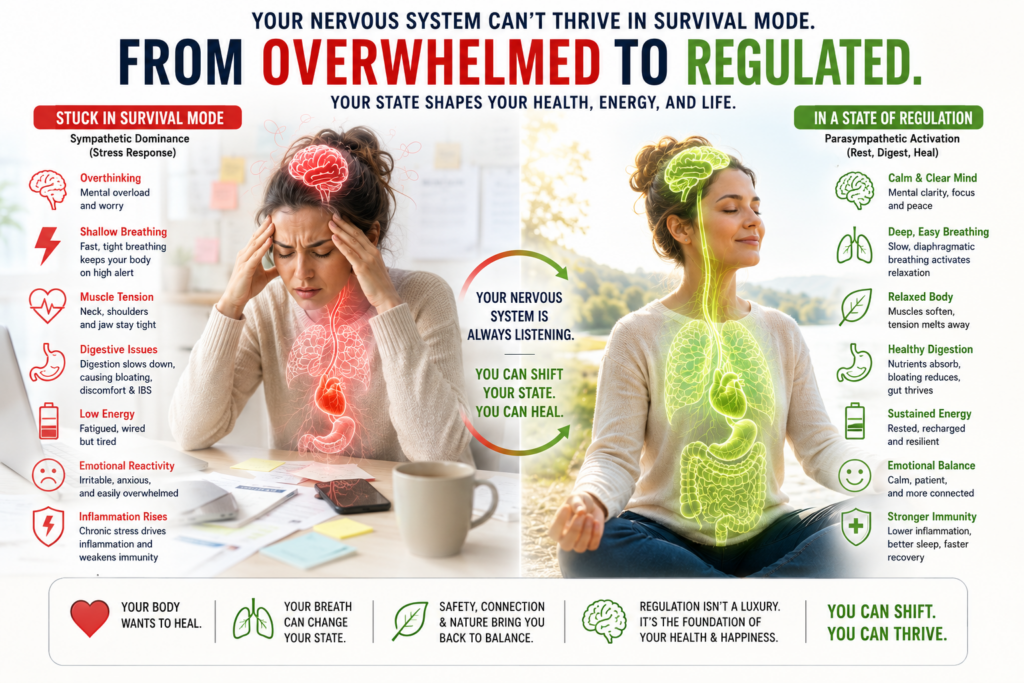
The autonomic nervous system has two primary branches:
The sympathetic nervous system, commonly known as fight-or-flight.
And the parasympathetic nervous system, often referred to as rest, digest, heal, regulate, and recover.
The vagus nerve is one of the primary regulators of the parasympathetic nervous system.
When this system activates appropriately:
Heart rate slows
Breathing deepens
Digestion improves
Muscles relax
Blood pressure normalizes
Inflammation decreases
Hormonal balance improves
Sleep quality improves
Emotional regulation improves
Healing and recovery accelerate
This is where restoration happens.
This is where healing happens.
This is where the body repairs itself.
The problem is that many people rarely enter this state deeply anymore.
The Modern Nervous System Crisis
One of the greatest hidden epidemics in modern society is nervous system dysregulation.
People are exhausted but wired.
Tired but unable to relax.
Overstimulated but emotionally disconnected.
Chronically tense but unaware of it.
Living with elevated stress hormones for years.
The body begins interpreting everyday life as danger.
Emails.
Traffic.
Financial pressure.
Social media.
Poor sleep.
Inflammation.
Technology overload.
Emotional stress.
Poor posture.
Pain.
Chronic uncertainty.
Eventually the nervous system forgets how to fully relax.
And when the body no longer feels safe internally, physiology changes.
Digestion changes.
Breathing changes.
Hormones change.
Inflammation changes.
Muscle tone changes.
Pain perception changes.
Even emotional patterns and resilience may shift.
Many chronic conditions may involve autonomic nervous system imbalance including:
Anxiety
Chronic stress
Digestive disorders
IBS
Tension headaches
Migraines
Chronic inflammation
Sleep disturbances
Burnout
Fatigue
Brain fog
TMJ dysfunction
Fibromyalgia
High blood pressure
Emotional dysregulation
The body was never designed to remain in survival mode continuously.
Vagal Tone
The Health of Your Nervous System
You will often hear the phrase “vagal tone.”
Vagal tone refers to the functional health and adaptability of the vagus nerve.
Healthy vagal tone means your body can move fluidly between activation and recovery.
Stress occurs.
Then the body recovers.
Challenge occurs.
Then regulation returns.
Poor vagal tone may make it difficult for the body to shift out of stress physiology.
The nervous system gets “stuck.”
This may show up as:
Chronic tension
Shallow breathing
Anxiety
Poor digestion
Sleep problems
Emotional reactivity
Fatigue
Elevated resting heart rate
Poor stress tolerance
Chronic inflammation
A healthy vagus nerve does not mean life becomes stress-free.
It means your body becomes more adaptable to stress.
And adaptability may be one of the greatest predictors of long-term health.
The Gut-Brain Connection
One of the most fascinating roles of the vagus nerve is its involvement in the gut-brain connection.
Your gut and brain are constantly communicating.
This is why emotional stress can affect digestion.
And why digestive dysfunction can affect mood and emotions.
The vagus nerve helps regulate:
Stomach acid production
Digestive enzyme release
Intestinal motility
Gut inflammation
Microbiome communication
This may help explain why chronic stress frequently contributes to:
Bloating
Constipation
Acid reflux
IBS
Nausea
Digestive discomfort
The nervous system and digestive system are deeply interconnected.
A body trapped in stress physiology often cannot digest optimally.
The Vagus Nerve and Inflammation
The vagus nerve also plays a major role in regulating inflammation.
Researchers often refer to this as the inflammatory reflex.
Healthy vagal signaling may help modulate excessive inflammatory responses throughout the body.
Chronic stress and autonomic imbalance may contribute to persistent low-grade inflammation.
And chronic inflammation has been associated with:
Cardiovascular disease
Metabolic dysfunction
Autoimmune conditions
Chronic pain
Neurodegenerative disorders
Mood disorders
The nervous system and immune system are in constant communication.
Health is never isolated to one single system.
The Vagus Nerve and Human Emotion
One of the most profound aspects of the vagus nerve is its relationship to emotional regulation and human connection.
The vagus nerve influences:
Facial expression
Vocal tone
Eye contact
Emotional safety
Calm presence
Social engagement
Compassion
Trust
Connection
When the nervous system feels safe, humans connect more easily.
When the nervous system feels threatened, humans protect.
Many emotional responses are not simply psychological.
They are physiological.
Sometimes people do not need to “try harder.”
Sometimes their nervous system simply needs support returning to regulation.
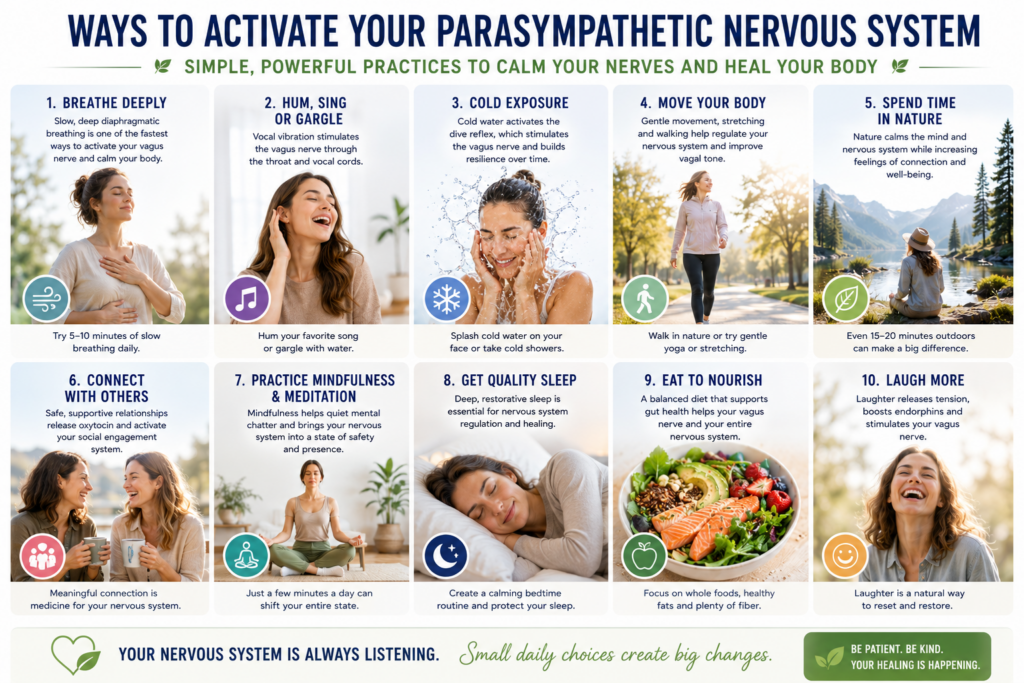
How to Activate the Vagus Nerve Naturally
One of the most empowering realities about the vagus nerve is that it can be influenced intentionally.
Small daily habits can profoundly shape nervous system regulation over time.
Deep Diaphragmatic Breathing
Slow breathing is one of the fastest ways to stimulate parasympathetic activity.
Especially:
Slow exhalations
Nasal breathing
Belly breathing
Rhythmic breathing patterns
Fast shallow chest breathing often signals stress.
Slow diaphragmatic breathing signals safety.
Humming, Chanting, Singing, and Prayer
The vagus nerve connects to the throat and vocal cords.
This may explain why humming, chanting, singing, prayer, and vocal vibration often feel calming and grounding.
Many ancient healing traditions understood this long before modern neuroscience.
Cold Exposure
Cold exposure may stimulate vagal pathways and improve autonomic adaptability.
Examples include:
Cold face immersion
Cold showers
Contrast therapy
Cold plunges
The goal is not punishment.
The goal is adaptability and resilience.
Movement and Exercise
The human body was designed for movement.
Walking, stretching, mobility work, rhythmic exercise, yoga, dance, and nature walks may all help regulate the nervous system.
Movement helps discharge stress physiology.
Sedentary lifestyles often reinforce nervous system dysregulation.
Nature and Sunlight
Natural environments often help shift the nervous system toward parasympathetic dominance.
Fresh air, sunlight, reduced stimulation, and rhythmic movement in nature may help calm the nervous system profoundly.
Many people notice they breathe differently near the ocean, in forests, or under open skies.
The nervous system recognizes environmental safety cues.
Human Connection
One of the most overlooked vagus nerve activators is healthy human connection.
Feeling seen.
Feeling heard.
Feeling understood.
Feeling safe.
Feeling loved.
Supportive relationships can regulate physiology.
Chronic conflict and isolation can dysregulate physiology.
Humans are biologically wired for connection.
Chiropractic Care and Nervous System Regulation
The spine and nervous system are intimately connected.
Mechanical stress, spinal dysfunction, postural distortion, restricted motion, muscle tension, and upper cervical imbalance may all influence nervous system physiology.
Particularly important is the upper cervical region near the brainstem where autonomic regulation is heavily coordinated.
Chiropractic care is not simply about pain relief.
It is about optimizing nervous system function.
Improving motion.
Reducing mechanical stress.
Enhancing neurological communication.
Supporting adaptability and regulation.
Many patients report improvements not only in pain, but also in:
Sleep
Digestion
Stress tolerance
Breathing
Emotional calmness
Recovery
Energy levels
While chiropractic care is not a direct “vagus nerve treatment,” optimizing spinal and nervous system function may profoundly influence parasympathetic balance and nervous system regulation.
Sleep and the Nervous System
Sleep is one of the body’s greatest parasympathetic healing states.
Poor sleep disrupts autonomic regulation.
And autonomic dysregulation disrupts sleep.
This creates a vicious cycle.
Supporting vagal function often improves sleep quality.
And improving sleep often improves nervous system regulation.
Everything is connected.
Trauma, Stress, and the Body
One of the deepest truths about the nervous system is this:
The body remembers.
Past trauma, chronic stress, emotional overwhelm, physical injury, and unresolved tension patterns may influence autonomic function for years.
Sometimes healing requires more than positive thinking.
Sometimes the nervous system itself needs support.
This may involve:
Breathwork
Meditation
Chiropractic care
Movement
Therapy
Somatic work
Prayer
Community
Nervous system retraining
Mindfulness practices
Healing is not weakness.
Rest is not weakness.
Regulation is not weakness.
The body was designed to heal when given the opportunity.
The Ultimate Goal Is Not Relaxation
It Is Adaptability
The healthiest nervous systems are not permanently calm.
They are adaptable.
Able to rise to challenge when necessary.
Able to recover afterward.
Able to transition fluidly between activation and restoration.
This is resilience.
This is regulation.
This is health.
Final Thoughts
Your Nervous System Is Always Listening
Every thought.
Every breath.
Every posture.
Every relationship.
Every stress.
Every environment.
Every habit.
Your nervous system is constantly interpreting the world around you.
The vagus nerve helps determine whether your body moves toward protection… or healing.
Toward survival… or restoration.
Toward exhaustion… or vitality.
The goal is not to eliminate stress completely.
The goal is to create a nervous system capable of recovery.
A nervous system that feels safe enough to heal.
A nervous system adaptable enough to thrive.
A nervous system connected enough to fully experience life.
Because perhaps the greatest human experience is not simply being alive.
It is feeling regulated, connected, resilient, present, and capable of healing from within.
And the vagus nerve may be one of the most important gateways to that experience.
The question is:
What signals are you giving it every day?
If you are ready to support your nervous system, improve adaptability, and help your body move toward healing instead of survival, we would be honored to help.
Ptak Family Chiropractic 3122 Santa Monica Blvd. Suite 102 Santa Monica, CA 90404 (310) 473-7991
The Master System of Human Life, Health, Healing, Adaptation, and Expression
“What lies behind us and what lies before us are tiny matters compared to what lies within us.” — Oliver Wendell Holmes
Most people spend their entire lives thinking about health in separate compartments.
The mind is one thing. The body is another. Stress is emotional. Pain is physical. Digestion is separate from posture. Breathing is separate from anxiety. Aging is separate from movement. Emotions are separate from physiology.
But the deeper we study the human body, the more astonishing the truth becomes:
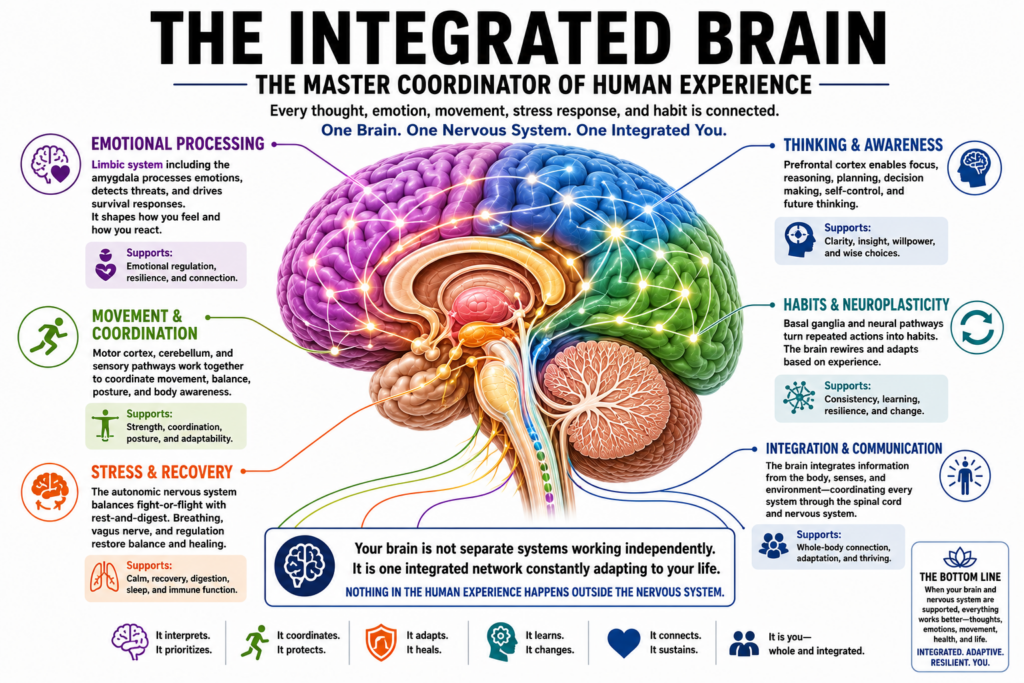
Nothing in the human experience happens outside the nervous system.
Not thought. Not movement. Not healing. Not stress. Not pain. Not emotion. Not posture. Not inflammation. Not digestion. Not breathing. Not recovery. Not adaptation. Not life itself.
Everything you experience is processed, coordinated, interpreted, regulated, and expressed through the brain, spinal cord, and nervous system.
The nervous system is not simply another system in the body. It is the master communication system of human life itself.
And perhaps the most extraordinary part of all?
Your body reveals this truth before you are even born.
The Body Builds Itself Around the Nervous System
In the earliest stages of life, long before the heart fully develops or muscles become strong, something remarkable begins to form.
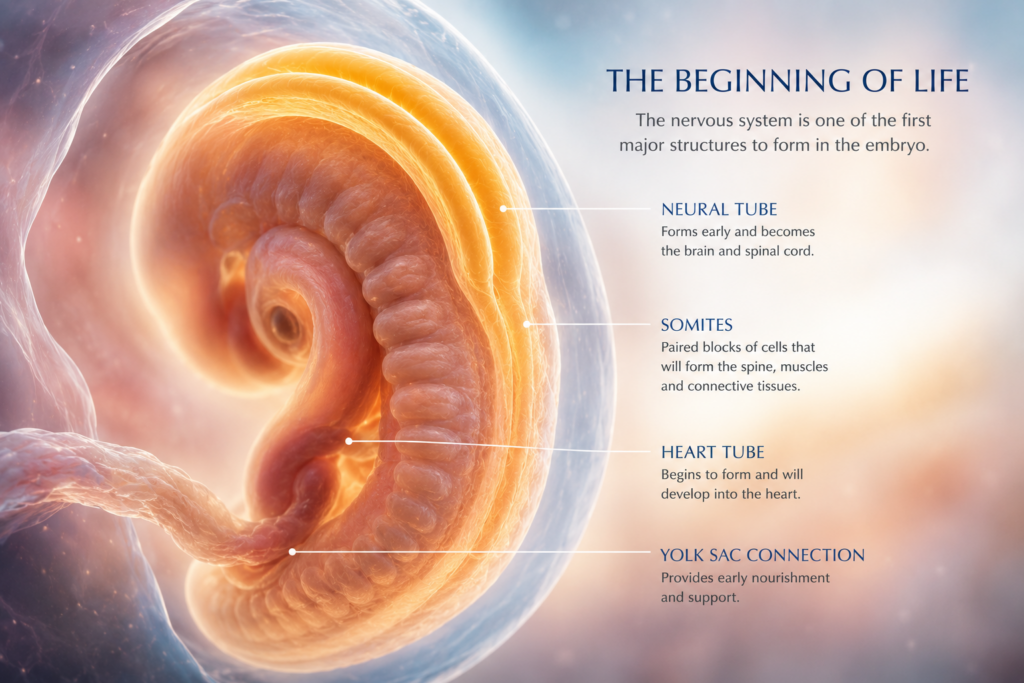
Two cells divide into four. Four become eight. Eight become sixteen. From this unfolding miracle, one of the very first major structures to emerge is the neural tube — the primitive structure that eventually becomes the brain and spinal cord.
The nervous system develops first.
Not last.
First.
From this central communication system, the body begins organizing itself in coordinated development. The brain expands. The spinal cord forms. Nerves branch outward into every region of the body carrying information, communication, sensation, coordination, and regulation.
Then something extraordinary happens.
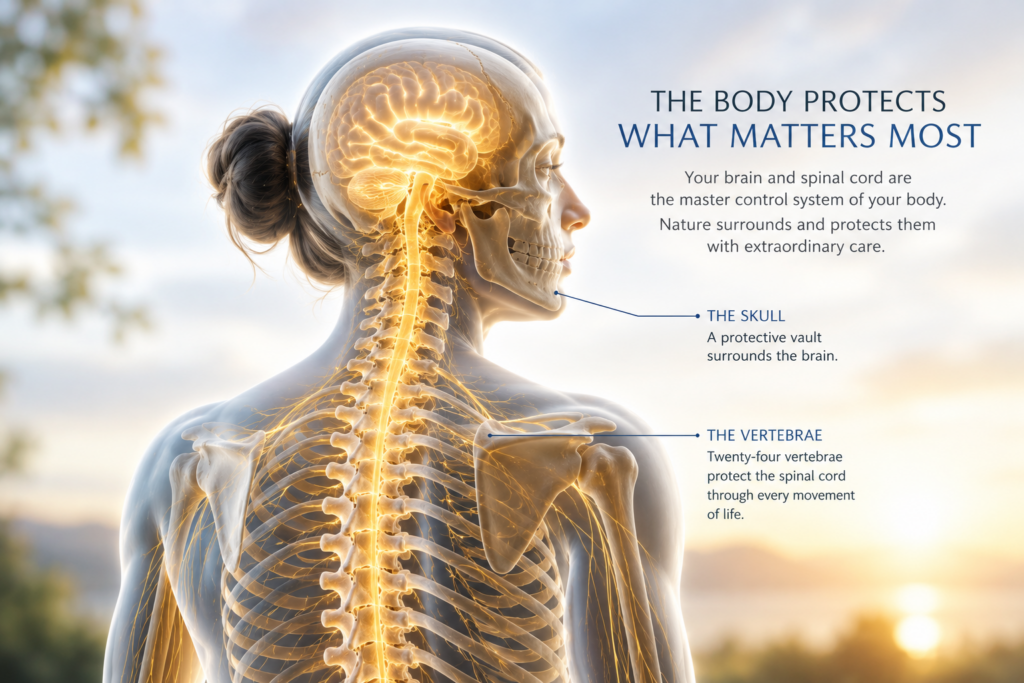
The body builds protection around the nervous system.
The skull forms around the brain. The vertebrae form around the spinal cord. Layer after layer of protection develops around this master communication network.
No other system in the human body receives this level of structural protection.
The body is telling a story.
The nervous system matters deeply.
Every heartbeat, every breath, every movement, every hormonal response, every healing process, every stress response, and every coordinated function depends upon neurological communication.
The human body is not merely a collection of separate organs and tissues. It is an integrated communication network constantly adapting to life.
And the nervous system is the master coordinator of that adaptation.
Your Nervous System Is Listening to Everything
Most people think stress is purely emotional. But the nervous system does not separate stress into neat categories the way humans intellectually do.
The body experiences physical stress, emotional stress, chemical stress, inflammatory stress, postural stress, environmental stress, trauma, poor sleep, repetitive movements, fear, exhaustion, tension, shallow breathing, and sedentary living all through the nervous system.
Everything enters the body as information.
And the nervous system is constantly interpreting that information and asking one fundamental question:
Can I adapt to this efficiently?
Then the body responds accordingly.
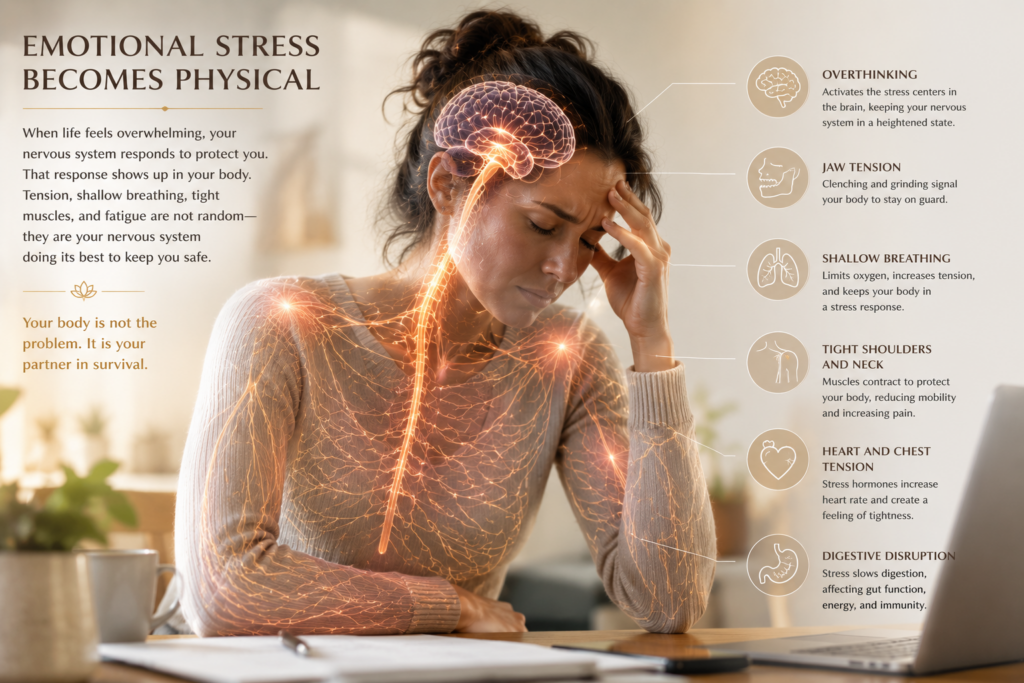
This is why emotional stress eventually becomes physical.
Fear changes breathing patterns. Stress tightens muscles. Anxiety alters posture and movement. Overwhelm affects digestion. Burnout changes sleep. Chronic stress increases inflammation and tension throughout the body.
What many people experience physically is often the body’s adaptation to what is being experienced neurologically.
These are not isolated experiences.
They are integrated neurological experiences.
The nervous system continuously coordinates your response to life itself.
The emotional centers of the brain are constantly evaluating experience, processing memory, detecting threats, regulating survival responses, and shaping how the body reacts to the world around it. Emotions are not floating abstractions disconnected from the body. They are neurological events that influence breathing, posture, muscle tone, hormones, digestion, immune responses, and behavior.
This is why unresolved stress can eventually become deeply physical.
The Body Adapts to the Life You Live
One of the greatest misunderstandings in modern healthcare is the idea that symptoms are always the problem.
Very often, symptoms are adaptations.
The body is intelligent. When the body senses instability, muscles may tighten protectively. When movement becomes restricted, compensation patterns develop. When stress becomes chronic, breathing patterns change. When the nervous system feels overwhelmed, energy may decrease in an attempt to conserve resources.
The body is always adapting.
Sometimes beautifully. Sometimes protectively. Sometimes inefficiently. But rarely randomly.
Tight muscles are often not the true problem. They are frequently the body’s protective response to deeper stress, imbalance, inflammation, instability, or altered neurological patterns.
Even posture tells a story.
Forward head posture, elevated shoulders, jaw tension, shallow breathing, collapsed posture, reduced spinal movement, and chronic stiffness are not simply mechanical events. They are expressions of neurological adaptation.
The body is constantly responding to the environment you place it in physically, emotionally, chemically, mentally, and neurologically.
And over time, those adaptations become your physiology.
Repeated experiences create repeated neurological pathways. Habits of movement, posture, stress, breathing, thought patterns, and lifestyle begin shaping the nervous system itself. The brain adapts to what it experiences most often.
Health Is Not Merely the Absence of Symptoms
One of the greatest tragedies in modern culture is that many people wait until they are suffering before they begin caring for themselves.
But true health is not merely the absence of pain.
Pain is often one of the last things to appear and one of the first things to disappear. Long before symptoms arise, the body may already be adapting through altered breathing, movement, sleep, posture, coordination, and function.
Health is deeper than symptom suppression.
Health is adaptability.
The ability to recover, regulate, heal, move, rest, coordinate, respond, and express life fully through a healthy, adaptable nervous system.
The Nervous System Never Stops Learning
From the womb to the tomb, the nervous system is constantly adapting to the experiences of life.
Movement feeds the brain. Balance feeds the brain. Breathing patterns feed the brain. Posture feeds the brain. Stress feeds the brain. Thoughts feed the brain. Environment feeds the brain.
Every moment of your life becomes neurological input.
Thoughts are not separate from physiology. The thinking brain continuously interprets reality, filters experience, creates meaning, solves problems, anticipates danger, plans the future, and shapes behavior. The brain is constantly learning from the environment around it.
Movement, in particular, plays an enormous role in neurological health.
When joints move properly, mechanoreceptors send enormous amounts of information into the nervous system. Healthy movement nourishes coordination, balance, awareness, adaptability, posture, and function. Movement literally shapes the brain, while the brain simultaneously shapes movement.
Conversely, chronic stress, sedentary living, repetitive posture, unresolved tension, poor sleep, and inflammation can slowly reduce the body’s adaptability over time.
The stress brain is designed to protect survival. In short bursts, this system is extraordinary. But when stress becomes chronic, the nervous system may remain stuck in protective physiology for prolonged periods of time. Breathing changes. Muscles tighten. Sleep suffers. Digestion slows. Recovery decreases. Tension accumulates.
Not because the body is weak.
But because the nervous system adapts to the conditions it experiences repeatedly.
Chiropractic and the Nervous System
This is where chiropractic enters the conversation in a profoundly different way than many people realize.
Chiropractic is not fundamentally about “cracking backs,” nor is it merely about chasing pain.
At its highest level, chiropractic is about helping support the communication, movement, coordination, and adaptability of the nervous system through the spine and body.
The spine is not simply a stack of bones. It is a dynamic protective structure surrounding one of the most important systems in the human body.
When spinal movement becomes restricted, altered, imbalanced, or chronically stressed, the body often adapts around those patterns.
Corrective chiropractic care focuses on helping restore healthier movement patterns, reduce physical stress, improve neurological communication, and support the body’s remarkable ability to adapt and function more efficiently.
Not because the body is broken.
But because life creates stress.
And the nervous system is constantly adapting to that stress.
Chiropractic is not about putting health into the body.
It is about helping remove interference so the body can better express the incredible intelligence already within it.
That is a profoundly different philosophy of healthcare.
Bringing Out What Is Right
Perhaps the most beautiful truth of all is this:
Your body is not your enemy.
Your body is continuously trying to adapt, protect, heal, regulate, survive, and express life as efficiently as possible based upon the information and stress it experiences.
And chiropractic, at its philosophical core, has always recognized something deeply important:
The goal is not merely to remove what is wrong.
The goal is to help express more of what is right.
More movement. More adaptability. More resilience. More coordination. More healing capacity. More vitality. More life.
The human body is far more intelligent, interconnected, and adaptable than most people realize.
And perhaps the more we understand the nervous system, the more we begin understanding ourselves not as disconnected parts, but as one extraordinary integrated living system constantly adapting to life.
From the womb to the tomb.
A Different Way to Think About Health
What if healthcare was not only about treating symptoms after something goes wrong?
What if it was also about protecting and supporting the system that coordinates every function in the human body?
What if caring for your nervous system was not something you did only when you were hurting… but something you valued throughout your entire life?
Because every experience you will ever have… every movement… every thought… every stress… every adaptation… every moment of healing… will happen through your nervous system.
And that system deserves to be cared for.
If you are ready to think about your health differently — not merely as the absence of pain, but as the expression of greater vitality, adaptability, resilience, and function — corrective chiropractic care may be one of the most important investments you can make in yourself and your family.
At Ptak Family Chiropractic, our focus is not simply helping people feel better.
It is helping people function better, adapt better, move better, heal better, and express life more fully through a healthier nervous system.
Because nothing happens outside the nervous system
Ready to Experience a Different Approach to Health?
If you are tired of merely chasing symptoms and are ready to begin supporting the system that coordinates every function in your body, we invite you to experience the difference corrective chiropractic care can make.
At Ptak Family Chiropractic, our focus is not simply helping people feel better temporarily. Our mission is to help people function better, adapt better, move better, heal better, and express life more fully through a healthier nervous system.
Whether you are dealing with stress, tension, posture changes, chronic stiffness, headaches, fatigue, spinal issues, or simply want to support your long-term health and vitality, your nervous system deserves attention and care.
Because nothing happens outside the nervous system.
Schedule Your Consultation Today
Ptak Family Chiropractic
3122 Santa Monica Blvd. Suite 102 Santa Monica, CA 90404
The Definitive Chiropractic Authority Guide to Better Sleep, Better Alignment, Better Recovery, and a Healthier Nervous System
Every day patients ask me:
“What mattress do you sleep on, Doc?” “What pillow should I buy?” “Should I get a Tempur-Pedic?” “Is memory foam bad?” “What’s best for side sleepers?” “Should I sleep with a pillow between my knees?” “What about my child’s mattress?” “Can my mattress actually be causing my pain?”
The answer is yes.
Your mattress and pillow may be helping your body recover every night… or they may quietly be reinforcing spinal stress, muscular imbalance, inflammation, poor posture, nerve irritation, and chronic tension patterns for 7–8 hours every single night.
Most people spend roughly one-third of their lives sleeping.
That means your sleep environment matters far more than most people realize.
At Ptak Family Chiropractic, we do not look at mattresses and pillows simply from a “comfort” perspective.
We look at them through the lens of:
spinal biomechanics,
posture,
nervous system function,
structural balance,
tissue stress,
pressure distribution,
muscular compensation,
recovery,
and long-term adaptation.
Because the body adapts to the positions it spends the most time in.
And for most people… that position is in bed.
The Biggest Mistake People Make When Choosing a Mattress
Most people choose mattresses based on:
softness,
advertisements,
hotel experiences,
influencer recommendations,
or how a mattress feels for 5 minutes in a showroom.
But your body does not sleep on a mattress for 5 minutes.
It sleeps on it:
every night,
for years,
often for decades.
The question is not: “Does this feel comfortable initially?”
The real question is: “What position does this mattress place my spine in for thousands of hours every year?”
That is an entirely different conversation.
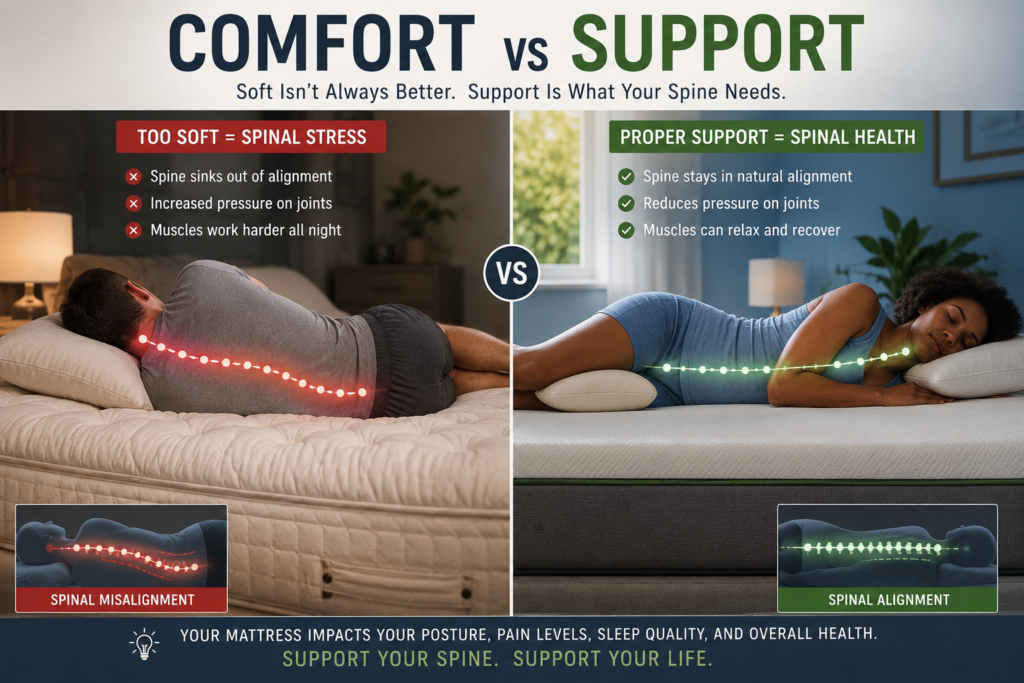
Comfort and Support Are NOT the Same Thing
A mattress can feel soft and luxurious while simultaneously allowing:
pelvic collapse,
lumbar twisting,
shoulder compression,
forward head posture,
muscular imbalance,
and rotational stress patterns.
Many ultra-soft mattresses feel amazing initially because they reduce surface pressure.
But over time they may also:
distort spinal alignment,
reduce movement,
increase muscular guarding,
reinforce asymmetrical posture,
and increase stress on already unstable areas.
Research consistently shows that medium-firm support often provides the best combination of comfort and spinal support for many adults with back pain.
The goal is not hardness.
The goal is neutrality.
The Goal: Neutral Spinal Alignment
An ideal sleep surface should:
support the natural curves of the spine,
reduce excessive twisting,
minimize pressure points,
allow movement,
and decrease unnecessary muscular tension.
That means:
the neck should remain neutral,
the shoulders should not jam upward,
the hips should not excessively sink,
and the lower back should not collapse or rotate.
The right mattress for one person may be terrible for another.
Why?
Because body structure matters.
Why Body Type Changes Everything
A petite 110-pound side sleeper has dramatically different support needs than:
a 240-pound back sleeper,
a pregnant woman,
a teenage athlete,
a patient with scoliosis,
or someone with chronic spinal degeneration.
The mattress must match:
body weight,
shoulder width,
pelvic width,
spinal curves,
flexibility,
sleep position,
muscular balance,
and structural stability.
There is no universally perfect mattress.
There is only: the best mattress for YOUR body.
My Personal Mattress Preference
Patients often ask me directly: “What mattress do you personally sleep on, Doc?”
Personally, I sleep on:
an organic latex mattress,
on a solid platform bed frame,
with a very small, relatively flat pillow.
One of my favorite companies is LifeKind because of their emphasis on:
organic materials,
natural latex,
breathability,
lower chemical exposure,
and structurally supportive sleep systems.
Personally, I prefer:
firm to medium-firm support,
minimal sink,
breathable materials,
and freedom of movement.
I do NOT personally like thick mattress toppers or excessively plush sleep surfaces.
Why?
Because many soft pillow-top systems allow the body to collapse into dysfunctional positions for hours at a time.
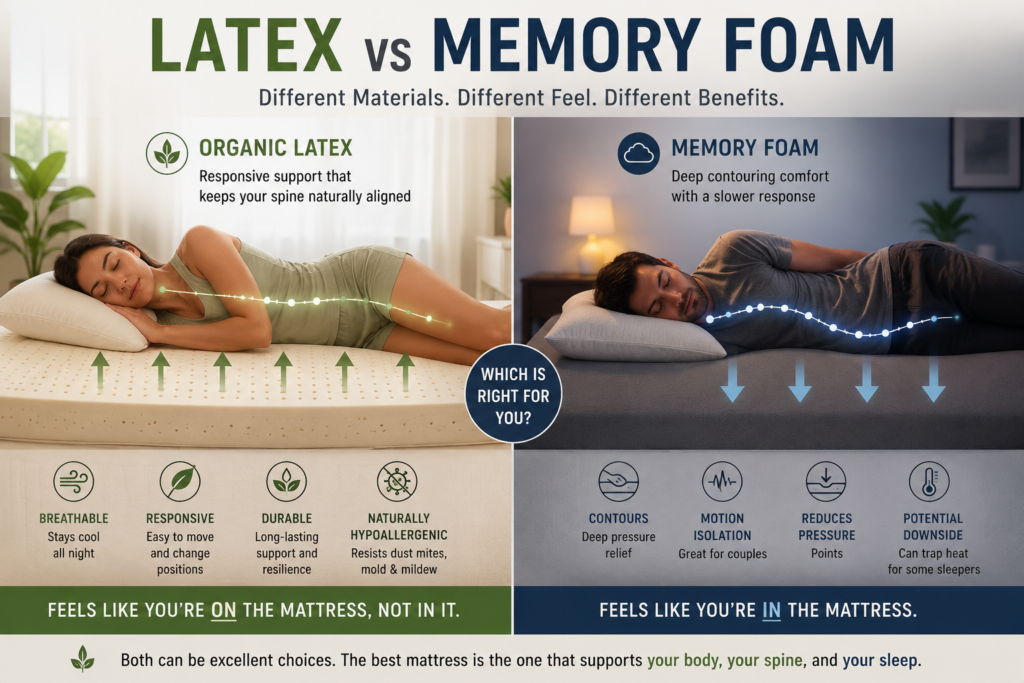
Why I Like Latex Mattresses
Latex behaves differently than many traditional foams.
Unlike many memory foams that allow deep sinking, latex tends to:
support while still contouring,
remain responsive,
distribute pressure well,
sleep cooler,
and allow easier movement.
Many people describe latex as feeling more like: “sleeping on the mattress” rather than “sinking into the mattress.”
Research has shown latex mattresses may improve pressure distribution and reduce pressure points while maintaining support.
Breathability Matters More Than Most People Realize
Many people sleep hot and do not realize their mattress may be contributing.
Heat retention may:
disrupt sleep cycles,
increase tossing and turning,
increase inflammation,
worsen restlessness,
and reduce sleep quality.
Latex tends to breathe better than many dense memory foams because of its open-cell structure and airflow channels.
This becomes especially important for:
hot sleepers,
athletes,
menopausal women,
inflammatory conditions,
and children who overheat easily.
Hypoallergenic Benefits of Latex
Natural latex also tends to resist:
dust mites,
mold,
mildew,
and allergen buildup more effectively than many conventional materials.
For allergy-sensitive individuals, that can make a major difference in nighttime breathing and sleep quality.
What About Latex Allergies?
This is important.
If someone has a true latex allergy, then latex mattresses and pillows may not be appropriate.
In those cases, higher-end adaptive memory foam systems — such as TEMPUR-Pedic TEMPUR-Adapt Medium Mattress — may become a better alternative compared to many lower-grade memory foam products.
Not all memory foam is created equally.
Memory Foam: The Pros and Cons
Memory foam became popular because it:
contours deeply,
reduces pressure points,
isolates motion,
and creates a “hugging” sensation.
For some people — especially:
pressure-sensitive sleepers,
lighter body types,
or acute pain sufferers — memory foam can initially feel incredibly relieving.
However, from a structural perspective, some people do NOT do well on highly conforming memory foam.
Why?
Because excessive sinking may:
reduce ease of movement,
increase rotational stress,
allow spinal collapse,
and create prolonged asymmetrical loading.
Many patients describe:
waking stiff,
feeling “stuck,”
sleeping hotter,
or struggling to reposition during the night.
That does NOT mean memory foam is bad.
It means different bodies respond differently to different materials.
Why Chiropractic Care Changes the Mattress and Pillow Conversation
One of the biggest mistakes people make is assuming there is a universally “perfect” mattress or pillow.
There is not.
Because the spine you are trying to support matters tremendously.
A spine that is:
subluxated,
compressed,
inflamed,
asymmetrical,
unstable,
neurologically imbalanced,
or chronically adapted to stress behaves very differently than a spine under regular corrective or maintenance chiropractic care.
This is one reason mattress recommendations become so confusing.
A person with:
chronic spinal restriction,
muscle guarding,
loss of normal curves,
pelvic imbalance,
forward head posture,
chronic inflammation,
or compensation patterns may struggle on mattresses or pillows that work beautifully for someone else.
Why?
Because a stressed and subluxated spine is often:
stiffer,
less adaptable,
more compressed,
more sensitive to pressure,
less symmetrical,
and neurologically less balanced.
Many people are trying to sleep on mainstream products that were never designed around their unique structural distortions.
As a result:
pressure points increase,
muscles guard,
joints compress,
sleep quality suffers,
and pain persists.
Why Regular Chiropractic Patients Often Adapt Better
Patients under regular chiropractic care frequently experience:
improved spinal motion,
reduced muscular tension,
improved posture,
improved symmetry,
decreased inflammation,
better nervous system balance,
and greater structural adaptability.
As spinal function improves, the body often becomes:
less reactive,
less guarded,
more balanced,
and easier to support during sleep.
This is important because it expands the range of mattresses and pillows a person may tolerate comfortably.
In other words:
A healthier, more adaptable spine generally has more options.
A chronically stressed spine often has fewer.
That is one reason some people:
constantly change pillows,
repeatedly buy mattresses,
cannot get comfortable,
or wake up sore no matter what they try.
The issue may not only be the mattress.
It may also be the underlying spinal and neurological stress patterns beneath the surface.
Sleep Position Matters Tremendously
Your sleep posture changes spinal loading dramatically.
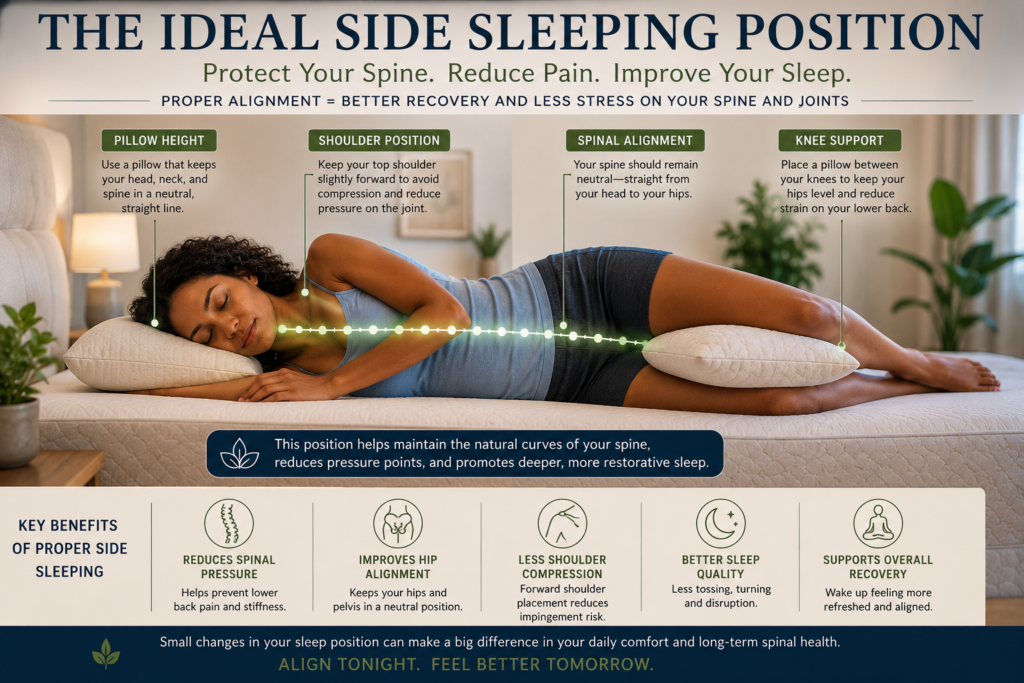
Side Sleeping
I am primarily a side sleeper.
I sleep mostly on my right side.
However, I do NOT sleep directly on my shoulder.
Instead:
my shoulder is slightly forward,
my torso is slightly rotated,
and my body weight distributes more naturally.
Direct shoulder compression for hours may contribute to:
shoulder impingement,
numb hands,
thoracic rotation,
neck tension,
and arm discomfort.
For many people, side sleeping is excellent IF:
the pillow height is correct,
the mattress supports the torso appropriately,
and the spine remains level.
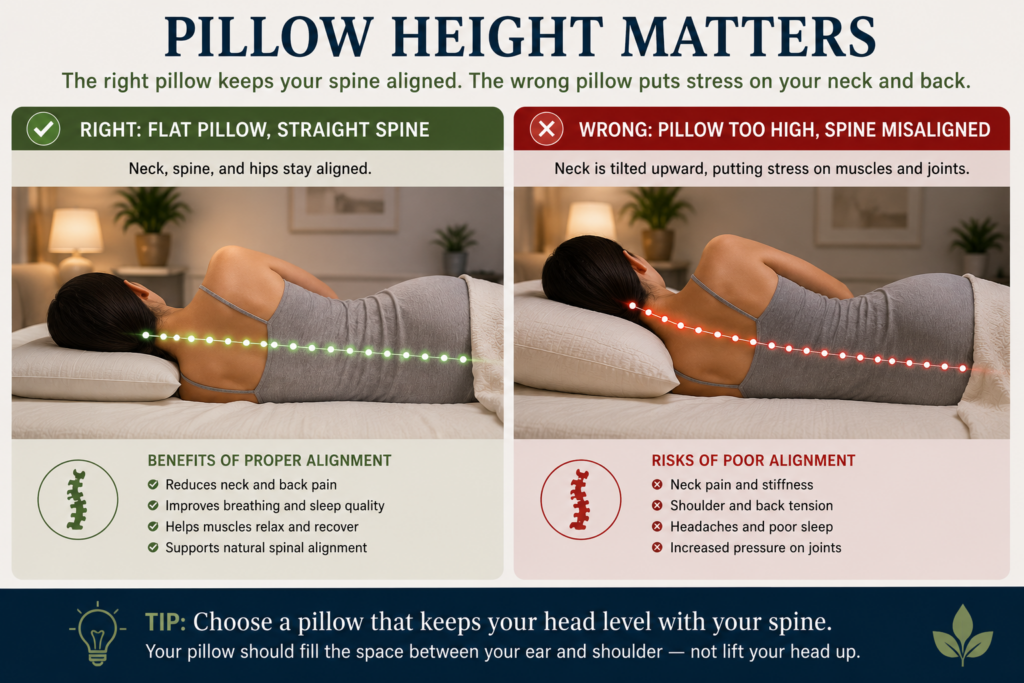
Pillow Height Is Critical
For side sleepers, the pillow must properly fill the space between:
the head,
neck,
and mattress.
If the pillow is too low:
the neck bends downward.
If too high:
the neck bends upward.
Either may create:
muscular tension,
headaches,
joint irritation,
and morning stiffness.
Broad shoulders generally require:
higher loft pillows.
Petite frames generally do better with:
flatter pillows.
Back Sleeping
Back sleeping may allow excellent symmetry for some people.
However:
thick pillows often force forward head posture,
flatten the cervical curve,
and strain the neck for hours.
Back sleepers usually do better with:
lower-profile pillows,
gentle cervical support,
and sometimes a pillow beneath the knees.
A pillow beneath the knees may reduce stress on the lumbar spine and pelvis.
Stomach Sleeping
Stomach sleeping is usually the hardest on the spine.
Why?
Because:
the neck remains rotated,
the lumbar spine increases extension stress,
and the pelvis often twists asymmetrically.
Many stomach sleepers wake up with:
headaches,
neck pain,
jaw tension,
shoulder tightness,
or lower back stiffness.
If someone absolutely must stomach sleep:
a very thin pillow,
or sometimes no pillow, may reduce stress somewhat.
Why Pillows Matter So Much
Your pillow controls:
neck position,
cervical curve support,
muscle tension,
airway positioning,
and upper spinal alignment.
A poor pillow may contribute to:
headaches,
numb hands,
neck pain,
jaw tension,
poor sleep quality,
and even breathing issues.
Personally, I use a very small and relatively flat pillow.
Why?
Because many pillows today are dramatically too thick.
Especially for:
smaller-framed individuals,
people with forward head posture,
or those with flattened cervical curves.
Pillows Between the Knees: One of the Simplest Solutions for Lower Back Pain
For side sleepers, placing a pillow between the knees may:
reduce pelvic rotation,
decrease lumbar twisting,
improve hip alignment,
and reduce lower back strain.
This is especially helpful for:
sciatica,
SI joint irritation,
hip pain,
pregnancy,
and asymmetrical tension patterns.
Without support between the knees, the top leg often collapses downward, twisting the pelvis and lumbar spine for hours.
Sleep and Children: Why This Matters Early
Children are not simply “small adults.”
Their:
spines,
posture,
airway development,
ligaments,
and nervous systems are constantly developing.
That means their sleep environment matters tremendously.
Infants
Infants should sleep on:
a firm flat mattress,
without pillows,
without thick soft bedding,
and without excessive padding.
Safety and airway protection are critical.
Toddlers and Young Children
Many parents unknowingly give toddlers:
oversized pillows,
extremely soft mattresses,
or thick bedding.
But many children actually do better with:
firmer support,
smaller pillows,
and more neutral spinal positioning.
Children’s cervical spines are smaller and lighter.
Oversized pillows may force:
forward head posture,
neck flexion,
and altered spinal alignment overnight.
Teenagers and Adolescents
This is one of the MOST overlooked stages structurally.
During adolescence:
growth accelerates,
posture changes rapidly,
sports intensify,
and screen time explodes.
This is when many teens begin developing:
forward head posture,
rounded shoulders,
pelvic imbalance,
asymmetrical movement patterns,
headaches,
neck pain,
and chronic tightness.
A poor mattress during these developmental years may reinforce those patterns every single night.
Teen Athletes and Sleep Recovery
Teen athletes especially need:
pressure relief,
spinal support,
temperature regulation,
and movement freedom.
Athletic bodies recover during sleep.
Poor sleep surfaces may:
increase recovery time,
increase stiffness,
and reduce tissue healing efficiency.
Signs Your Mattress or Pillow May Be a Problem
You wake up with:
headaches,
neck stiffness,
numb hands,
shoulder pain,
hip pain,
lower back tightness,
tossing and turning,
jaw tension,
fatigue,
or pain that improves once you start moving.
These are often signs your sleep environment may not be supporting your structure appropriately.
The Chiropractic Perspective
In chiropractic, we evaluate:
spinal mechanics,
posture,
movement,
nervous system function,
and structural stress patterns.
If the spine is already:
subluxated,
unstable,
asymmetrical,
rotated,
or compensating…
then spending 7–8 hours every night in poor alignment may reinforce those patterns continuously.
Sometimes patients improve temporarily…
But then re-create the stress overnight.
Your sleeping posture becomes part of your healthcare.
Ultimate Mattress Comparison Guide
Mattress Type
Best For
Potential Downsides
Breathability
Ease of Movement
Organic Latex
Structural support, hot sleepers, combination sleepers
Latex allergy
Excellent
Excellent
Memory Foam
Pressure sensitivity, motion isolation
Heat retention, excessive sinking
Moderate
Moderate
Hybrid Mattress
Combination sleepers
Depends on construction
Good
Good
Pillow Top
Plush comfort lovers
Can lose support faster
Moderate
Moderate
Extra Soft Mattress
Pressure-sensitive lightweight individuals
May worsen spinal collapse
Moderate
Lower
Firm Mattress
Back sleepers, heavier body types
Pressure points for some side sleepers
Good
Excellent
Ultimate Pillow Comparison Guide
Pillow Type
Best For
Potential Downsides
Latex Pillow
Cooling, responsiveness, support
Latex allergy
Memory Foam Pillow
Pressure relief, contouring
Heat retention
Feather Pillow
Softness preference
Inconsistent support
Cervical Pillow
Neck support
Wrong size may worsen symptoms
Adjustable Pillow
Multiple sleep positions
Requires customization
Best Pillow Height by Sleep Position
Sleep Position
Usually Best Pillow Style
Side Sleeper
Medium-to-high loft
Back Sleeper
Low-to-medium loft
Stomach Sleeper
Very thin pillow
Broad Shoulders
Higher loft
Petite Frame
Lower loft
Forward Head Posture
Usually thinner pillow
Best Mattress Style by Body Type
Body Type / Condition
Often Does Better With
Hot Sleeper
Latex or breathable hybrid
Heavier Individual
Medium-firm to firm support
Pressure Sensitive
Adaptive foam or hybrid
Sciatica
Medium-firm with knee support
Shoulder Pain
Responsive side-sleeper support
Hypermobile Spine
Stable non-collapsing surface
Athletes
Responsive support with movement freedom
Mattress and Pillow Recommendations for Children
Age Group
General Recommendation
Infants
Firm flat mattress, no pillow
Toddlers
Small low-loft pillow if needed
Young Children
Medium-firm breathable support
Adolescents
Proper support during growth spurts
Teen Athletes
Pressure relief plus structural support
Final Thoughts
There is no perfect mattress for everyone.
There is no universally perfect pillow.
The best sleep setup is the one that:
supports your spinal curves,
reduces stress,
promotes movement,
minimizes asymmetry,
improves recovery,
and allows your nervous system to truly rest.
The body adapts to what it experiences repeatedly.
And your bed is one of the most repeated environments in your life.
At Ptak Family Chiropractic, we believe spinal health is not only about how you move during the day…
It is also about what your body spends every night lying on.
(310) 473-7991 www.ptakfamilychiropractic.com 3122 Santa Monica Blvd. Ste Santa Monica, CA 90404
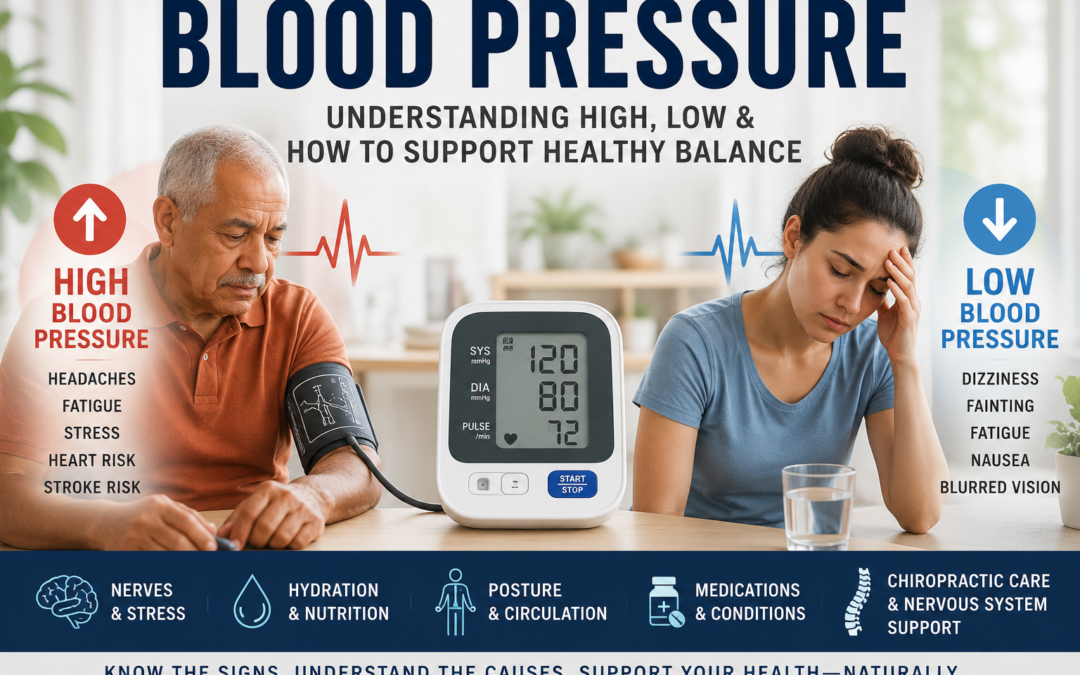
What Most People Never Hear About Stress, the Vagus Nerve, the Atlas Bone, and the Nervous System’s Role in Blood Pressure Regulation
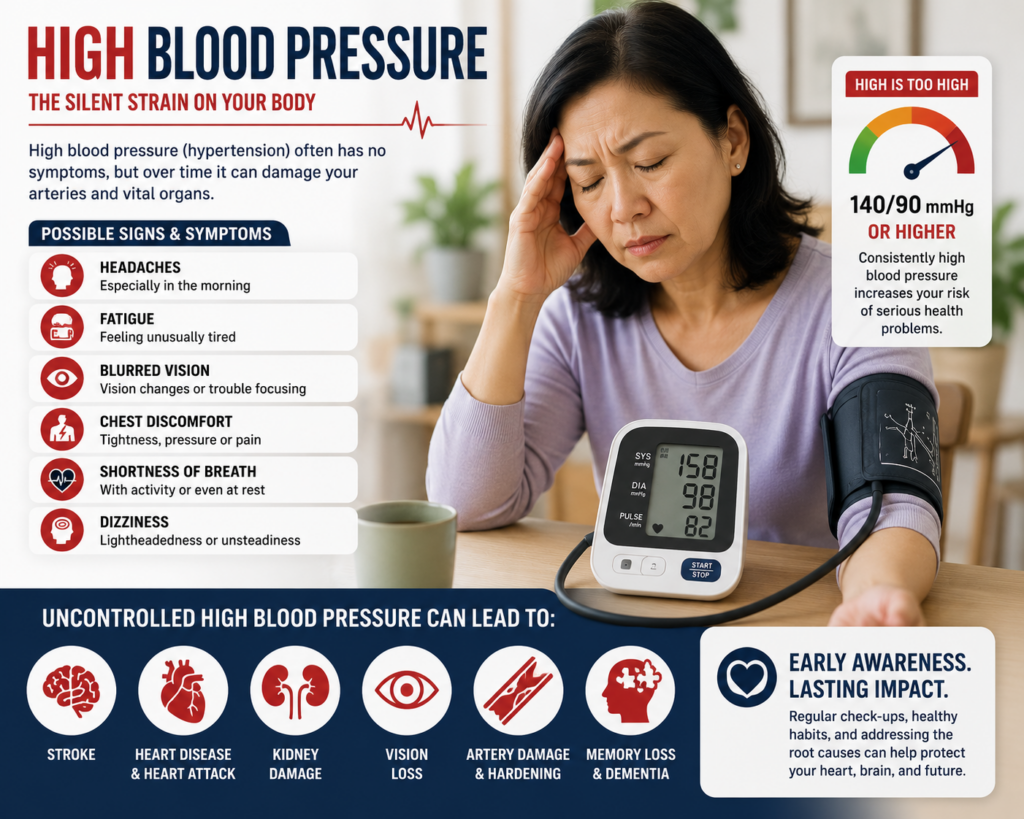
High blood pressure affects nearly half of all adults in the United States.
Low blood pressure affects millions more.
Some people feel their heart racing constantly. Others feel dizzy when they stand. Some battle headaches, fatigue, anxiety, brain fog, chest pressure, or chronic stress.
Yet despite how common blood pressure problems have become, most conversations focus almost entirely on:
salt
medications
age
weight
genetics
And while those factors absolutely matter, one major system is often overlooked:
The nervous system.
At Ptak Family Chiropractic, we believe blood pressure is not simply a cardiovascular issue.
It is also a neurological regulation issue.
Because blood pressure is not random.
Your body is constantly regulating circulation through a complex communication network involving:
the brain
brainstem
autonomic nervous system
vagus nerve
blood vessels
hormones
kidneys
stress responses
and the upper cervical spine
When that communication system becomes overwhelmed, stressed, or dysregulated, blood pressure patterns may begin to change.
And that changes the entire conversation.
Blood Pressure Is Controlled by the Nervous System
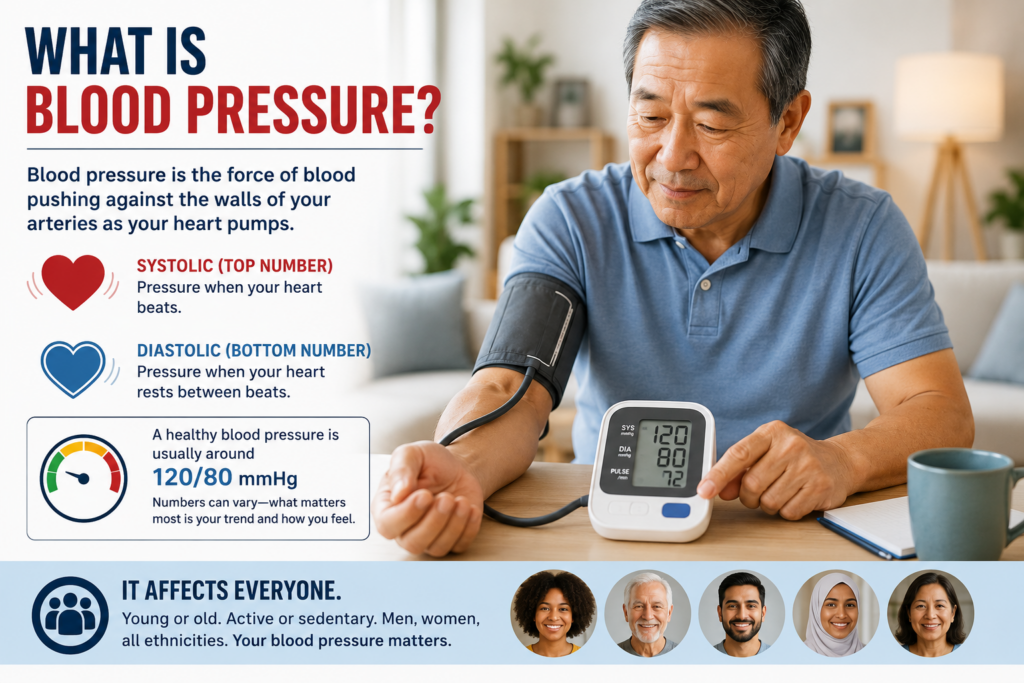
Most people think blood pressure is simply: “Pressure inside the arteries.”
But blood pressure is actually a constantly changing neurological process.
Every second of every day, the brain monitors:
oxygen demand
breathing
stress levels
posture
inflammation
hydration
heart rate
blood vessel tension
emotional stress
survival needs
The nervous system then adjusts the body accordingly.
Your body is constantly adapting.
Blood pressure is one of the ways it adapts.
The Autonomic Nervous System: Your Internal Regulator
The autonomic nervous system controls automatic body functions you do not consciously think about.
This includes:
heart rate
blood pressure
circulation
digestion
breathing
inflammation
recovery
stress responses
It has two major branches.
Sympathetic Nervous System
Often called: “Fight or flight.”
This system:
raises blood pressure
increases heart rate
tightens blood vessels
increases stress hormones
prepares the body for survival
This system is helpful during emergencies.
The problem is: many people now live in chronic sympathetic dominance.
But the deeper question is: Why is the body increasing pressure in the first place?
Possible contributors include:
chronic stress
inflammation
poor sleep
obesity
insulin resistance
smoking
vascular disease
nervous system dysregulation
autonomic imbalance
chronic sympathetic activation
The body is often adapting to stress physiology.
Low Blood Pressure: The Other Side of Dysregulation
Low blood pressure is often overlooked, yet many people struggle with:
dizziness
faintness
fatigue
lightheadedness
cold hands and feet
brain fog
weakness
poor circulation
low energy
Some people feel exhausted standing up quickly.
Others feel chronically depleted.
Possible contributing factors include:
dehydration
autonomic dysfunction
poor vascular tone
chronic fatigue states
hormonal imbalance
vagal dysregulation
nervous system stress
The goal is not simply lowering blood pressure.
The goal is helping the body regulate appropriately.
The Overlooked Connection Between the Atlas (C1) and Blood Pressure
One of the most fascinating areas of blood pressure research involves the upper cervical spine — specifically the atlas vertebra, also known as C1.
The atlas is the top bone in the neck and sits directly beneath the skull.
This region surrounds and protects portions of the brainstem — the area responsible for:
autonomic nervous system regulation
heart rate
vascular tone
stress responses
blood pressure regulation
vagus nerve communication
Because of this close neurological relationship, some researchers and chiropractors have explored whether upper cervical dysfunction may influence blood pressure regulation in certain individuals.
The University of Chicago / Rush Blood Pressure Study
In 2007, researchers led by George Bakris published a groundbreaking pilot study examining upper cervical chiropractic care and blood pressure regulation.
The study used:
randomized design
placebo control
double-blinding
Researchers examined patients with Stage 1 hypertension and atlas misalignment.
The results were remarkable.
Following a specific upper cervical adjustment:
systolic blood pressure dropped significantly
diastolic blood pressure improved significantly
changes persisted for 8 weeks
Researchers stated the reduction was similar to what is often seen with two blood pressure medications used together.
Importantly:
patients were not taking blood pressure medication
no adverse effects were reported
the adjustment specifically targeted the atlas vertebra
This does NOT mean chiropractic cures hypertension.
But it strongly suggests neurological and upper cervical factors may influence blood pressure regulation in certain individuals.
And that changes the conversation dramatically.
How Might the Upper Neck Influence Blood Pressure?
Researchers propose several possible mechanisms:
altered brainstem signaling
autonomic imbalance
muscular tension patterns
stress physiology
altered vascular regulation
vagus nerve influence
postural strain
sympathetic nervous system activation
The exact mechanism is still being researched.
But anatomically and neurologically, the relationship between the upper cervical spine and autonomic regulation is significant.
Why Stress Changes Blood Pressure So Powerfully
Most people underestimate how much chronic stress changes physiology.
Stress alters:
cortisol
inflammation
breathing
vascular tension
heart rate variability
sleep quality
muscular tension
autonomic balance
Over time, the body adapts to survival mode.
This may contribute to:
hypertension
anxiety
fatigue
headaches
sleep disturbances
autonomic dysregulation
This is why many people notice blood pressure worsens during:
emotional stress
burnout
poor sleep
chronic pain
nervous system overload
Blood Pressure and Sleep
Poor sleep is one of the strongest predictors of blood pressure dysregulation.
Sleep deprivation may increase:
cortisol
inflammation
sympathetic activation
vascular tension
Conditions like sleep apnea are strongly associated with hypertension.
The body cannot regulate efficiently without proper recovery.
Blood Pressure and Breathing
Shallow chest breathing may reinforce sympathetic dominance.
Deep diaphragmatic breathing helps stimulate the vagus nerve and parasympathetic nervous system.
Breathing is neurological.
The way you breathe affects:
heart rate
stress hormones
circulation
autonomic balance
blood pressure regulation
Blood Pressure and Posture
Poor posture may contribute to:
muscular tension
shallow breathing
upper cervical stress
nervous system overload
Forward head posture places significant strain on the upper neck and surrounding tissues.
Over time, this may influence:
autonomic regulation
vagal tone
breathing efficiency
stress adaptation
Posture is not just structural.
Posture is neurological.
Blood Pressure and Dehydration
Many people do not realize dehydration may contribute to:
dizziness
blood pressure fluctuations
fatigue
poor circulation
headaches
The body depends on proper hydration for:
blood volume
vascular regulation
cellular communication
circulation efficiency
White Coat Hypertension: When Stress Raises Blood Pressure
Some patients only experience elevated blood pressure in medical settings.
This is known as: White Coat Hypertension.
Why?
Because stress and anxiety directly affect the autonomic nervous system.
The body perceives stress… and physiology changes immediately.
Blood pressure is deeply tied to emotional and neurological states.
Exercises That Help Activate the Parasympathetic Nervous System
One of the most powerful ways to support healthier blood pressure naturally is by improving parasympathetic activation.
The body cannot fully heal while trapped in chronic survival physiology.
1. Diaphragmatic Breathing
Try:
inhale through the nose for 4 seconds
expand the belly
exhale slowly for 6–8 seconds
repeat for 5–10 minutes
Long exhalations stimulate vagal activity and may reduce sympathetic dominance.
2. Humming and Chanting
The vagus nerve connects to vocalization muscles.
Humming, chanting, singing, or prolonged “OM” sounds may help stimulate vagal pathways.
3. Walking
Gentle walking helps:
regulate stress hormones
improve circulation
calm the nervous system
improve heart rate variability
Movement is neurological medicine.
4. Cold Water Facial Stimulation
Cool water on the face may activate portions of the parasympathetic nervous system through the diving reflex.
5. Cervical Mobility and Postural Exercises
Improving:
posture
neck mobility
thoracic movement
breathing mechanics
may reduce stress patterns affecting the upper cervical spine and nervous system.
Why Chiropractic Care and Parasympathetic Exercises Work Together
At Ptak Family Chiropractic, we believe chiropractic care and nervous system exercises complement one another powerfully.
Chiropractic adjustments focus on:
spinal motion
nervous system communication
adaptability
reducing neurological stress
Parasympathetic exercises help reinforce calmer neurological states and improved vagal tone.
Together, the goal is helping the body:
regulate more efficiently
reduce chronic stress physiology
improve circulation
improve recovery
restore autonomic balance
Daily Habits That Influence Blood Pressure
Small daily habits matter enormously.
Helpful habits may include:
proper hydration
consistent sleep
walking
sunlight exposure
stress management
posture awareness
breathing exercises
reducing processed foods
movement throughout the day
nervous system recovery
The body responds to lifestyle patterns over time.
Key Takeaways
Blood pressure is neurologically regulated.
The autonomic nervous system strongly influences circulation.
Chronic stress may drive sympathetic dominance.
The vagus nerve helps regulate recovery and cardiovascular balance.
The upper cervical spine may influence autonomic function.
Chiropractic care may support nervous system regulation in some individuals.
Parasympathetic activation exercises may help improve adaptability and recovery.
Health is not simply chemical — it is neurological.
Frequently Asked Questions About Blood Pressure
Can stress raise blood pressure?
Yes. Chronic stress activates the sympathetic nervous system, which may increase vascular tension and blood pressure.
What is the vagus nerve?
The vagus nerve is a major parasympathetic nerve involved in heart rate, digestion, inflammation, and autonomic regulation.
Can chiropractic help blood pressure?
Some research suggests upper cervical chiropractic care may influence blood pressure regulation in certain individuals.
Can posture affect blood pressure?
Posture may influence breathing, muscular tension, autonomic balance, and upper cervical stress patterns.
Can anxiety raise blood pressure?
Yes. Anxiety activates stress physiology and may temporarily elevate blood pressure.
What causes low blood pressure?
Low blood pressure may involve dehydration, autonomic dysfunction, hormonal issues, or nervous system dysregulation.
Can dehydration affect blood pressure?
Absolutely. Hydration strongly influences blood volume and circulation.
Why does blood pressure rise at night?
Poor sleep, stress physiology, sleep apnea, and autonomic imbalance may contribute.
Is high blood pressure always permanent?
Not always. Lifestyle, stress regulation, sleep, nervous system function, and overall health all influence blood pressure patterns.
Why do I get dizzy when standing up?
This may involve blood pressure regulation, hydration, circulation, or autonomic nervous system responses.
A Different Conversation About Blood Pressure
At Ptak Family Chiropractic, we believe people deserve a broader understanding of how the nervous system influences health.
Because the body is not simply chemical.
It is neurological.
The brain and nervous system coordinate every organ, every blood vessel, every stress response, and every adaptive process within the body.
And when communication improves, function may improve.
Important Medical Disclaimer
High or low blood pressure can be serious and potentially life-threatening.
Patients should never stop medications or alter treatment plans without consulting their physician.
Anyone experiencing symptoms or concerns regarding blood pressure should seek appropriate medical evaluation and monitoring.
Looking for a More Neurologically Focused Approach to Health?
If you are struggling with:
high blood pressure
low blood pressure
dizziness
headaches
chronic stress
poor sleep
fatigue
autonomic imbalance
nervous system overload
schedule a no-charge consultation at Ptak Family Chiropractic to learn more about a neurologically focused approach to health and healing.
Research & References
George Bakris et al. Atlas vertebra realignment and achievement of arterial pressure goal in hypertensive patients: a pilot study. Journal of Human Hypertension. 2007.
University of Chicago Medicine. Special chiropractic adjustment lowers blood pressure among hypertensive patients with misaligned C1.
Stephen W. Porges. The Polyvagal Theory: Neurophysiological Foundations of Emotions, Attachment, Communication, and Self-Regulation.
Bruce S. McEwen. Protective and damaging effects of stress mediators. New England Journal of Medicine. 1998.
Robert M. Sapolsky. Why stress is bad for your brain. Science. 1996.
Patricia M. Lehrer et al. Heart rate variability biofeedback improves autonomic regulation and cardiovascular function.
Julian F. Thayer and Richard D. Lane. The role of vagal function in emotional regulation and cardiovascular health.
Herbert Benson. The relaxation response and cardiovascular regulation.
American Heart Association. Current hypertension guidelines and cardiovascular risk recommendations.
Andrew Huberman et al. Contemporary research discussions involving autonomic regulation, stress physiology, and vagal mechanisms.
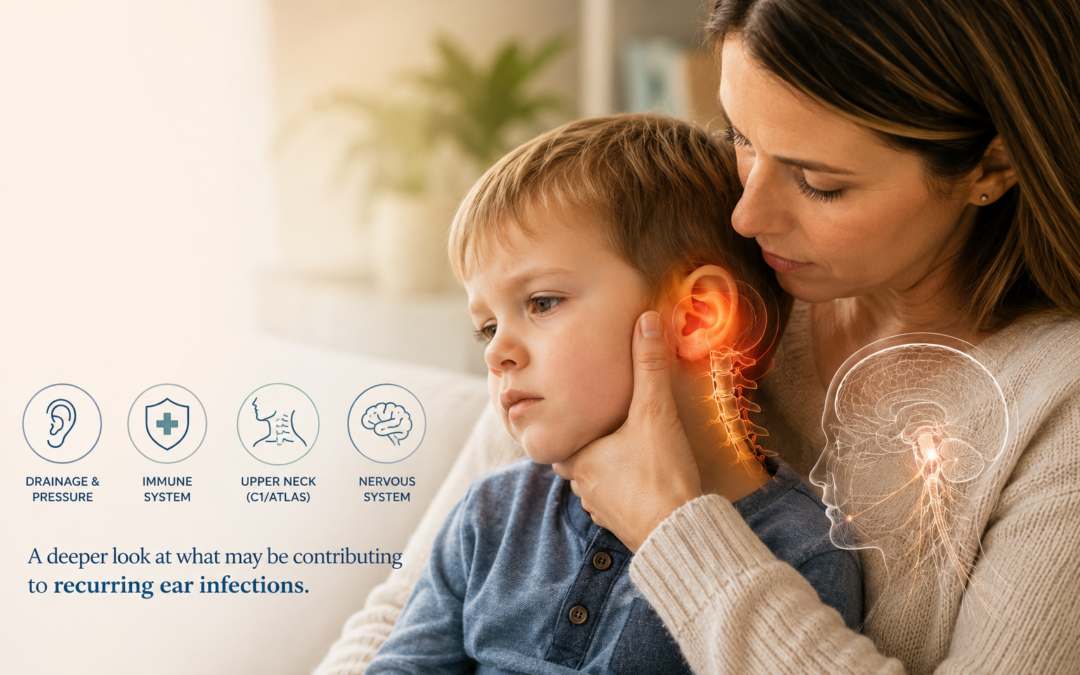
Why So Many Children Keep Getting Them, And What Most Parents Are Never Told About the Immune System, Drainage, the Upper Neck, and the Nervous System
Few things frustrate parents more than recurring ear infections.
The sleepless nights. The crying. The fevers. The repeated antibiotics. The temporary improvement… only for the infection to return weeks later.
Eventually many parents begin asking:
“Why does this keep happening?”
Because while ear infections are extremely common in childhood, recurring ear infections are often a sign that the body may be struggling with pressure regulation, drainage, inflammation, immune adaptation, or nervous system stress.
At Ptak Family Chiropractic, we believe parents deserve a broader understanding of what may contribute to recurrent ear infections — not simply repeated symptom suppression.
Because sometimes the issue is not that the body is weak.
Sometimes the issue is that the body is overwhelmed, congested, inflamed, mechanically stressed, or struggling to adapt efficiently.
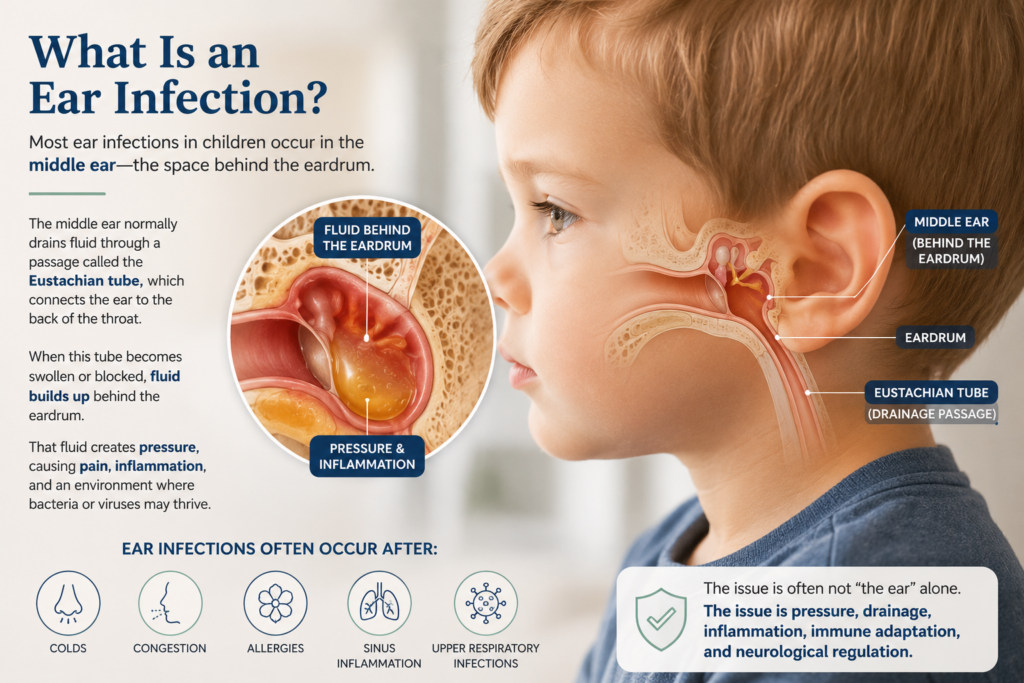
What Is an Ear Infection?
Most childhood ear infections involve the middle ear — the space behind the eardrum.
This condition is known as: Acute Otitis Media.
The middle ear normally drains fluid through a narrow passageway called the Eustachian tube, which connects the ear to the back of the throat.
When this drainage system becomes swollen, inflamed, or unable to function efficiently, fluid may accumulate behind the eardrum.
That fluid creates:
pressure
pain
inflammation
irritation
and an environment where bacteria or viruses may thrive
This is why ear infections often occur after:
colds
congestion
allergies
sinus inflammation
upper respiratory infections
The issue is often not “the ear” alone.
The issue is pressure, drainage, inflammation, immune adaptation, and neurological regulation.
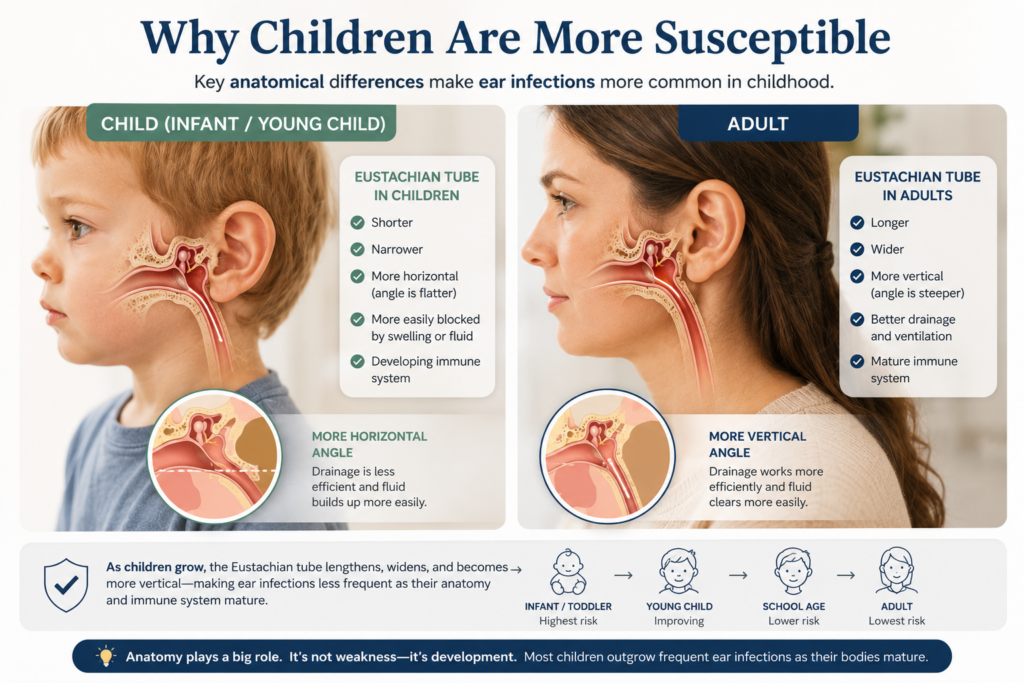
Why Children Are More Susceptible
Children’s anatomy makes them more vulnerable to ear infections.
Compared to adults, children have:
shorter Eustachian tubes
narrower drainage pathways
more horizontal tube angles
developing immune systems
This makes drainage less efficient — especially during congestion or inflammation.
In many children, these issues improve naturally as the skull, neck, airway, and drainage pathways mature.
But in other children, infections become recurrent.
And this is where many parents begin searching for deeper answers.
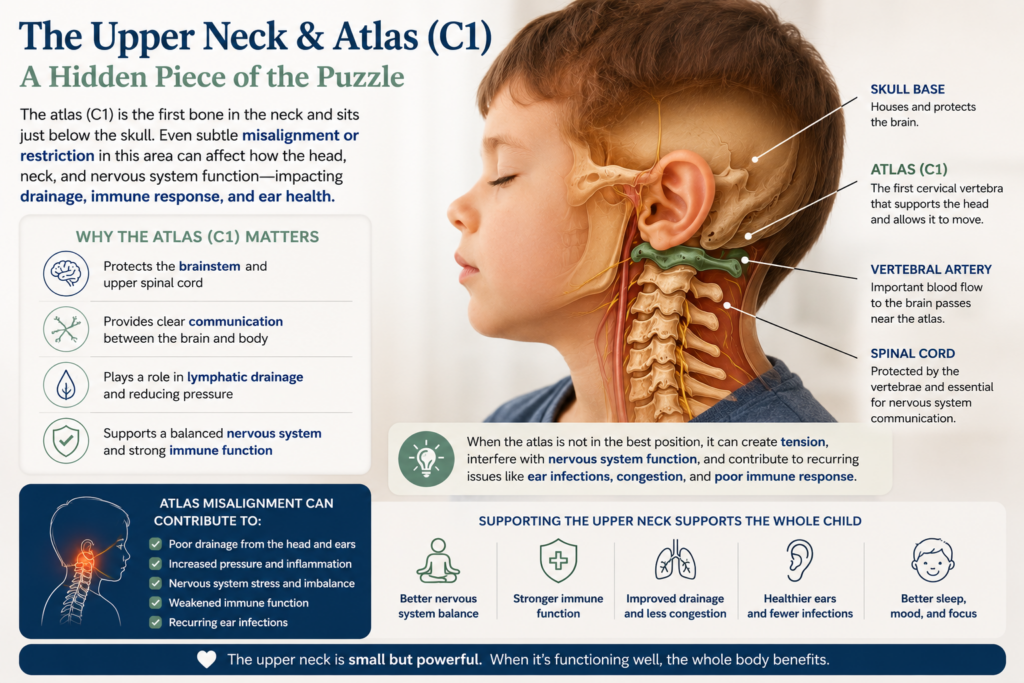
The Often Overlooked Role of the Upper Neck and Atlas (C1)
One area many parents never hear discussed in relation to recurring ear infections is the upper cervical spine — particularly the atlas vertebra, also known as C1.
The atlas is the top bone in the neck and sits directly beneath the skull.
This region is incredibly important because it is closely associated with:
head and neck mechanics
muscle tension patterns
jaw function
lymphatic drainage
neurological communication
pressure regulation near the Eustachian tube
The muscles surrounding the upper neck and jaw help influence the function of the Eustachian tube.
If tension, restricted motion, postural imbalance, or upper cervical dysfunction develop, some chiropractors believe this may contribute to:
impaired drainage
fluid retention
altered pressure regulation
muscular tension near the ear and jaw
autonomic nervous system stress
reduced adaptability
Birth stress, falls, repetitive strain, posture, and physical tension patterns may all influence this area.
This does not mean the atlas is the sole cause of ear infections.
But many chiropractors believe it may be one contributing factor affecting how efficiently the body drains, adapts, and heals.
Why Chiropractors Evaluate the Upper Cervical Spine
At Ptak Family Chiropractic, children with recurring ear infections are commonly evaluated for:
upper cervical motion restrictions
tension patterns
spinal mechanics
postural imbalances
nervous system stress
overall adaptability
Why?
Because the nervous system controls and coordinates healing throughout the body.
The upper cervical spine is particularly important because of its close relationship to:
brainstem function
muscle tone
autonomic regulation
lymphatic movement
inflammatory responses
adaptation and recovery
Chiropractic adjustments are designed to improve spinal motion and reduce interference within the nervous system.
Some chiropractors propose that improving upper cervical function may help support:
healthier drainage mechanics
reduced muscular tension
improved pressure regulation
more efficient neurological communication
better adaptability during immune stress
Many parents report improvements in:
congestion
comfort
sleep quality
recurrent episodes
overall well-being
following chiropractic care.
While more research is still needed to fully understand the exact mechanisms involved, many families appreciate an approach that focuses on supporting the body’s natural ability to regulate, drain, adapt, and heal.
Why Antibiotics Sometimes Help… But Don’t Solve the Bigger Problem
Antibiotics can absolutely be necessary in certain situations.
They can be life-saving when bacterial infections become severe or persistent.
But many parents notice something important:
The infection improves… then returns.
Why?
Because while antibiotics may help address bacteria, they do not necessarily address:
chronic congestion
inflammation
drainage dysfunction
recurring immune stress
upper cervical tension
postural mechanics
nervous system stress
repeated respiratory irritation
Additionally, many childhood ear infections are viral — meaning antibiotics may not always be the primary solution.
This is one reason many pediatric guidelines now recommend careful evaluation before immediate antibiotic use in every situation.
The Nervous System and Immune Function
One of the most overlooked concepts in children’s health is the relationship between the nervous system and immune function.
The nervous system helps regulate:
inflammation
immune signaling
lymphatic flow
stress responses
healing
sleep
muscle tone
recovery and adaptation
When the nervous system becomes overwhelmed by stress, inflammation, tension, or repeated immune challenges, the body’s ability to adapt efficiently may become compromised.
Health is not simply about eliminating symptoms.
Health is about adaptability.
Why Some Children Seem to Get Sick Constantly
Many parents notice their child experiences:
repeated ear infections
chronic congestion
poor sleep
mouth breathing
frequent colds
lingering inflammation
repeated antibiotic use
irritability during illness
The question should not only be: “What infection is present?”
Sometimes the deeper question is: “Why is the body struggling to adapt repeatedly?”
Possible contributing factors may include:
chronic inflammation
immune stress
allergies
daycare exposure
poor sleep
dietary stressors
environmental irritants
upper cervical dysfunction
postural strain
nervous system overload
The body is interconnected.
A Different Way to Think About Children’s Health
At Ptak Family Chiropractic, we believe children’s bodies are designed for:
adaptation
healing
regulation
resilience
Symptoms are often signals.
Not failures.
The goal is not simply suppressing every symptom as quickly as possible.
The goal is helping the body function more efficiently.
Because when the nervous system functions better, the body may be better able to:
drain
regulate inflammation
recover
adapt
heal naturally
Ear Tubes: Sometimes Necessary, But Not the Entire Conversation
For some children, ear tubes may become medically necessary — especially when infections are severe, persistent, or affecting hearing and development.
But even then, many parents still wonder:
Why was the body struggling repeatedly in the first place?
Procedures may address the immediate mechanical issue while broader contributing factors may still remain.
This is why many families seek a more comprehensive understanding of health and adaptation.
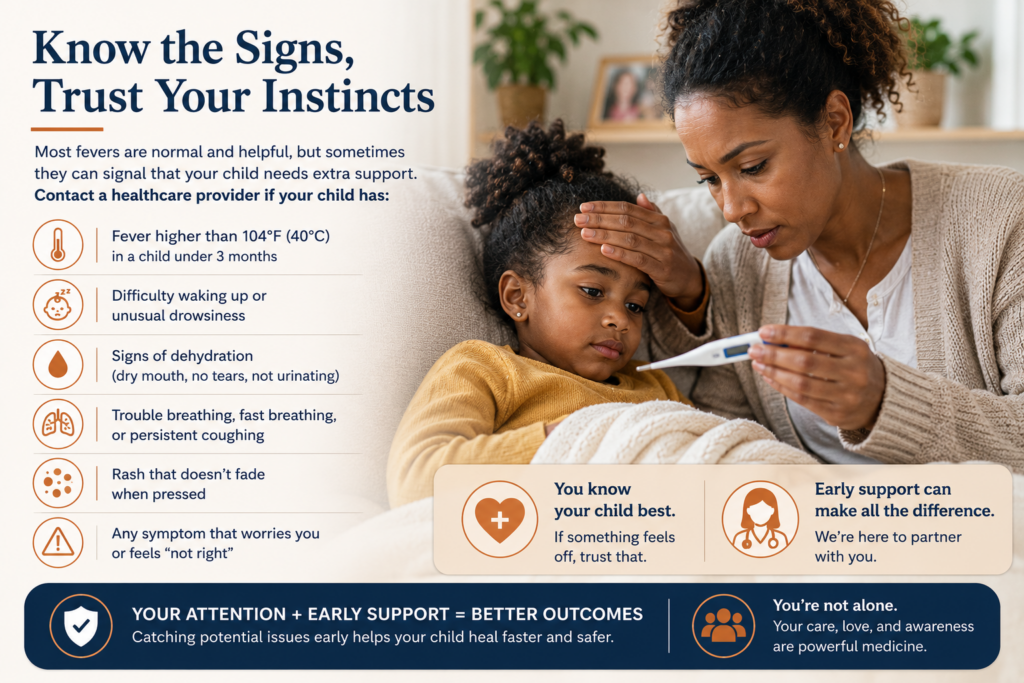
When Parents Should Seek Medical Attention Immediately
Parents should always contact a healthcare professional if a child experiences:
difficulty breathing
severe lethargy
dehydration
swelling around the ear
persistent high fever
stiff neck
fluid or blood drainage from the ear
worsening symptoms
hearing changes
severe pain
symptoms in very young infants
or anything concerning or unusual
Trust your instincts.
Looking for a More Neurologically Focused Approach?
At Ptak Family Chiropractic, our focus is helping families better understand the relationship between the nervous system, spinal function, adaptation, and long-term wellness.
If your child has been struggling with recurring ear infections, congestion, sleep challenges, or repeated immune stress, schedule a no-charge consultation with our office to learn more about a neurologically focused approach to health and healing. (310) 473-7991.
Research & References
American Academy of Pediatrics. Clinical Practice Guideline: The Diagnosis and Management of Acute Otitis Media. Pediatrics.
Tasnee Chonmaitree et al. Viral upper respiratory tract infection and otitis media complication in young children. Clinical Infectious Diseases. 2008;46(6):815–823.
Joan Fallon. The role of chiropractic care in children with recurrent otitis media: a pilot study. Journal of Clinical Chiropractic Pediatrics. 1997.
Jennifer H. Alcantara, Joel Alcantara. Chiropractic care of pediatric patients with otitis media: case reports and review of the literature. Explore. 2009.
International Chiropractic Pediatric Association. Vertebral subluxation and pediatric otitis media: clinical observations and chiropractic considerations.
Jerome O. Klein. The burden of otitis media. Vaccine. 2000;19:S2–S8.
Aleksandra Skotnicka et al. Anatomy and physiology of the Eustachian tube related to otitis media in children. International Journal of Pediatric Otorhinolaryngology.
Centers for Disease Control and Prevention. Appropriate antibiotic use and watchful waiting recommendations for pediatric ear infections.
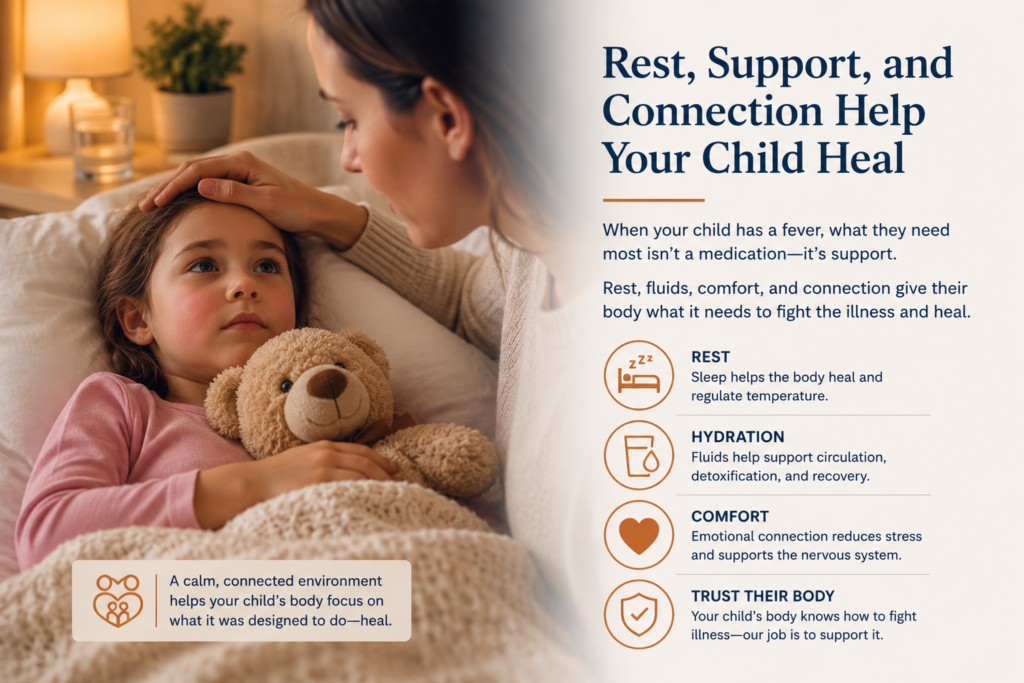
What Most Parents Were Never Told About Fever, the Immune System, and the Body’s Natural Intelligence
Few things make a parent anxious faster than seeing their child develop a fever.
The warmth. The flushed cheeks. The fatigue. The number on the thermometer climbing higher.
For decades, parents have been taught to fear fever and immediately try to “bring it down.”
But what if fever is not the problem?
What if fever is actually one of the body’s most intelligent healing responses?
At Ptak Family Chiropractic, we believe one of the most important conversations parents can have is learning the difference between a body that is failing… and a body that is working.
Because in many cases, fever is not evidence that the body is weak.
It is evidence that the immune system is active, responsive, adaptive, and doing exactly what it was designed to do.
Fever Is Not a Mistake
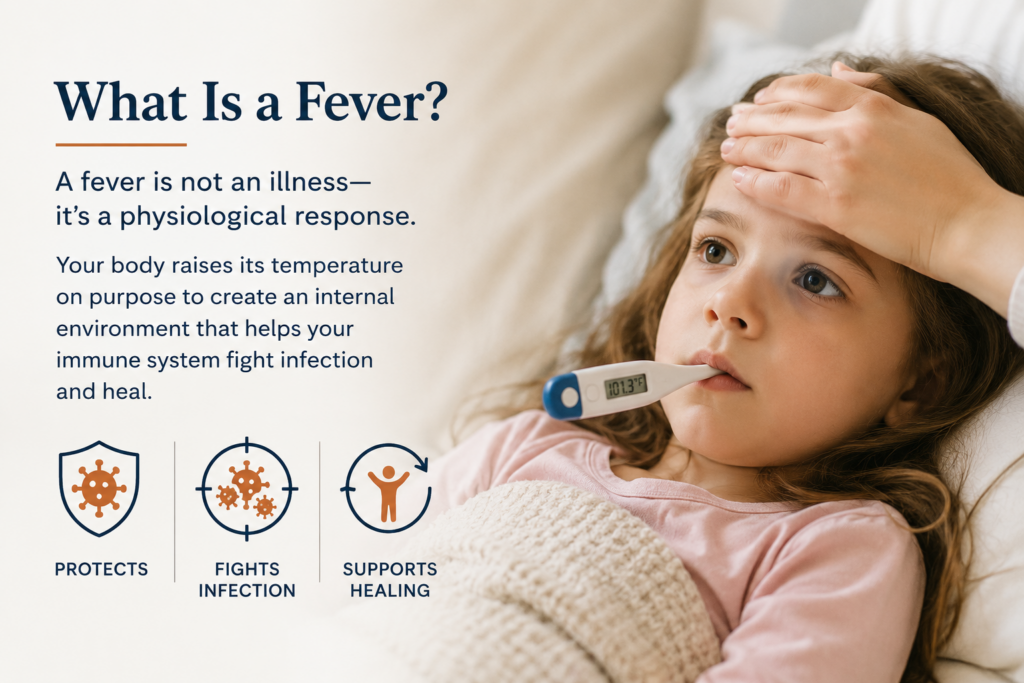
A fever is not a disease.
A fever is a physiological response.
When the immune system detects viruses, bacteria, or other immune challenges, the brain intentionally raises body temperature as part of the healing process.
This response is coordinated primarily through the hypothalamus — the part of the brain responsible for regulating temperature and many survival functions.
The body does this for a reason.
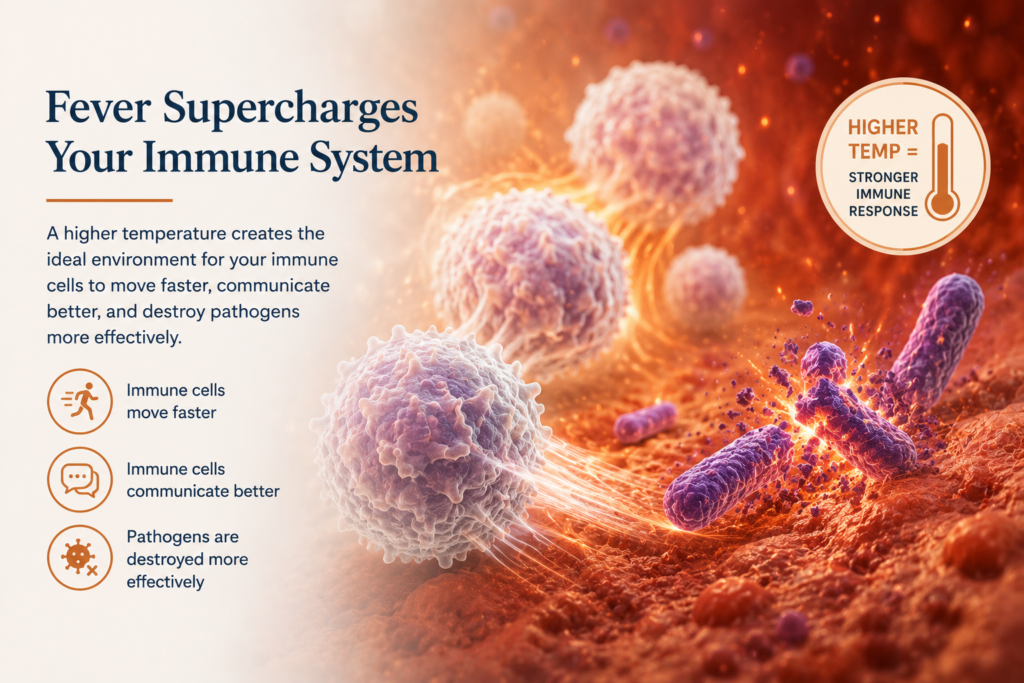
Higher temperatures can:
Support immune cell activity
Slow the replication of certain viruses and bacteria
Enhance metabolic and repair processes
Improve immune communication
Increase white blood cell efficiency
In other words:
The body raises temperature because it may help the body heal more efficiently.
Fever is not the body losing control.
Fever is often the body taking control.
Why Fever Frightened an Entire Generation of Parents
Many parents grew up hearing:
“A fever is dangerous.”
“You must bring it down immediately.”
“A high fever means something is terribly wrong.”
But much of modern “fever fear” developed from misunderstanding and anxiety — not always from physiology itself.
In fact, many healthcare professionals now acknowledge that fever is a normal and beneficial immune response in many situations.
That does NOT mean fever should always be ignored.
And it does NOT mean parents should never seek medical care.
But it DOES mean fever should be understood properly rather than automatically feared.
The Difference Between Monitoring and Panicking
A fever alone is not the most important factor.
What matters more is:
The child’s responsiveness
Hydration status
Breathing
Energy levels
Behavior
Medical history
Duration of symptoms
Associated symptoms
A child with a fever who is:
drinking fluids
making eye contact
resting comfortably
responsive
periodically playful
may be handling the illness quite differently than a child with:
labored breathing
lethargy
dehydration
confusion
severe pain
persistent vomiting
concerning neurological symptoms
The body is dynamic.
Numbers alone do not tell the whole story.
Why the Immune System Needs Challenge
One of the most overlooked concepts in health is this:
The immune system develops through adaptation.
Just like muscles grow stronger through challenge, the immune system learns, responds, remembers, and adapts through exposure and experience.
This does not mean children should be unnecessarily exposed to illness.
But it does mean the body was designed with intelligent defense mechanisms.
Fever is one of them.
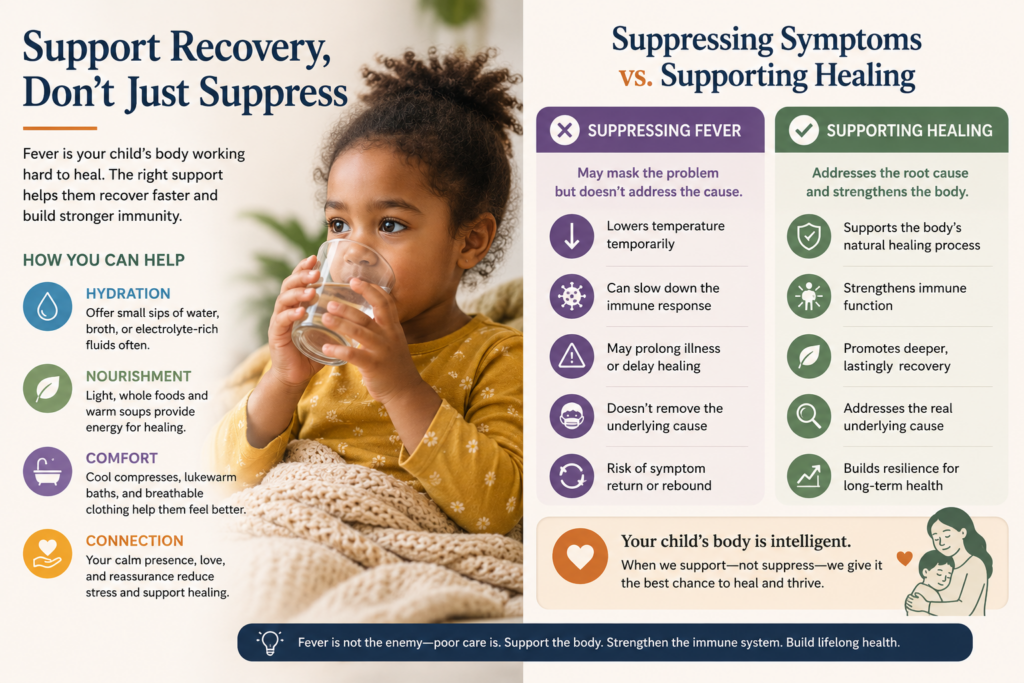
Suppressing every fever immediately may interfere with some aspects of the body’s natural immune processes.
The goal should not always be: “How quickly can we stop the fever?”
Sometimes the better question is: “How can we support the body while it heals?”
The Nervous System and Immune Function
The immune system does not function independently from the nervous system.
The brain and immune system are in constant communication.
The nervous system helps regulate:
Inflammation
Stress responses
Immune signaling
Recovery
Sleep
Adaptation
Healing responses
When the nervous system becomes overwhelmed by chronic stress, poor sleep, inflammation, or physiological overload, the body’s ability to adapt efficiently may become compromised.
This is one reason many families are beginning to look at health more holistically.
Not simply asking: “How do we suppress symptoms?”
But instead: “How do we support the body’s ability to function?”
Why Some Children Seem to Get Sick Constantly
Many parents notice:
recurrent ear infections
repeated colds
lingering congestion
chronic inflammation
frequent antibiotic use
poor sleep
fatigue
behavioral changes during illness
While there are many factors involved, one important concept is adaptability.
Children’s nervous systems are constantly developing.
Their immune systems are constantly learning.
Their bodies are constantly adapting to:
stress
environmental exposures
sleep changes
nutrition
inflammation
posture
physical trauma
birth stress
emotional stressors
Health is not simply the absence of symptoms.
Health is the ability to adapt.
Supporting the Body During a Fever
Many parents today are seeking balanced approaches that support healing while also knowing when professional medical care is necessary.
Helpful supportive strategies may include:
hydration
rest
reducing overstimulation
proper nutrition
monitoring symptoms carefully
supporting recovery instead of panicking
consulting appropriate healthcare professionals when necessary
Every child is different.
And parents should always seek medical attention when symptoms are severe, persistent, or concerning.
What About Febrile Seizures?
Few things terrify parents more than hearing the words “febrile seizure.”
And while febrile seizures can be frightening, they are often misunderstood.
Most febrile seizures are believed to be related more to rapid changes in temperature than to the actual height of the fever itself.
Importantly:
Most febrile seizures do not cause long-term neurological damage.
Many occur in otherwise healthy children.
Parents should still seek immediate medical evaluation if one occurs.
This is another example of why education matters more than fear.
The Bigger Problem May Not Be Fever
Sometimes the real issue is not that the body creates fever.
Sometimes the issue is that modern life has weakened our ability to trust and understand the body.
We have become conditioned to believe:
symptoms are always bad
discomfort always means danger
suppression equals healing
But healing is often active.
Healing can involve:
inflammation
fatigue
temperature changes
immune activation
recovery phases
The body is not always malfunctioning when symptoms appear.
Sometimes the body is fighting, adapting, and healing.
Fever Is Often Evidence of a Working Immune System
This may be one of the most important concepts parents can understand:
A fever is often evidence that the body recognizes a challenge and is responding to it.
That response is intelligent.
That response is coordinated.
That response is purposeful.
And while there are certainly times medical intervention is necessary, fear should not be the default response to every elevated temperature.
A Different Conversation About Children’s Health
At Ptak Family Chiropractic, we believe parents deserve a deeper understanding of how the body works.
Not fear. Not panic. Not confusion.
But education.
Because when parents understand:
the nervous system
adaptation
immune responses
recovery physiology
the body’s innate intelligence
they can make more informed, empowered decisions about their family’s health.
When to Seek Medical Attention
Parents should always contact a healthcare professional immediately if a child experiences:
difficulty breathing
severe lethargy
dehydration
seizures
stiff neck
persistent vomiting
unresponsiveness
bluish skin color
symptoms worsening rapidly
fever in very young infants
or any symptom that feels concerning or unusual
Trust your instincts.
Ready to Learn More About Supporting Your Child’s Health Naturally?
At Ptak Family Chiropractic, our focus is helping families better understand the relationship between the nervous system, adaptation, healing, and long-term wellness.
If you would like to learn more about a neurologically focused approach to health and development, schedule a no-charge consultation with our office today (310) 473-7991.
3122 Santa Monica Blvd. Ste 102 Santa Monica, CA 90404
Research & References
Barton D. Schmitt. Fever phobia: misconceptions of parents about fevers. American Journal of Diseases of Children. 1980;134(2):176–181.
Barton D. Schmitt. Fever in childhood. Pediatrics. 1984;74(5 Pt 2):929–936.
Matthew J. Kluger. Fever: role of pyrogens and cryogens. Physiological Reviews. 1991;71(1):93–127.
David M. Morens and Jeffery K. Taubenberger. The mother of all pandemics is 100 years old (discussion of fever and immune response physiology). American Journal of Public Health. 2018;108(11):1449–1454.
Andrew J. Pollard and Michael Levin. Vaccines and fever physiology in immune activation. Archives of Disease in Childhood. 2000;82(3):238–239.
Katherine A. Autry et al. Fever as an adaptive immune response. Comprehensive Physiology. 2011;1(3):1341–1358.